Interpeting the Asuras

Revise

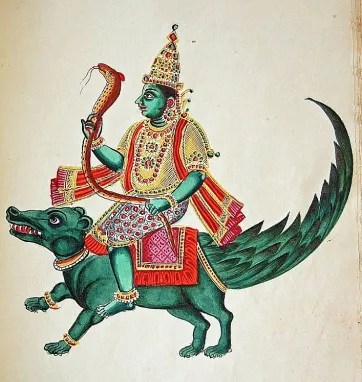
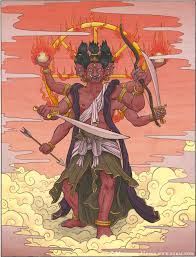
Eliade describes the Asuras as lawful and decisive and the devas as creative. Although this has validity, it should b e remembered that Mircea Eliade is Romanian and aligned with Russian orthodoxy. However many will believe the assures are guiding modern philosophy and not the devas. It generally seems like the modern period is assuring people that what they are doing is in the creation of new philosophies is correct. Another heuristic interprets the asuras and grandparents and the devas as parents. Al.so the assures can represent the early 1900s and the devas the 1800s. This can be sidstepped if we remember that the root of asura is assure which came about when the modern period was being developed. This can be sidestepped if we remember that the modern period was governed by idealism which tells them to proceed without there actually being a definitive truth, thus they probably took the assures to be assuring them. This says the Italians probably had a greater impact on the development of modern philosophy than expected since they are the ones who are asserting modern philosophy What the west is essentially telling you to worship wyour grandparents and not your parents. This allows society to proceed with a greater stedyness and give the youth more information to work on. This is in contrast to some Judaic interpretations.. We must remember that Mircea Eliade is Romanian which says that he is essentially being somewhat honest, giving an accurate description of reality and exerting himself and fudging the results Al little bit. Thus there is no guarantee that what Mircea Eliade is saying is correct

Mircea Eliade: The Religion of the Vedas

The entry of the Indo-Europeans is marked by destruction.  The documents mention ethnic groups such as Hittites, Mitanni; but Aryan elements are also mentioned. For more than a century, scholars have made efforts to identify the homeland of the Aryans such as in the Russian steppes, in central Asia, and Anatolia, but many today locate them north of the black sea. In terms of their migrations, they reached central Europe, the Balkans, Anatolia, and northern Iran in the second millennium, and the Mediterranean, northern Europe, and India in the 1st millennium. It is certain the origin of the Aryans is the neolithic, perhaps the Mesolithic. It also certain that the culture was influenced by civilizations of the near east.1

We can verify common structures of the common Indo-European religion. The earliest studies show the root deiwos, “sky,” in the terms designating god and in the names of the principal gods: Dyaus, Zeus, Jupiter. A certain number of gods are designated by thunder- Thorr, Perkunas. It is probable that the sky god was already yielding place. The cult of fire is also to be found such as the Vedic god Agni or the Slavic Ogni. The solar god also held a preponderant place, but has a checkered history among the Indo-Europeans, especially after contacts with the near east. The earth was vital energy opposed to the sky, but is more recent. They practiced sacrifice and knew chanting.  They had rituals in which they consecrated territories that they settled. They prohibited against using writing. A common heritage is not always recognizable because of the different cultural contacts during the migrations.2

Ideology and development in India

The various Indo-European mythologies have come down to us from different ages and documents of unequal value. Although we should avoid the errors of “comparative mythology,” a common Indo-European character can be inferred. Georges Dumezil has renewed the comparative study of Indo-European mythologies and religions. His works have demonstrated a common structure to Indo-European ideology- the division of society into three classes- priests, warriors, stock breeders and farmers. With the Indo-Iranian’s, we perceive the best tripartite division of society. And, indeed, in India we have the brahmanas, the kshatriya and the Vaisya. However, in Iran, this division did not harden into a caste system.  Similar tripartite divisions are found with the Celts the Romans. the division of the first function into complementary parts or tendencies can also be inferred.  Dumezil has also emphasized differences.  for example, the Romans think historically and juridically, whereas the Indians think in fable and mystically.3

The Aryans advanced into northwestern India in the second millennium and in a few centuries occupied the basin of the upper Indus. The invaders battled the dasyu of the Indus civilization. They are described as having black skin, and professing the cult of the phallus. They live in fortified settlements, which were ransacked. The dasyu were slaves but also seemed to be integrated into Aryan society. Symbiosis will increase as the Aryans advance toward the plain of the Ganges. The Aryans practiced agriculture but the economy was pastoral and the horse was reserved for raids. The Aryans love music and dancing and are fond of intoxicating drinks: soma and sura– the later having no religious meaning. The Vedic pantheon is occupied mostly by gods and not goddesses and when territory became occupied, they would dedicate an alter to Agni. The Vedic system consists of a priestley elite and a military aristocracy, but the public held beliefs later found in Hinduism.4

The Gods

In the Vedas, Dyas- the sky god- has already disappeared.  Dyas is soon replaced by Varuna. Varuna is designated by the name asura– a title possessed by others- i.e. Agni. The asuras are the ancient divine family.  The Vedic texts mention the opposition of the gods to the asuras– commented on in the post-Vedic brahmanas.  Agni- at Indra’s invitation- abandons the asuras since they didn’t possess sacrifice. Indra invited Varuna to his kingdom, and sent the dasyus into darkness.  This conflict opposes the young gods with the primordial divinities. However, the asuras were not necessarily the gods of the pre-Aryans.  The time of the asuras precedes the current epoch ruled by the devas. In India, the passage from a primordial epoch to the present epoch is explained in cosmogonic terms.5

Varuna is sovereign, oversees the world, is omniscient, thousand eyed, no sin escapes him. Men are slaves to him; he is master of bonds and has the power to bind men at a distance and set them free.  He is represented with a rope in his hand and binds and ties, beginning with knots. Varuna is in decline in the Vedic period, but is connected to rta and maya. Rta means order- cosmic and moral. Varuna is brought up in the “house” of rta; to bear witness to rta. Varuna is responsible for those who break the law and reestablishes order. It seems paradoxical that the guardian of rta should also be intimately connected to maya. Maya means to change- destructive change that negates good mechanisms, but demonic and deceitful change. it is magic of the demonic type. The origin of philosophical mayacosmic illusion– is to be found in this definition since the definition is ambiguous.6

The union of opposites must call our attention; this is not peculiar to Varuna alone. The rig Veda terms Agni a “furious serpent;” Ahi Buha is invisibly what Agni is visibly; the serpent is a virtuality of fire whereas darkness is nonmanifested light. The Adityas are originally serpents- casting off their old skin, they achieved immortality and became gods, devas. The Satapatha Brahmana declares that “the knowledge of the serpents is the Veda”- a knowledge that at least in the beginning had a demonic character.  Mitra is secondary to Varuna- the sun is his eye; all seeing, nothing escapes him; with Mitra are Aryaman and Bhaga- who protect the society of the Aryans and share the wealth.  These four make up the Adityas or sons of the goddess Aditi.  The texts identify her with the earth or even the universe.7

Indra is the most popular god in the rig veda; he guides warriors, is fecundator, represents life, cosmic and biological energy. Indra fights Vrtra, the dragon, who held back the waters. This myth is naturalistic- losing hurricanes, pouring down rain, and causing wetness; but it is also cosmogonic- Indra, hurling vajra, tore apart Vrtra who caused sterility resulting from an immobilization of the waters. Indra burst the primordial monad by breaking the “resistance” and inertia of Vrtra. Other Indian myths explain creation from prime matter, but in this case, a world already existed. After this demiurgic defeat, Indra appointed Varuna as guardian of rta. This myth is also naturalistic and historical- it served the Aryans and inspired a mythico-ritual scenario. Indian speculation will soon use this myth to illustrate divine biunity and as an example of a hermeneutics seeking to unveil reality.8

The cult of domestic fire is important to the Indo-Europeans. In the Veda, Agni represents fire; however, he is not limited by this- for example, being the son of Dyaus, descendant from the sky, and is identified with the sun; Agni- god of sacrifice- is said to have fier spurts and have eternal youth- this makes his relationships with others more intimate than with other gods. Although god of sacrifice, Agni does not have considerable mythology- he is said to come from the mother and to have penetrated the waters; he is in the possession of clairvoyance. These meditations on heat are an Indian elaboration from prehistory; in later philosophical speculations, there is an elaboration and systematization of these meditations; Agni’s importance to the Indians is giving rise to meditations and speculations9

Soma– third in the Vedic pantheon- is friend of Indra; like Agni, it’s not easy to separate the ritual of the plant from soma himself. One of its only myths is its celestial origin- a bird took the plant from the mountains and brought it back to earth. The ritual of the plant is described in cosmic and biological terms. The texts emphasize ceremonies that precede and accompany the purchasing of the plant and the preparation of the drink. The virtue of soma is the ecstatic experience brought on by its ingestion. Soma stimulates thought, brings a sense of community, and certainty of “nondeath.” Its ingestion was confined to priests and some scacrifiers. Soma was a replacement for the original Indo-Aryan plant. Later, the experience of soma lead to meditation, orgys, yoga, and a series of philiosophoumena.10

The Vedas mention certain gods which will slowly be forgotten or achieve unequalled position; among the former are Usas, goddess of dawn, Surya and Savitr, solar divinities, the Asvins, sons of Dyaus, and the Maruts, sons of Rudra; among the later are Rudra-Siva and Visnu. In the rig Veda, Visnu is kindly disposed towards men, friend of Indra, whom he helps against Vrtra; the brahmanas emphasize his relations with Prajapati. In the Upanishads, Visnu is exalted as supreme monotheistic god. Rudra is of the opposite type. He is not friend of men, disseminates sickness. Rudra wears his hair braided and his color is dark brown; his belly black and his back red.  He is armed with bow and arrow and haunts the mountains. Later, he becomes lord of wild beasts and protects those who shun Aryan society.11
A contemporary Defense of Magic

According to the definition of magic, there are a bunch of subtle forces that permeate the cosmos; there is no way of knowing how many of these subtle forces there are and what kinds there are, but one can begin to tap into these subtle forces through a posterior intuition. One cannot know for certain that these forces exist but by trying things in the world they can begin to figure out how it works. This leads to a variety of maneuvers in order to tap into these forces, leading to a variety of black magic, red magic, white magic, and Evola’s favorite: high magic. To present standards it seems as though the positing of these forces are a flagrant denial of Ockham’s razor: positing more entities than is necessary to explain things. However, I’m not so sure. I will now argue that magic is no less plausible than recent scientific theories such as string theory. String theory is regarded by even many leading philosophers to be not simply physics but actually a form of scientific metaphysics. Indeed, the source of the principles is empirical, but what is extrapolated from those principles is beyond empirical verification. One must ask himself what is positing more extravagant entities: string theory or magic? The strings in string theory seem to be even more extravagant of entities than simply a plurality of forces that underly the cosmos.

In order to verify whether anyone is ever able to epistemically justify real magical phenomenon from experience, let’s look at a thought experiment of an extreme hypothetical situation. Lets say someone says I am going to perform a hand maneuver and then after that someone is going to show up at my door at 3:15 PM exactly and there is going to be a little red ink stain on his shirt- and that person has not shown up at your door for three years. And you perform the hand maneuver and then this actually happens. Lets say the next day, you say I am going to perform a hand maneuver and then someone is going to call me on the phone and recite 20 random words that you agree upon ahead of time. And thjen you do that and it happens. The chanc es that there is not magical phenomenon going on at this point is now probably 1 in 1 million or something like that. Let us say that then you do this 300 times over the next year and the results turn up every time. The chances that there is not something magical going on is now 1 in 300 billion or something like that. The logical positivist will now find it very likely to insert false hypotheses in order to maintain that nothing magical is going on such as that you afctually had the idea that the person was going to show up at your door in your subconsious. But the logical postivist simply attadcks the metaphhysician on grounds that are difficult to deefend through second order experience. SWe know in this hypothetical case that not only that that is not the case but that the person has the right to conclude that that is not the case.

Difference between Continental and Analytic Philosophy

     What is the difference between analytic and continental philosophy? Other than epistemological differences, this really reduces down to scientific materialism vs metaphysics. I have religion labeled as an extension of continental philosophy since religion is essentially metaphysical in nature. Some of the different components of analytic philosophy are logical positivism, structuralism, philosophy of mind: functionalism, empirical psychology, realistic philosophy of science. Functionalism is really self-referential in nature. Logical positivism is the reduction of metaphysical claims to language, psychology, and the physical. I also place existentialism under analytic philosophy and not continental as it takes place purely through a reductionist lens. Post structuralism is not analytic philosophy but is an offshoot of analytic philosophy as it not only believes it is impossible to study nature through the structures of metaphysics, but also that it is impossible to study nature through the structures of science. Thus, it can be seen as a new form of skepticism.

Understanding of Metaphysics and Religion in America

     Really, we have been in a continual downward spiral as to our knowledge of what metaphysics is and how it works for about 100 years now, ever since the advent of logical positivism in the 1920s. The first thing to go was esotericism around perhaps in the 90s. There are very few Americans today who truly take the law of attraction seriously due to its being embedded into the sciences in the 90s, which I actually believe was an incorrect maneuver. But the law of attraction serves as an approximation as to the American mindset and I believe more Americans subscribe to the law of attraction today than they are letting be known. That being said, the only truly reductionist ages in American history of the last 100 years were the 80s and to a lesser extent the 50s. The 90s were in fact not reductionist, but nonreductionist as Jainism, the law of attraction, and British Idealism were very popular. The early nineteen hundreds were also nonreductionst with the advents of European Indology, Orientalism, Islamology, and the many esoteric organizations that began to surface: theosophy, spiritualism, new thought, anthroposophy, and traditionalism.

     One does not need religion in order to function- analytic philosophy suits that purpose. In fact, function is even in the name of functionalism- one of the components of analytic philosophy. However, many religious people will recognize that religion is something that is necessary in order to function correctly. For example, how does a person function correctly without free will? One may find that the alternative cognitions available through religion actually turn out to be more conducive to an enriched existence than reductionism. Religion can thus be seen as an existentialism substitute (even though existentialism was originally seen to be the religion substitute). For the American, religion is something one has to consciously engage in and take an interest in. For an alternative defense of religion, look to Averroes of the Middle East who regarded physical claims to be in the same ontological category as metaphysical claims.

Egyptian Religion: Temples and Gods

     The temples in ancient Egypt were enormous containing huge sandstone columns and many different compartments to the temple; pictures of deities lined the walls. The sacred part of the temple was the sanctuary in which stood a statue of the resident god. The statues in the temples were made of electrum, lapis lazuli, turquoise, and precious stones. The ancient Egyptians did not regard the god to be manifest in the statue; however, the statue formed a receptacle to the essence (ba) of the god. The ba would enter the statue when cult rituals were performed. The Egyptians would not describe this ba in the abstract terminology of energy, but in the concrete terms of a falcon descending into the statue. To summon the god, the Egyptians would perform the daily offering ritual by physically maintaining the statue and presenting food and drink. The chief priest would be purified and joined by the other priests, before gathering the materials required. They would then proceed to the temple sanctuary and start with a series of recitations and preparations. The priest would scatter white sand on the floor and spray the statue with perfume. Then he would offer the god lengths of red, white, and green cloth and adorn the statue with jewelry. It seems as though the general population had knowledge of the cult rituals. For example, the priests were drawn from the community so that many had first-hand experience of the rituals, and there were pictures of the rituals on temple walls accessible to the public.

     The Egyptians had an close relationship with their gods and there were a variety of ways in which to contact the gods. Temples were mostly restricted to priests, however, parts of the temple were accessible to the public. Much of the worship of ordinary people took place outside the temple. For example, the triple shrine of Seti II  (which was not yet enclosed in a temple at the time of its construction) was a place of assembly. Some of the walls of a shrine or temple had holes cut into them to support fabric that fit over the individual to support privacy while they prayed. These shrines were associated with the more common of gods. Since not everyone was allowed in the temple, people instantiated private statue cults to be placed in the temple. The statues were placed there to absorb and transmit the prayers and rituals to their owners. The statues would not be made to resemble the purchaser, but would be inscribed with their name, The statue cults were mostly a phenomenon of the mid and upper elite. The Egyptians also placed votive figurines of women, animals, and gods in houses, temples, and tombs as offerings to the gods in thanks to a god or to get them to act on the petitioner’s behalf. Votive figurines were used in all the dynastic periods and different votive figurines were used for different purposes. Self-devotion to a particular god was rare, but on occasion, an individual would declare special devotion to a single god.

List of Terms

Mathematics – structural reasoning coming from before experience

Philosophy – conceptual reasoning coming from before experience

Metaphysics – a claim about the fundamental nature of reality that transcends the physical.

Transcendent – something that transcends rationality.

Transcendental – something that remains within the bounds of rationality

Empirical – something pertaining to the senses or scientific experiment

Physical – pertaining to natural law or the empirical

Idealism- Synonymous with immaterialism. belief that all is mind or that the world is contained within the mind, or that matter does not exist.

Subjective idealism- belief that the world is contained within the individuals mind. Found in the modern Western tradition and components in Buddhism and Hinduism.

Types of God

Objective idealism – belief that the world is contained within some Gods mind and in which there is an immanent component. Found in the Western tradition, Islam, and Hinduism.

Pantheism – a purely immanent God.

Theism – belief in a transcendent God that interferes with the world from time to time. Found in Christianity, Islam, and Judaism.

Deism – belief in a purely rational God that does not interfere with the world.

Types of metaphysics

Esotericism – the root word of esotericism means hidden and only accessible to a small group of people. I take it to mean a metaphysical claim that transcends reason, perhaps having been handed down from an ancient prehistory. The big three are magic, astrology, and alchemy.

Mysticism- A metaphysical claim that usually is reduced to state of mind such as a feeling of merging with god. Can also depict a line of reasoning that transcends rationality. Can be used synonymously with esotericism.

Religion – A system of critical mysticism that is organized, in which there is a transcendent component and a critical or philosophical component.

Occultism – A metaphysical claim that lays over and on top of a physical claim. For example, in the 1800s magnetism and gravity were considered occult. Can also mean the new type of esotericism that emerged in the late 1800s in which less of an emphasis is placed on tradition.

Paranormal – includes phenomenon such as the psychic, ghosts, and telepathy. A mix of the esoteric and the occult.

Supernatural – a first order interaction between the physical and the metaphysical. There have been few cases throughout history other than superpowers, and examples from the Christian and Buddhist tradition.