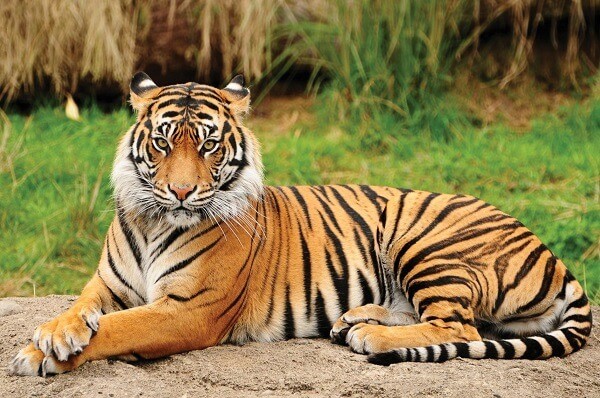
Schopenhauer believes the world is as appearance, but he also posits a thing-in-itself. So the animals actually exist when you are not looking at them, unlike Berkeley, and they are as they appear. Thus, all of those beetles and insects really exist when you are not looking at them and they exist in a very grotesque form. What Schopenhauer is attempting to do is cut out any attempt by the sciences to elucidate a prettier picture of the animals. Back in the 1800s, it was looking like the sciences were potentially about to give a positive description of the nature on the animals and they are not really as bad as they seem. Perhaps the sciences would reveal, for example, that the animals do not cognate the same way as humans. However, Schopenhauer is maintaining that they are as they appear. What ended up happening was the sciences ended up going in a similar direction as Schopenhauer took it with survival of the fittest. Schopenhauer learned about Darwin’s origin of species on his death bed and he probably knew exactly what was happening. The sciences ended up giving a similar description of the animals as Schopenhauer’s theory. However, these theories are still slightly different. While Darwin is giving a specific description of the animals, Schopenhauer is simply maintaining that they are as they appear and that is grotesque. You can see the impact of Schopenhauer and Darwin on the national geographic channel.
Further Considerations
Is Schopenhauer determine how animals look? In which case, metaphysical speculation would be very powerful, indeed. You determine how animals look through metaphysical speculation. However, Schopenhauer is not determining how animals appear, he is simply saying that they are as they appear. Thus this is really a weaker claim. That’s all transcendental metaphysics is- something to subscribe to that may or may not be a correct description of reality. It may be a correct description of reality or it may reduce entirely to cognition, but either way it works.

 Idealism Studies