Biography of Rene Guenon

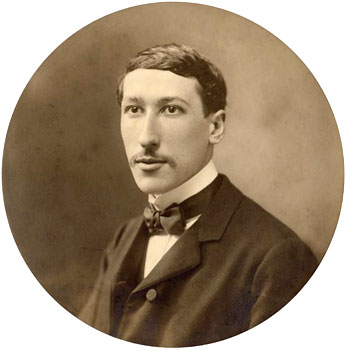
Rene Guenon (1886- 1951)

Early Days

Rene guenon was born November 15, 1886 to a 56-year-old father- Jean-Baptiste- and a 36-year-old mother in France. Guenon was entirely French in ancestory and his family owned a vineyard. however, by the time he was born, they were living in a small house in Bloise. When he was seven, they moved to a bigger house with a garden, which is where the formative years of guenon’s childhood were spent.  Guenon suffered ill health as a child and his family was very religious. Guenon was talented in school, always coming first or second in the class. This was obtained all while guenon was experiencing frequent bouts of ill health and consequent time off school. Guenon soon became a loner among his peers and believed his teachers had it in for him. Because of this, Guenon moved to a new school in 1902, which had an excellent reputation. At this school, despite continued bouts of ill health, he continued to do very well and was particularly good at math, philosophy, and religion. Guenon entered the College Rollin to study advanced math in 1904, but he fell behind due to ill health and homesickness to the extent that he needed supplementary coaching. He left in 1906 and established himself in a small flat in the Ile St. Louis in Paris. The Ile St. Louis was in the center of Paris surrounded on all sides by a river. The flat had an interior courtyard and winding staircases. Guenons’ room had a spacious kitchen and dining room lit by gas and two bedrooms all with simply furnished rooms.1

Middle Years

Guenon’s decision to not obtain an academic position was a crisis point in his life. His admiration for philosophy and religion had been instantiated back in school. Now guenon attempted to access a more attractive and immediate form of metaphysical knowledge which led him to attempt to access the occult societies of Paris. At this time, Guenon was initiated into the Martinist order lead by Papus (real name Gerard Encausse) an energetic read bearded man some twenty years older than Guenon of French and Spanish descent based on the works of the Eighteenth-century Spanish philosopher L.C. de Saint-Martin.  Guenon went to Papus’s school of occult studies based on a recommendation of a friend and Papus had himself been a student of the College Rollin. In 1908, Guenon began to fall out with Papus mainly because he wished to revive the Order of the Temple. There were three more main organizations which appealed to both the general public and the occultists of France: the theosophical society of America, the spiritualism of America and France, and the freemasonry of England. Guenon was attracted to certain fringe masonic groups and spiritualist movements but eventually turned away from them.2

By this time, Guenon began to fall out with Papus along with two of his close friends: Champrenaud and Pouvourville. Guenon founded a periodical called La Gnose with these two when he was initiated in 1912 into a Sufi order lead by al-Kabir. Guenon made translations of important Sufi mystical texts and continued to work on La Gnose. Guenon’s interest in the Hindu doctrines had been stimulated by his contacts with the theosophical society which is linked to Indian philosophical teachings though much adulterated by madame Blavatsky’s vision. However, the Vedanta was now somewhat popular in Europe. Guenon claims to have received his teachings directly from Hindu masters. Back in 1912, Guenon also married a young woman who was an assistant to his aunt. The marriage was Catholic as Guenon was still Catholic.3

Publishing of Main Works

From now von, Guenon’s life changed because he now had family responsibilities and had to earn a living, but also because he increasingly disapproved of the occultists of his time. He retained his interest in masonry and became affiliated with the Thebah lodge associated with La Grande Loge de France. The following year we find him associated with a leading anti-masonic writer: Abel Clarin de la Rive. Anti masonry was initiated into the public by Taxil some 40 years earlier. He revealed, for example satanic rites practiced by masons which in actuality may have had nothing to do with masonry. Guenon was initiated into an anti-masonic magazine through his contacts with La Gnose. Many have commented on Guenon’s writing for an anti-masonic magazine while being a member of a masonic organization, but Guenon’s approach to masonry was idealistic. guenon seems to have retained a belief in masonry as a preserver of the primordial tradition.4

During the first world war he was exempted from military service due to poor health and had to take up teaching in order to pay the rent. He taught at a high school during the 1915-16 years and after his mother died in 1917 was appointed lecturer in philosophy at Setif in Algeria.  In 1918, he returned to France and settled with his wife and aunt in his old family home in Bloise and was appointed lecturer in philosophy at his old school.  Guenon was introduced to a circle of young philosophy students who had gathered around the Institut catholique de Paris. By this time, Guenon had ceased to be the wild occult experimenter of his youth and was now an academic bourgeoise engaging in intellectualism. During this time, guenon wrote his first book Introduction to the Study of the Hindu Doctrines which was submitted for a doctorate but was rejected since it failed to display the sort of evenhanded documentation required for such theses. Nonetheless it was accepted for publication. In 1921, guenon published Theosophy: History of a Pseudo-Religion. This book was exceedingly well documented although much more is now known about the ludicrous and fantastic side of the religion.5

Guenon life now began to change in that he now became increasingly absorbed in his writings. During this time guenon published several new books including The Spiritist Fallacy in 1923 and East and West in 1924. This helped Guenon gain some readers, but he was still being somewhat ignored by both the general public and academics. In 1924, Frederic Lefevre, editor and chief of a prestigious religious journal decided to hold a press conference with some leading religious experts of the time. Rene Grousset, an expert on China, Jacques Maritan, a Christian neo-Thomist, and Rene guenon, and expert on Hinduism, were invited to take part. One more event to be noted is Guenon’s relationship with the journal Regnabit– a Christian religious journal. Here, guenon developed some of his ideas on symbolism. From 1924 onwards, Guenon taught at a private all-girls school. However, in 1928 Guenon’s wife died and nine months later his aunt died. His supporters tried to keep him tied to the catholic religion but this double blow caused him to seek to eventually retreat into the safe haven of the east.6

Later Years

Guenon was not good at being a bachelor, and needed the support of a wife and a secure home background. He attempted a second marriage, but was refused.  Thus in 1930, he made the decision to travel to Egypt with a wealthy widow- madame Dina- planning to found a publishing house there to translate original texts illuminating the primordial tradition. Three months later, madame Dina returned to France and the plans for the publishing house folded. Guenon stayed and by 1931 was publishing in an Arab periodical. Guenon moved to a modest house opposite a university and abandoned western clothes for an Egyptian style of dress. In 1934, he married the daughter of a Muslim lawyer. The couple moved to a few different houses and settled in 1937 to a comfortable house in a suburb with a distant view of the pyramids but moved back to the center of Cairo in 1946 and had four children. His time in Cairo was mainly spent on study and writing. Guenon eventually converted to Islam but maintained that it doesn’t imply the superiority of one tradition over another as they all are reflections of the primordial tradition. During this time, Guenon published several new books including The Multiple States of Being in 1932, The Reign of Quantity and the Sign of the Times in 1945, and The Metaphysical Principles of the Infinitesimal Calculus in 1946. In 1945, Guenon developed a persistent cough and eventually died in 1951.7 More books from Guenon have been published posthumously.
Traditionalism

Guenon on the Free Masons

Guenon on the Free Masons

The free masons hold high importance to both science and metaphysics. The free masons are related to carpentry and stone-cutting.1 Masonic initiation is divided into three successive phases: apprentice, fellow, And master.2 There are two types of masons: operative and speculative. The operative masons are workers and artisans and the speculative masons are related to philosophy, but this is hermetic philosophy and not profane philosophy. The free masons craft metaphysical symbolism into their works- be it architecture or something else.3 The free masons tend to hold no dogmatic assertions- either scientific or metaphysical. However, Guenon believes true metaphysics, which is suprarational contains nothing that could offend them. There is really according to Guenon no contradiction or incompatibility between science and religion.4

Guenon believes the Freemasons, to a certain extent like all traditions, alludes to something that has been lost. However, freemasonry- being the last of the traditions to come about, represents one of the most degraded forms of tradition. Throughout history, information has been lost constituting substitution, and more information has been lost constituting further substitutions. Freemasonry- being the last tradition to develop has the most substitutions ion place. Thus, freemasonry is simply a “corpse of the original tradition. This tradition has been distorted in do many ways to the point of becoming unrecognizable. The different grades of mastership do not in any way relate to how things were in their primordial state. There should really be no distinction between the different grades of mastership if things were the way they should be. These high grades are in reality far removed from the original tradition.5

Analysis

I am aware that the Freemasons are an esoteric organization, but I am also aware that they share some enlightenment ideals. That being said, I am only concerned with Freemasonry to the extent that it remains traditional. I’m not a free mason that has a slight interest in traditionalism, I am a traditionalist that has a slight interest in freemasonry. What I am interested in is tradition and traditional activities. Freemasonry is an interesting way to express these ideas. That being said, freemasonry constitutes a valid activity and can lead to some interesting results. A society without freemasonry can be boring and it should be retained at least in the West.

The metaphysical heritage of tradition has a greater variety and has a higher quality than anything that can be invented in contemporary times. There have been many religions invented in history and further esoteric traditions documented in the west: magic, alchemy, astrology.  Nothing today is as interesting as these ideas and it would take years to develop a new esoteric tradition at the same level as what came in the past. There has been invented for example, the idea that we live in a computer simulation as invented by the Swedish philosopher, but this is a lesser form of metaphysics having been developed over less time and leads to paradoxical consequences. Additionally, it can be further argued that the esoteric traditions are the only traditions that constitute a true facet of our reality. These traditions have been received through divine revelation and have been handed down throughout history. Additionally, the moral principles involved in moving out of tradition can be seen as a degeneration. The moral principles of tradition are far superior to anything that has come since. One should retain proper male female relations and proper familial relations by relying on tradition. The relationless monism of Bradley and Atkinson’s law of attraction can get out of hand if pushed to the extreme. These ideas should be retained but handled with caution while remaining in a traditional framework.

Guenon’s Conception of Heaven and Hell

Guenon’s Conception of Heaven and Hell

Under a modified Guenonianism, Guenon believes in Heaven and Hell. I say a modified Guenonianism because Guenon sometimes alludes to the idea that the Hindus don’t really believe in either Heaven and Hell or reincarnation. But under the modified Guenonianism, he believes in Heaven and Hell because that is part of the generic esoteric domain that he believes belongs to all religions. However, the Muslims have a notion of Heaven and Hell that is permanent and the Hindus have a notion of heaven and hell that is temporary. What is guenon’s analysis of the matter?

Although I agree with Gornahoor that Guenon is essentially recognizing the identically of every religion in all that is essential, where I am diverging from his stance is that I believe Guenon recognizes the exoteric domain as a valid feature of religion and that the religions are different in the exoteric domain. Although Gunenon recognizes that there is one truth and that truth is incorporated in all religions, he recognizes differences within the individual religions and it is impossible to know which one is correct. This is evidenced by his seemingly arbitrary conversion to Islam. He would probably have stayed with Catholicism if he did not recognize differences in the religions. Therefore, Heaven and Hell might be temporary and might be permanent and it is impossible to know which one is correct. Guenon would probably lean towards Heaven and Hell being temporary states since he believes the esoteric tradition has a source and Hinduism came around first.

Heaven and Hell as permanent States

However, what if the Heaven and Hell of the Muslims and Christians is different than the Heaven and Hell of the Hindus? These are different revelations and different revelations call for different esotericisms. This would mean that one afterlife is temporary while the other is a permanent state.

The Hindus will probably now bring up the seeming metaphysical paradox in a permanent heaven. For how could a person not get bored living in the same place for eternity? Certainly, things would get boring with the same people for eternity. However, this can be sidestepped if we recognize that this permanent afterlife is similar to this life except better in most ways. Thus there is no less paradox in a permanent heaven than there would be in continual reincarnation on earth. This would mean that the earth is a short testing ground to determine the readiness of a person to make it into the real life. This now makes sense why the Muslims are so cautious. If you have the opportunity to make it into a permanent place that is infinitely better than this existence, you had better not move a muscle.

This alternative Heaven would be reached through initiation or perhaps through belief or through decent living. I think the main route to this heaven would be through initiation. The Catholics have multiple sacraments set up- the Eucharist, baptism confirmation, confession. However, I believe other people would be let in through living a decent life or wanting this and so forth. Some Hindus would make the cut and others would have to wait until they are reborn into a properly Christian family, while many would remain Hindu. This allows for a flexible framework in which there is reincarnation except for those lucky few are able to make it into a permanent afterlife through being initiated into the Christian faith.

Traditionalism

Guenon: Insights into Christian Esotericism

Christianity as exotericism

In his posthumous book Insights into Christian Esotericism, Guenon gives a description of the exoteric nature of Christianity. Contrary to some popular opinion, Guenon believes Christianity in its beginning had a true initiatory character of the esoteric type. However, this was eventually lost and Catholicism then entered into an exotericism. In line with what many protestants believe, at some point- probably at the at the council of Nicaea- a cannon law had to be adopted in which a Roman component entered. This component was completely foreign to Christianity. At the time of the augmentation, the sacraments became performed by a greater number of unqualified people. This augmentation was necessary in order to preserve Christianity to a wider public. This shift into the exoteric was necessary to preserve tradition in the Greco-Roman world since the old religion had then entered a state of degeneration. This kept tradition going for another thousand years since the West was not yet at the stage to move into a state of no tradition. At this point, the holy spirit no longer acted through the sacraments. However, Guenon believes that as an exoteric religion, some force continues to act through the sacraments but he is not sure what. This force continues to be supra-individual and not sub-individual. However, this force is not as strong as the holy spirit.

The fact that the sacraments have descended into a exoteric domain is shown by the fact that many of the rights that were once private and initiatory are now public. One example is baptism, being a sacrament that initially involved a long ceremony involving preparations; this then turned into a public ceremony that anyone can perform and in which anyone can attend. Similarly, confirmation and the obtaining of the Eucharist are now public. It is this making of the rights public which is of the tendency of an exoteric right, as esoteric rights should be performed in secrecy with high initiates.

Analysis

Guenon believes that when the augmentation occurred, a Roman component entered and the holy spirit ceased to act through the sacraments. However, there is reason to believe that the holy spirit continues to act directly through the sacraments. If Christianity was first and foremost designed for the Roman people, it would make sense that a Roman component would have entered into it; things were in essence designed that way by Jesus. There is substantial evidence from the New Testament alone that the Christian doctrine was designed specifically for the Roman people and their kin. As such, there is reason to believe that Jesus would continue to have the power to bless the sacraments through the priests from heaven after the augmentation occurred. Since the Roman people are the inheritors of the tradition, the priests would specifically be allowed to bless the sacraments and he would bless the sacraments through them. However, the most fundamental way of validating an esoteric claim is to verify it a posteriori. In other words, the best way to verify the sacraments validity is to take them and look at people who have taken them and see their effects. I personally have taken the Eucharist a number of times and I can say that I think it has had a direct impact on me. But I continue to maintain that the sacraments are in part a mystery.

Traditionalism

Guenon on the Mind Matter Distinction

originally posted 6/24/22

Guenon holds the metaphysical interpretation of Fichte- a Frenchman- but Guenon also says once you remove the mind-matter distinction the question resolves itself naturally and I assume he means people are by nature idealists- that is unrestricted. However, When Guenon makes this claim, he is really alluding to the neutral monism of Averroes of the Renaissance. I in fact made this claim about 3 years ago that the ancients are in fact idealists by nature. But now I am not so sure. The reason is you have to posit some sort of substance to constitute the body in order to know whether the body is restricted or not. For how does one know how the body acts without positing a substratum for the body? Really, I don’t think a person such as Marcus Arruleous would have known one way or another how he obtained success and whether other people would be able to obtain the success that he had. The reason is you have to follow the nature of the philosophy that he subscribed to- stoicism- which is some form of skepticism. What about the other ancient philosophers? The Ionian philosophers posited, for example, that all is water, or all is fire. This means that the body probably would act smoothly, or sporadically, respectively. With Eleatic philosophers such as Zeno- with change is an illusion- again he would say the bodies actions are an illusion and not restricted or unrestricted and so forth. Thus this makes idealism and all of the developments associated with it a specifically renaissance and modern development in the West.

Back to traditionalism

Guenon’s Critique of Theosophy

Description of Theosophism

     Theosophy is the new religious movement established in America in the late 1800s by the Russian Jew Helena Blavatsky. Theosophy is described to be esoteric Buddhism together with some original ideas thrown in. Esoteric means that it only treats only those aspects of Buddhism that transcend reason such as reincarnation and the chakras. Some of the original ideas popularized by theosophy involve the astral plane, astral projection, and the levels of the ego. The astral plane is the idea that there is a plane of existence that exists coterminous with our plane of existence and in which Ghosts live.

     According to Guénon, there is no principle theosophical teaching, but it is presented as the core of all religion and the “absolute truth.” In addition to Eastern doctrines, theosophy also includes traces of Western doctrines such as Gnosticism, Neoplatonism, and Jewish Kabbalah. It claims to be of Eastern origin but takes on a totally Western character. A lot of the ideas involved are in fact wholly modern. Guénon claims it attempts to displace Christianity from the planet.  (THP, 2, 90)

     The main goal of theosophy according to Guénon is “progress.” The theosophists believe, for example in four-dimensional space and will go even further with higher dimensions such as seven-dimensional space. Theosophists typically regard their doctrine to be “transcendent materialism” in which the only thing that exists is matter. Matter, space and motion constitute the core of the universe. The Theosophists also have a progressive version of reincarnation. (THP, 101-104) Transcendent materialism means that they believe in the metaphysical but under a reductionist lense. For example, the law of attraction could be subscribed to but is interpreted under a reductionist lense. Heaven and hell may exist, but these are real physical places that people go to in embodied form. When it comes to higher dimensional space, this is where the conception of the hypercube originates that we see at times in India.

     Blavatsky had a correspondence with a mysterious group of figures called the Mahatmas- which I assume was psychic correspondence, but which was also maintained through the writing of letters. The Mahatmas are the highest-ranking members of the occult hierarchy which according to the theosophists secretly govern the world. There are seven of these Mahatmas and they were initially known as “brothers” but changed to “adepts,” (borrowed from the Rosicrucians) to mean those who have achieved the highest rank in their hierarchy. They are also sometimes known as “masters” (THP, 38). The theosophists regard the Mahatmas to be living men located in Tibet, but who have developed superpowers.

Guenon’s Critique

No real Mahatmas

     Guénon clearly does not like Theosophy and throughout the text goes at great lengths to critique it and show its pseudo-religious character. For one thing, the historical accounts given by Blavatsky were often fabricated. For example, the trip to Tibet that she supposedly took initially never happened (THP, 21). Guénon maintains that most of Blavatsky’s many spirit guides throughout her times at the theosophical society were in fact fabrications based off of people and esoteric societies she had been in contact with. For example, John King, her initial spirit guide was a person not a spirit and she never had contact with HB of L (THP, 11-13, 15-19). Blavatsky’s “spiritual guides”- John King and the Mahatmas- only actually reflect various people that Blavatsky had met throughout her life. Some of these guides and esoteric organizations had used Blavatsky as a cover, while others Blavatsky used for her own benefit. Thus, those who believe she made it all up and did everything by herself were just as mistaken as those who believe her claims concerning the spirit guides (THP, 24).

     In reality, the word Mahatma cannot designate a person, for it in reality designates a purely metaphysical principle that cannot be applied to human beings. There is evidence that the letters sent from the Mahatmas were in fact taken from other sources. For example, an article appearing in an occult magazine that was supposedly a letter from one of the Mahatmas turned out to be an article written by a professor at New York. This caused Blavatsky to switch to a new Mahatma, who was never referred to accept in appendices. The Mahatmas were not simply invented out of thin air by Blavatsky, but were inspired by others (THP, 39–44). In fact, Guénon says that sometimes she declared that she had made it all up in times of desperation. Blavatsky was in touch with the Rosicrucians, of which she translated some of the ideas about the adepts. For example, the book L’Etoile Flamboyante was a book written about several high masonic grades that borrows from the writings of an esteemed Rosicrucian. The idea of adepts who live for ever is also borrowed by some documents of western esotericists. Indeed, the idea that the adepts are located in the middle-East also comes from these same sources in which Western adepts have been regarded to leave for India. Thus, whenever Blavatsky located information about masters in old Rosicrucian texts, she incorrectly interpolated this as about the Mahatmas. (THP, 45-49) Indeed, Guénon said in 1913 he proposed a meeting with one of the figures associated with the Mahatmas who was supposedly located in the Balkans and when the meeting was arranged. a Western theosophist was all that showed up saying the supposed individual was unable to accompany them.

Sources are actually fully Eastern and not Mahatmas

     Guénon claims the doctrines involved are in fact taken from Eastern sources and compiled into a “wholly” modern framework- which is full of contradictions. Where do Blavatsky’s original ideas come from if not from the revelations of the Mahatmas? She simply acquired her work through her travels. Partly arising from the likes of Jacob Bohme and Eliphas Levi and various kabbalistic and hermetic treatises. There are in fact letters from Olcott to Blavatsky recommending various rare Eastern and Western texts. (THP, 82, 83) Blavatsky as a librarian, purchased and kept many rare books, the contents of which appeared in her main written books. These books had been manipulated and changed to her own liking- which is thoroughly full of contradictions. These were thrown together in an incoherent manner in which some interesting documents are found in a mass of uncontrolled jargon. (THP, 84) The original ideas obtained by Blavatsky were thus full of contradictions.

Defense against transcendent materialism

     This is in contrast to the Easterners who don’t even have a conception of matter (THP, 101). Indeed, it is difficult for the Westerner to understand Eastern conceptions with the advent of matter in the West. The Eastern conceptions are attempting to gain access into the fundamental nature of reality through speculation without a notion of matter. Similar to the Schellingian interpretation of mythology, this is very often obtained in the present moment- possibly with the advent of drugs. Indeed, it is difficult for a theosophist to understand the true nature of things when they have not had the drug experience. The drug experience gives first had acquaintance with the metaphysical. I personally have had experience with drugs and the outcome was an understanding of the metaphysical. Certain mythologies have their own more materialistic notion of mythology that could possibly be interpreted along materialistic lines, but this is certainly not how things have been reached in the East and a lot of times in the West. When it comes to magic, alchemy and astrology, Catholics have for the most part always interpreted these along nonreductionist lines. The Catholics make clear from the beginning that the soul is a Non reductionist entity that departs from the body upon death and enters a metaphysical domain. In addition, according to Guénon, there are clear sources from the Indian document that the different previous yuga periods had no materialistic component to them whatsoever. This is in contrast to Blavatsky’s cyclic understanding.

Back to Traditionalism

René Guénon on Tradition

    René Guénon (1886-1951), the French esotericist and philosopher of religion was the originator of the doctrines of traditionalism and perennialism. Traditionalism is the belief that the world’s esoteric doctrines and the resulting customs and practices should be practices exactly as they are handed down through history. This is thus closely related to conservatism, the belief that customs and practices should be conserved as they were in the past dependent or independent of a metaphysical doctrine.Perennialism is the belief that the world’s religions reflect a universal truth that is common to all traditions. As such, Guénon would be labeled both a traditionalist and a perennialist.

Materialism, Tradition, and Perennialism

    Materialism means in the theoretical sense the belief that nothing exists except matter and its derivatives. Indeed, what is called “spiritualism” in the philosophical sense, or “idealism,” is usually only a sort of transposed materialism. Indeed, idealism and Materialism cannot be understood apart from each other and are inverses of each other– which combat each other as the sole description of reality. Thus, these two supposed opposites are close to being simple equivalents and the pretended opposition amounts to no more than a verbal dispute. Modern science actually does not possess the character of disinterested knowledge but in fact hides purely practical considerations. It is the practical results of the sciences which gives prestige in the eyes of the public. This forms the materialist tendency of “common sense” consisting of ignoring all that does not have immediate practical appeal- making intelligence an instrument subordinated to the most corporal part of the human individual. Even if it is admitted that material development does have advantages, it is to be questioned whether the advantages really in fact outstrip the inconveniences. If the loss of higher knowledge, intellectuality, and tradition is taken into account, the result may well prove to balance negatively. The inventions, which are growing at an ever-increasing pace, are all the more dangerous in that they bring into existence forces whose real nature is unknown; and this is the best demonstration of the worthlessness of modern science. Contemporaries claim they increase the “welfare” of the public, but what about those of which have had materialism thrust upon them? Those of the material world regard themselves to be “superior” and seek to impose their materiality on the East but the East simply participates to defend itself. They regard those who do not participate in materiality lazy. For this reason, it is not difficult to understand why the Anglo-Saxon mania for sport gains ground day by day.

     Tradition, according to René Guénon, is something that may be in either written or oral form which comprises of the whole body of techniques, institutions, and beliefs common to a group of people during a certain time. The identification of tradition with the entirety of the civilization is certainly justifiable, especially in the east, but Guénon tends to reserve the word tradition for the most “intellectual” of its components. The worlds esoteric traditions designate a single doctrine, which is cyclical and primordial- i.e., passed down from an ancient prehistory, existing at the beginning of the current cycle. This wisdom was known to the scholastics of the Middle Ages except perhaps in a more convoluted form. This designates the common and fundamental esoteric core to all traditions, which is far from covering the entirety of the tradition. This core assumes different modalities according to the tradition it finds itself in. This sacred structure soon degenerated into the profane, with things coming from outside the esoteric domain. There are thus, for example, two sciences: one from a traditional point of view than from the profane point of view- the sciences being valid insofar as they adhere to universal principles as applications of the primordial tradition. Thus, the primordial tradition is the one true tradition and it is this esoteric core that can be regarded as truly essential. Due to its erosion over time the primordial tradition has become inaccessible to ordinary humanity. Every tradition is a reflection, but only a “substitute,” for the primordial tradition- which is the original form from which all those traditional forms proceed. It is an error to assimilate the original primordial tradition to any particular tradition. Not even the Hindu tradition should be considered the primordial tradition, although it can be linked the most to the primordial tradition, being the first on the list of traditions.

Further Thoughts

     Guénon regards the true domain of metaphysics to be the esoteric domain, which was supposedly handed down from an ancient past. In doing so, Guénon actually rejects not only most of the rational metaphysics of the presocratics, but also much of what occurred during the modern period. It is interesting to note that Guénon defines the distinguishing feature of religion to be the esoteric component and subordinates the rational component. This is in stark contrast to Immanuel Kant’s critical mystical conception of religion in which there is a critical or philosophical portion and a mystical or transcendent portion (I assume when Kant says critical mysticism he means critical esotericism, as he was combating the works of Swedenborg at the time, which could possibly be labeled as esoteric as it is mystical). Thus, while Guénon rejects the Western philosophical tradition and retains religion and esotericism, Kant rejects the Western esoteric tradition and retains religion and western philosophy. The esoteric perspective really doesn’t make sense to the philosophical perspective as much as the philosophical perspective doesn’t make sense to the esoteric perspective. The esotericist says how can you possibly gain ontological knowledge into the world through reason when it is in contradiction with tradition and tradition is the truth? On the other hand, the rationalist will be very skeptical of the entire esoteric tradition. For what evidence of that do you have of that through first order experience? Thus, the only option is to speculate rationalistically. I for the most part take a neutral stance, as we have had rational theories definitively turn into empirical theories since the time of Guenon such as the atom of Democritus turning into the empirical atom. Also, idealism seems to gain knowledge into the world through its reduction of libido, argument for the identicality of the intellect, and so forth. This may however not be as important as the esoteric tradition and can perhaps be said to be useless when it comes into contradiction with the esoteric traditions.