New Thought as Idealism

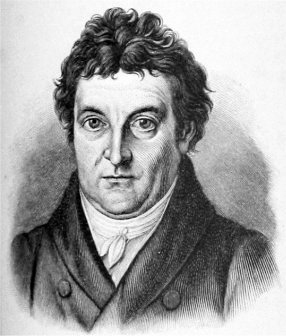
Fichte’s influence

Fichte, with his setting up the world as a product of the mind and his development of action theory, was still very close to the ordinary person and a whole lot of a ways off from Nietzsche. Positing the world as a product of the mind causes forward development in the world, but nothing as exaggerated as Nietzsche. However, Fichte is generally not considered to be the most important philosopher of the last 200 years. He is generally considered to be the founder of German idealism proper which includes only three philosophers- Fichte, Schelling, and Hegel. However, once you take into consideration not only new thought and Evola (which are usually overlooked) as well as the plethora of non-metaphysical egoists of the early 1900s and all of his direct influence, Fichte should probably be considered the greatest philosopher of the last 200 years. These latter ones are often overlooked because of either the religious nature of the work or the obscurity in the case of the egoists. Was Nietzsche inspired by Fichte? He usually lists Schopenhauer as his direct influence. However, Fichte probably impacted him indirectly; his philosophy was probably prevalent in society at the time of Nietzsche.

New Thought as idealism

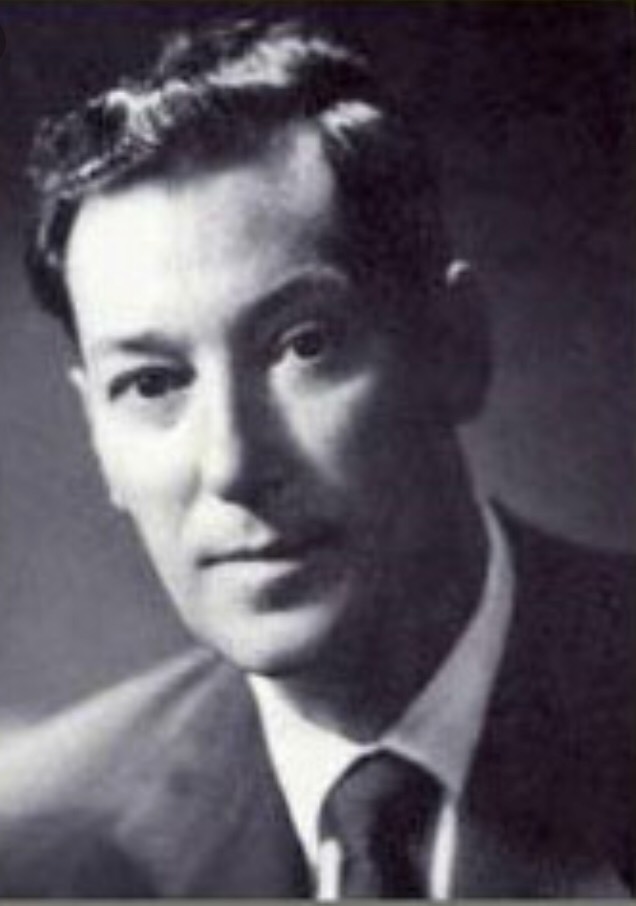
Neville Goddard, the New Yorkean ballet instructor and metaphysician, expounds in his book The Power of Awareness a doctrine in which the individual has the ability to control the world with his imagination. This can be handled either idealistically in which the subconscious manipulation is ripples in the idealistic construct or perhaps more physically in which the mind’s ability to control the world involves some sort of four-dimensional manifold exiting the persons brain. Goddard probably did not know who Fichte was, and lists as his inspiration kabbalah- which I take to be a mystical reading of the Bible involving the cosmological nature of the world. However, Goddard’s inspiration to Fichte is clear as in his ethics he expounds an action theoretic theory along Fichtean lines in much exaggerated form.

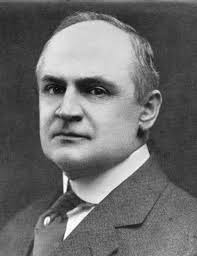
Is the law of attraction idealism? It certainly would be considered idealistic by many. However, new thought is more physicalist in nature and is a far way away from original idealism. Technically, new thought should be considered esotericism and not idealism. However, in Atkinson’s The power of concentration, he lays down an ethics that is Fichtean in nature in greatly exaggerated form together with religious connotations. This has to do with Atkinson’s thought vibration which involves a mind dependence on the world. It has to do with the mind dependence on the world that causes this forward momentum. Thus, Atkinson owes inspiration to Fichte’s idealism. Additionally, Atkinson writes many books on suggestion and autosuggestion and psychic phenomenon which can be considered idealistic in nature. These are perhaps outlined in Fichte with his positing other individuals as subcategories of the persons subconscious, but the detailed analysis was not carried out until Atkinson. Many would consider Fichte’s position to be closer to solipsism than to have a belief in psychic correspondence, but psychic phenomenon can be found in Hinduism which I am arguing all Hinduism presupposes idealism. Thus the idealistic nature of Atkinson of the Fichtean variety is obvious. William Atkinson certainly did not list Fichte as his inspiration, and I doubt Atkinson knew who Fichte was. However, yet again Fichte was probably an indirect influence of Atkinson

New Thought

An Interview with Salvador Dali

     I recently came across an interview from the 1950s which was an American television interview with Salvador Dali- the early twentieth century surrealist painter. I am not aware of who the interviewer is, but every professional talk show host in America probably knows exactly who he is. This came at a time in the fifties when, although usually seen as a reductionist and Freudian age, Atkinson and Evola were in full swing. It is interesting to see what happens when two heavyweights of philosophy go at it. The guy giving the interview is a law of attraction person; there looks like there is a magnet literally coming out of his head and his teeth are pearly white. He actually gives a commercial for a cigarette company himself right on the talk show- unlike the commercial cuts that happen today- and his last sentence comes straight from the law of attraction- “pay the rich because we like to pay them.” Meanwhile, Dali is sporting and Evolianism: he only cares about himself- a solipsist. He mentions his girlfriend who he tried to win over- taking very unusual and eccentric steps to winning her over- absolute freedom. Finally, he actually mentions how the fifties are a Freudian age and how he is the only surrealist left and surrealism coming from its height a decade ago has collapsed into a mere nonentity- the oscillatory relationship.

     So, Dali is the Evolian, and the talk show host is a law of attraction person. Atkinson treats Evola with suspicion and Evola treats Atkinson with suspicion. And this really goes on into the 21st century. Atkinson has control over the West, and Evola has some degree of control over the East- Evola treats Atkinson with suspicion and Atkinson treats Evola with suspicion. No one really tries to assume a philosophical role anymore with the continuing unfolding into reductionism. What was once obvious to the public has now become lost. What the public today often overlooks is that the four fundamental metaphysical principles layed down by Evola are in fact the basis behind that kind of eccentric mode of behavior found in so many southern Europeans throughout the 1900s. Many adopt a more watered down version of Evolianism than Dali. I will provide a link to the interview below.

Salvador Dali Interview with Mike Wallace (1958)

Back to British and Continental Idealism; back to New Thought; back to Traditionalism

Goddard 2

originally posted 6/19 (This will be further revised)

    Although it can seem like you are living in a material world, you are actually living in a world of the imagination. All current events are the result of previously thought assumptions. At times, the imagined state will be so real that when one turns back to the world it is a shock that it does not correspond to the imagined state. This reverses your time sense and the world now becomes a result of being in imagination where you have not yet been physically. The assumption of the wish fulfilled is the vehicle through which the world is transformed. When you use the law of assumption, you are conforming to it just like the law of magnetism. In this respect you are impotent to it, you can only yield or conform, and so the value of using the power of assumption must be obvious. Imagination is distinguished from reverie in that in imagination, ones thoughts are steadied, controlled, and focused, whereas reverie is an undirected and uncontrolled imagination- usually just a daydream. The imagination works regardless of objective good or evil, but a good objective usually results in a better outcome than a bad objective. One can live in poverty, which is equivalent to sin and is ultimately a consequence of his beliefs not being the truth. If his beliefs are correct and his assumptions strong, he can be saved of sin, which is equivalent to righteousness. One common mistake is to focus on things such as a better house, and  righteousness is really focusing on being the person you want to be and already having what you desire. The kingdom of God (your I am God) is already within you and righteousness is realizing that you already possess it all. Free will occurs but once the assumption is assumed, everything operates according to determinism and happens automatically.

Atkinson: the secret of success

    According to Atkinson, there are eight metaphysical elements to success: the individual, spiritedness, latent powers, soul-force, the power of desire, the law of attraction, personal magnetism, and attractive personality. There are three parts of the individual: the physical body, the vital energy, and the mind. The vital energy is independent of the body and vitalizes, energizes, and animates it. The mind is that which the I uses in order to know. Latent powers are the second wind that exists within the individual, i.e. the ability to stick to the task when one is about to give up.  It is difficult to tell what causes this second wind, but it seems to be an opening up of the reserve stores of vital energy; all people have the ability to tap into these latent powers and accomplish wonders.  Enthusiasm is an imaginative zeal or interest, or a lively manifestation of joy, and is really a force coming from the inner part of a person’s mind or soul. Without a certain amount of enthusiasm, a person cannot achieve success. Few people acknowledge the importance of enthusiasm. You cannot accomplish tasks unless you show a degree of interest in them and that is what enthusiasm is, i.e. inspired interest. The law of attraction is the universal principle in both the physical and mental realm in which all things are attracted toward each other to the degree in which they are alike and repulsed from each other to the degree that they are unlike. This happens in the physical world where certain electrons attract each other causing them to combine into atoms, which attract and repulse each other to form matter. The law of attraction on the mental plane is similar since we bring things to ourselves in accordance to our desire demand and will. Personal magnetism is the ability to bring other people into a mood sympathetic to that of the magnetic person. This is similar to what occurs with magnets, although this occurs on the mental plane, i.e. the person sends vibrations which are caught by the other people. One should have enthusiasm and earnestness to conduct personal magnetism and the more lively and contagious the better.  Every person should make his personality as pleasing and attractive as he is able to do. One should always be cheerful even if they are actually in a bad mood for a number of reasons: (a) it induces a more buoyant and positive state of mind in oneself, (b) it attracts cheerful persons to oneself through the law of attraction, and (c) it presents an attractive personality to other people.

   Atkinson’s work is taken both from Indian influences and Western influences. In particular, I believe that Atkinson was clearly indirectly influenced by Fichte. When you look at Indian philosophy, you see more extreme a posteriori interactions between the subject and the physical world than in the West, although there are certain a posteriori interactions in the West as well. In particular the law of Attraction has similarities to Jainism and Hinduism. In particular, the word law is borrowed directly from Hindu thought. Atkinson accepts a dualism equipped with a scientific antirealism, in which large portions of science can be neglected; the dualism allows less paradox in a number of places than an idealism. Finally, Atkinson takes influence from occultism which attempts to reconcile science with philosophy and mysticism. Atkinson takes a mystical starting point in the law of attraction, but this is done in many places in Eastern philosophy. Atkinsons positing of the vital energy might seem a bit crackpot, but it is a good idea since sometimes you need to posit a metaphysical entity in order to make sense of things better than through the sciences. I am not sure if the sciences give an explanation for second wind, as some people are capable of having it and others are not, and this seems to go beyond what explainable through empirical methods. If there is a scientific explanation, it does not have the same effect as the metaphysical explanation since according to Atkinson’s explanation, the second wind has an enormous amount of ability and this can only be verified a posteriori. If it does, the metaphysical explanation captures the same material as the scientific explanation and gets the job done the same since the effect transcends the physical.

Goddard 1

     Your concept of yourself determines who you are. The individual possesses something that the rest of nature does not- the imagination, which is the vehicle through which you create your world. You thus have a choice whether you want to remain in a state of longing or use your imagination to change your world. The ideal you seek will not become manifest until you have imagined that you already possess it. You must create an image in your mind of an ideal and assume you are already that person. The key is that the desire that realizes itself is always a desire upon which attention is exclusively concentrated. The secret of success is to focus the attention on the feeling of the wish fulfilled without permitting any distraction. The world depends not so much on what is there but on the assumption you make when you look. Therefore, if you change your assumptions, the world will change with it. You must renounce evil and other negatives and refuse to concentrate on them. Everything is yours. Everything depends on your concept of yourself.  Know that you are all that you desire to be. You go and prepare a place for yourself by imagining yourself into your wish fulfilled. All that has ever existed exists now. You are free to choose the concept you accept of yourself. Therefore, you possess the power to alter the course of your future. Imagine yourself to be the ideal you dream of and desire. Your imagination is able to do all that you ask in proportion to the degree of your attention. Attention may be either directed from without or directed from within, and your capacity to change the future depends on the latter. Each day, withdraw your attention from the world and direct it within.   (Revise)

     Goddard is one of the members of the new thought movement of which one of their focuses is the attainment of success. Goddard starts with the mystical notion that the imagination has the ability to control the world and the individual is in essence God, and develops a philosophy around it.  This is similar to Atkinsons mystical notion of the thought vibration emanating from the individual. I believe we should let elements of mysticism into the colleges as they are a crucial part of philosophy and results in a wider amount of things to be said. Now we would keep the mystical distinguished from the purley philosophical and critiques of mysticism will keep the two separated from each other. The Indians philosophy also borders on the mystical and this is studied in the colleges. This would allow new thought to be studied in the colleges. New thought has had a greater impact on the country than perhaps many Western philsophers, and coilleges are suffering from this lack of incorporation, even if it is simply to defend against new thought. The colleges are heavily biased toward morally realism right now, and there will always be arguments for moral idealism. (Revise)

Atkinson: The power of Concentration

     According to Atkinson, it is of much value to learn how to concentrate. One should not become discouraged when attempting to concentrate, for it is much easier to concentrate on something counterproductive than something productive. The person who achieves success is usually the person who works hard. The untrained mind suffers from a lack of regulation and us subject to impulse and emotion. Whatever you think up becomes true if you stay con-centrated on it. Therefore, most people who achieve success deserve it. If you be-lieve you have success, the thought vibration will draw you to success. Let the troubles of life come since you will always prevail, and always maintain an unfaltering belief in your success. Through concentrated thought, you can ac-complish whatever you want. Every movement in the intellect corresponds to a movement in the brain. Therefore, it is important to exercise to improve concentration. Everybody does not have a perfectly developed will, but there are a number of things a person can do to overcome weakness of will- they are the following: 1. If a desire arises that is no good, use your will -power to kill out the desire 2. Don’t be slow in making decisions, as it is much easier not to something than to do something. 3. Attempt to make quicker decisions in your daily affairs at periodic intervals. 4. Make a definite plan and don’t give up until you accomplish your end. Concentration can overcome bad habits. The more often you repeat a good habit, the more it becomes embedded in your nature. Habits can be formed because every mental event in the brain can be thrown into imbalance. One should remember the following maxims: 1. Train your brain to function at an optimal level through exercise, 2. Don’t play with fire by forming bad habits. 3. Never allow an exception to occur until the new habit is securely grounded. Concentrate on courage. A lack of courage creates mental and moral difficulties. Form the habit of never thinking something unfavorable about yourself or another person. There are a number of exercises that the person can attempt throughout the day to improve concentration. 1. Sit in a chair and see how still you can sit. 2. Before you go to sleep. Put a glass of water near your bed and look at it to concentrate on its calm state. Then picture yourself in this calm state to go to sleep. 3. When you take a walk and pass a garden, concentrate on the smell, as this increases concentration. 4. If you learn something about another person and you desire to tell som-eone, keep it to yourself, as this will control your will. Etc.

     Atkinson is, among other things, making the metaphysics explicit in what is common to the person’s intuition when they are trying to visualize something into existence. Indeed, Reasoning is a combination of empiricism and rationality. Very often people heuristically think, I bet I am going just think this up and it is going to become true, and this heuristic process in which the subject disregards empiricism and believes that he will be able to think something into his life is captured and made explicit in the metaphysics and taken as a genuine ontological claim. Thus he is capturing the rationalistic process that occurs with visualizing action. We must remember that this is best seen as a metaphysical doctrine in which the mental ether leaves the mind and interact with the physical world to change it which goes beyond what is captured through the scientific tests involving brainwaves. That is why it is best to view the brainwaves as interference patterns between the mental ether and the physical world.

     Many people find the claim in the law of attraction in which if you do not find the law of attraction working then it is because you are not focusing your thoughts enough on positive thoughts difficult to handle and this results in a paradoxical situation where people are trying to get it to work and it is not working. This is really use of self-reference in which if it is working, you are not trying hard enough. We must remember that the law of attraction is an idealism which is not empirically verifiable. However, I believe this is valid use of self-reference as there is scientific support for the law of attraction (although I do not believe this proves it) as well as the a posteriori evidence found directly by Atkinson, so Atkinson believes you can have genuine ontological knowledge of the law of attraction.  I do not believe the law of attraction can be reduced to language and it improves cognition to think this way whether it is true or not, signifying a good idealism. The individual can simply reject the law of attraction if it is not working.

William Atkinson: The Law of Attraction

     In William Atkinson’s book The Law of Attraction, he describes a thought vibration emanating from the mind that interacts with the physical world that can be compared to ripples in a lake or a magnetic field. The thought vibrations leave the mind and enter the world in all directions. These vibrations attract those with similar vibrations. For instance if we think high and positive thoughts, we attract those with high and positive thoughts and if we think negative thoughts, we attract those with negative thoughts. Many more people are tuned into negative vibrations than positive vibrations. The vibrations add an additional component to things than what we would experience under normal or materialistic circumstances. Many psychic phenomenon are also handleable using this method. Atkinson and other occultists believe that these vibrations will eventually be able to be picked up through empirical methods, and these have been discovered since then as mentioned below.

     I define idealism to mean a system of philosophy that results in a direct interaction between the subject and the physical world. One can also factor in a direct correspondence between a universal mind and the physical world, which would be considered an objective idealism. In this case the law of the attraction would be labeled an idealism. The traditional definition of idealism is that the world is contained within the mind or a universal mind. In this case the law of attraction would appropriately be named a dualism/idealism, as I believe the world considered exterior from the mind in this case. The law of attraction should be regarded as developing a new version of karma. All of the different karmas take different starting points and lead to variations in effect.

     The rest of the book is mostly applied ethics. The key to this system is that a person has the ability to shift their mind from a negative vibration to a positive vibration through an act of will. There are two types of effort: active effort and passive effort. A passive effort is the result of the traveling along the same path it is used to. This can be corrected with an active effort, which is the result of a thought-impulse or motion-impulse. And this sends forth vibrations into the world. All thought impulses continue to vibrate along passive lines until corrected. It is only when one asserts the “I” that he begins on his path to self-mastery. This can be progressed through the saying of affirmations which is repeating to yourself over and over again what you want. Every person has a strong will and they just need to make use of it. Atkinson believes dualistically that one can regain brain cells through proper mental training. One should not think negatively, since one who thinks negative thoughts expects the negative thing, and according to the law of attraction, it is the same as if he actually desired it. He should turn those negative thoughts into positive thoughts and according to the law of attraction, this will occur. He should repeat the affirmations I can and I will. When you live on the I can and I will plane, you will see the vibrations manifesting themselves into action. One should start small and take little steps to get rid of this negativity. Negative thoughts include worry and fear and positive thoughts include courage and interest. In order obtain what you want you should visualize it. It is best to not focus on many things, and to focus on one thing.

     Atkinson’s theory of will is almost identical to Johann Fichte’s except flowered in American language and less rigorous. Atkinson was relying on American papers to expound this theory and Atkinsons influence probably comes directly from these papers and Indian religion. Atkinson’s theory of karma is different than Fichte’s and this will be discussed in a future post. Fichte is a subjective idealist and Atkinson is not, their ethics are different, and there are numerous other differences. Atkinson would also probably be considered more of a process philosopher although their processual elements to Fichte. Although their Foundations are similar, there systems of thought are drastically different. Atkinson’s thought develops in a different way than Fichte’s. Atkinson writes on topics such as concentration, success, and psychic phenomenon, while Fichte develops a lot in politics, morals, and epistemological analysis.

     Here I discuss whether the law of attraction should be considered physics or metaphysics. Many consider the law of attraction physics, and many consider it metaphysics, and I opt to consider it metaphysics. There seems to be a large amount of scientific evidence supporting the law of attraction. Examples would be the alpha waves recorded emanating from the brain and the discovery that meditating near a puddle of water causes it to change shape. I don’t know whether the scientists have recorded the alpha waves emanating from the brain and actually changing the electrochemical makeup of another person’s brain. Such evidence seems to be a large amount of support for this theory. However, once the metaphysical distinction is made between the mind and the brain and that it is recognized that it is in fact a metaphysical hypothesis that the mind is a complete product of the individual’s brain, this theory becomes just as unprovable as any other. There are in fact versions of idealism that regard the brain simply as sense data in the mind or that would regard the alpha waves emanating from the mind as nonexistent since they are not experienced immediately under normal circumstances. Further there is an ambiguity in the law of attraction that says exactly how these thought vibrations interact with things at long distances since it cannot be known whether the analogy between ripples in a lake or a magnetic field holds, and I do not believe this has been recorded in scientific experiments. So if they are taking the electromagnetic data and deducing from that things that are not recorded from the data such as a long distance or instantaneous interaction, they are doing metaphysics. In general, if the source of what you are recording is physical but what you deduce from that information is metaphysical, it immediately reduces to metaphysics.. And indeed I believe most of the quantum mechanics that is being done right now is like this as well and is essentially metaphysical. Indeed, there are realistic interpretations of quantum mechanics as well as idealistic that will never be resolved. This has been seen before (throwing metaphysics on top of physics) in philosophy, and Schelling’s organic idealism comes to mind. So ultimately I reduce this system to another metaphysical theory, and a solid one.

New Thought

William Atkinson: The Law of Attraction, Atkinson: The power of Concentration, Atkinson: the secret of success, Goddard 1, Goddard 2, New Thought as Idealism; Bibliography: Atkinson, William. Thought Vibration: The Law of Attraction in the Thought World. Chicago, Illinois: Seed of Life Publishing, 1908. Atkinson, William, William Walter Atkinson: Volume 1, Best Books Publishing, 2017; Goddard, Neville. The Power of Awareness, Pacific Publishing Studio, 2010