Mircea Eliade on Myth and Reality

Only in Greece did myth submit to analysis from which it emerged demystified. attempts to interpret Greek myth are to some extent conditioned by the Greek rationalists. Homer was not a typical theologian or mythologist and it can be said exercised a literary genius. Here we do not give a full description of the process of erosion in which the Homeric myths and gods were stripped of their original meanings. Thales revolted against the Homeric idea that Gods inhabited only certain regions of the cosmos. Xenophanes does not attack the pantheon but does not believe that the gods can move from place to place.  He rejects the immorality of the gods. Later, the critiques attempt to free the concept of divinity from the anthropomorphism of the poets. What was now sought was their hidden meanings. Theagenes suggested that the names of the gods represented the natural elements. Chryssippus reduced the Greek gods to physical or ethical principles Euhemeruis believed the gods were ancient kings deified. The Christians later took a stand to demonstrate the unreality of the Greek gods. The Greek myths are known only as literary works and are not seen in a cult context. The living side of Greek thought escapes us. However not all mythical thought was disregarded- i.e. the mystery religions.1

Mircea Eliade vs Guenon

Mircea Eliade claims that the Greeks took Homers work to be a work of Fiction. This relies on his critique of the Greek rationalists. Many people today will take what Mircea Eliade is saying to be fact- why? Because Mircea Eliade is Greek and the Greeks are gods. However, they overlook that fact that Mircea Eliade is leaving in a hint that What he is saying might not be true. The Greeks actually believed what Homer wrote was real. Why? Because along Guenonian lines it was handed down orally for a hundred years. This is very important because it says that a group of people at one time in history believed something to be true which upon inspection today turns out to be completely false. The same goes for certain myths of the Persians and Indians. Fiction is in fact a modern invention- instantiated by Descartes and made fully explicit by Fichte

Mircea Eliade: The Religion of the Israelites

The religion of Israel is supremely a religion of the book- the corpus made up of texts of different ages representing oral traditions of considerable antiquity but revised over the course of several centuries. Some authors maintain that cosmogony and origin myths play a secondary part in the religion of Israel. In short, the Hebrews were more interested in sacred history than in mythical events primordium. This may be true to a certain extent, but there is not any reason to conclude that the ancestors of the Israelites had disregarded these issues. Genesis begins with God creating the heavens and the earth and organization from chaos. He said “let there be light” and the successive stages of creation are accomplished by a divine word. The biblical account presents a specific structure: creating of a world and a world that is good. In another account, God fashioned Adam and created Eve through one of Adam’s ribs. The creation of woman from a rib from Adam can be interpreted as indicating the androgyny of the primordial man.1

The Garden of Eden and the Flood

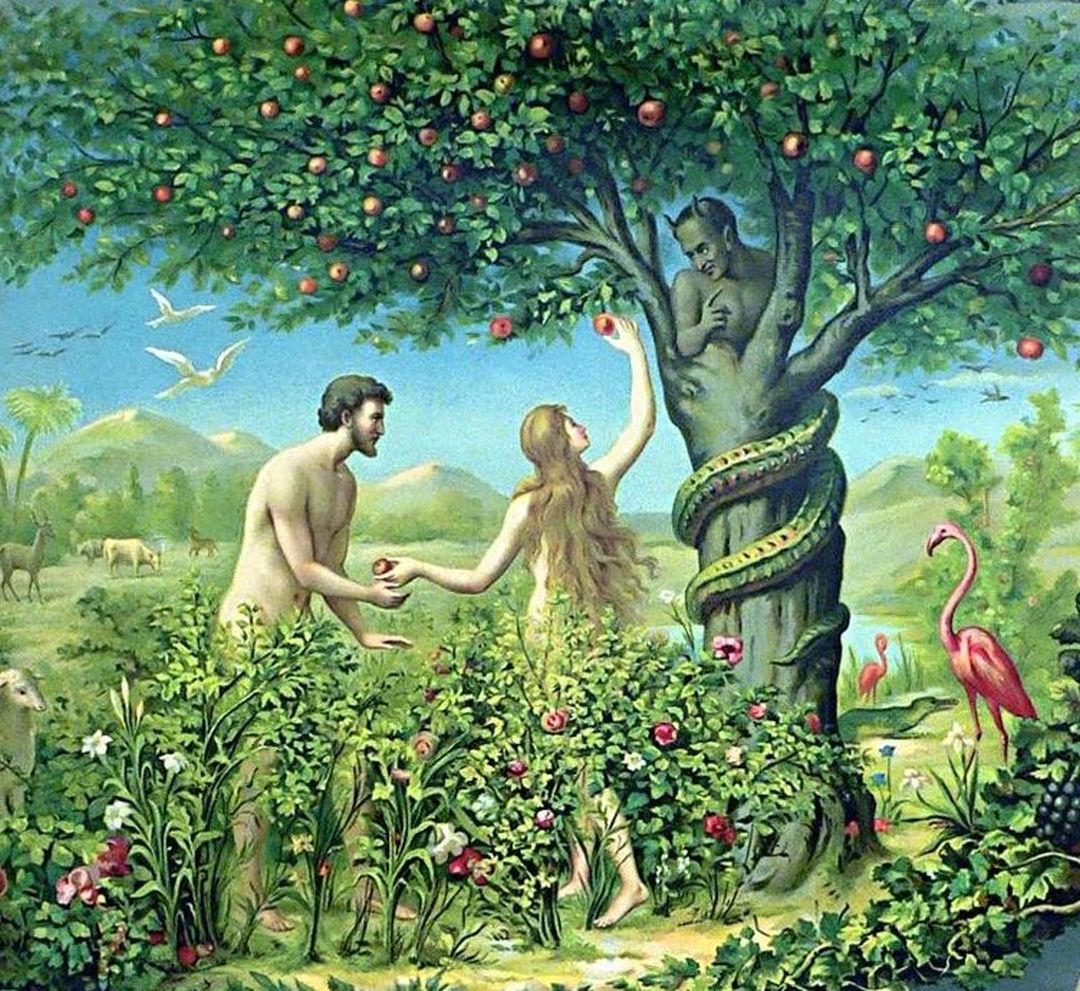
The tale of Adam and Eve and the garden of Eden has parallels with the Mesopotamians. This myth tells of an original paradise which is situated at the center of the world. Yahweh gives the commandment that all trees may be eaten except for one. However, the serpent succeeds in tempting Eve. God banishes the couple from paradise and condemns them to work for a living. Adams initiatory failure gave rise to the notion of “original sin” a central concept of Hebrew and Christian theologies and enforces the authority of Yahwistic monotheism. This first sin brought about the source of all evils that burden humanity. Eve gave birth to Cain a “smith” and Abel a “shepherd.” They gave their offerings and Yahweh accepted Abel’s over Cain’s. Angry, Cain killed Abel. Now Yahweh accursed Cain and drove him from the ground making him a wanderer of the earth. This myth reflects the simple and pure existence of nomadic herders and their resistance by dwellers in towns.2   

The descendants of Cain and Seth lived very long lifespans- 800 or 900 years in length. Similar ideas are found in Greece and India with the age of heroes. After a certain time, their lifespans were shortened to 120 years. The greatest event of this period was the flood. Noah built an arc on Yahweh’s instructions and built it with representatives of the animal species. Only Noah, his wife, and his sons were saved. In these myths, a flood is sent to destroy the world so that humanity can be recreated and restored. The ancestors of Noah decided to build a tower with “its top reaching heaven”- the last incorrect maneuver. Yahweh came down and concluded that there will be nothing to hard for them to do and confused their language and scattered them over the earth. The redactors of the torah preserved a mythology of the traditional type but reinvented to form a new religious vision. This was transformed into a “sacred history” to an extent previously unknown.3

The Period of the Patriarchs

The latter half of Genesis involve the adventures of Abraham and Isaac and constitutes the period of the patriarchs. This period has been criticized as being fictional but some have been inclined to accept the reality of this tradition. Whether they are donkey breeders or caravanners, this text shares certain analogies with the institutions of the near east. This half of Genesis introduces a new religious experience which will become the religious experience peculiar to Judaism and Christianity. God lays down a series of instructions and makes a series of promises. The religion of the patriarchs is the cult of the father. He binds himself to a group of men who he binds and protects. On entering Canaan, the patriarchs were confronted by El of whom they identified with him which says there may have been structural similarities between the two. The patriarchs offered sacrifices, built alters, and set up stones; they also offered blood sacrifices.4

One ritual that was important to the Israelites involves dividing a heifer, goat, or ram in two- which has analogies elsewhere. But the main sacrifice found in Genesis is the sacrifice of Isaac. God demanded that Abraham sacrifice his son Isaac as a burnt offering; but when he was preparing the ordeal, a ram was substituted for him. This has been criticized as an idealization of history since the Canaanites had a similar procedure; but in the context of Genesis, the writers were more concerned with faithful transmission of tradition than with idealization. This episode illustrates more forcefully than any other in the old teastemant the meaning of Abrahamic faith. Abraham did not prepare to sacrifice his son for some purpose but simply based on faith even though he did not know why. However, Abraham never doubted the sanctity, perfection, and omnipotence of his god.  Here we are presented with the dialectic of the “profane” being transmuted into the “sacred.”5

Moses and the Departure from Egypt

The beginnings of the religion of Israel are related to Genesis 46-50, Exodus, and the Book of Numbers. This includes the settling of Jacob in Egypt, the persecution launched by the pharaoh, the ordeals of Moses, his flight into the desert, the appearance of a “burning bush,” his mission laid out by God, the ten plagues sent by God, the departure of the Israelites and the crossing the sea, the theophany at mount Sinai, the forty years journeying in the desert, the conquest of Canaan under Joshua. Criticism has been made to separate the historical events in these sources from the mythological. certain events have been fitted with definitive dates but it has not been possible to recover the historicity of some of the most important events. There is no reason for doubting that Moses existed but many biographical details escape us. In any case, he follows the model of others in the age of heroes. The name Moses is Egyptian and perhaps of African descent.  It is possible that Moses knew of the reform of Akh-en-aton, The departure from Egypt seems to reflect a historical event but perhaps construed with mythological excrescences.6

While keeping sheep for his father-in-law, Moses crosses the desert and comes to a mountain. He sees a fire coming from a bush and hears a voice claiming to be God. He declares to be the god of Abraham but Moses senses he is in the presence of something unknown. He reveals his mode of being but does not reveal his person. All Hebrews today accept him to be the god of Abraham. However, this god is likely to be a pure Yahwism. On the other hand, there are some indications of Yahweh merging with the god of the father. What is involved may not be pure monotheism since the existence of other gods is not denied. However, the struggle against false gods begins. Yahweh is conceived as anthropomorphic. He displays qualities and faults that are specifically human but does not reflect the human situation. The contradictory nature of some of these attributes aligns him with some of the divinities from Hinduism, for example. After the departure from Egypt the theophany took place on the mountain of Sinai. Yahweh dictated the laws of the covenant and gave Moses the two tablets.  Nothing definite is known about this cult but may have shared similarities with preIslamic Arabs.7

The Religion of the Judges and Syncretism

The period from 1200 BC between when Moses entered Canaan and Saul was proclaimed king is known as the age of Judges. The judges were military leaders councillors and magistrates. Yahwism is accepted into other tribes and the Canaanite religion is absorbed into Yahwism. But also, during this time period, Yahwism evolves and changes. In consequence of the association Yahweh-El a number of Canaanite sanctuaries are consecrated to Yahweh. There was also a confusion between Yahweh and Baal.  Part of the Canaanite sacrificial system was adopted. Sanctuaries are built on Canaanite models including massebahs (standing stones) and asherahs (wooden posts symbolizing Asherah). Among the ritual objects, we find teraphim (images or masks). The cult was organized around sanctuaries containing priests and next to them diviners or seers. Israeli ecstatic prophecy was deeply rooted in Canaanite religion. Even during the conquest there was a Canaanite influence even though the prophets lay claim to the purest Yahwism.8

Mircea Eliade

Mircea Eliade: The Religion of the Egyptians

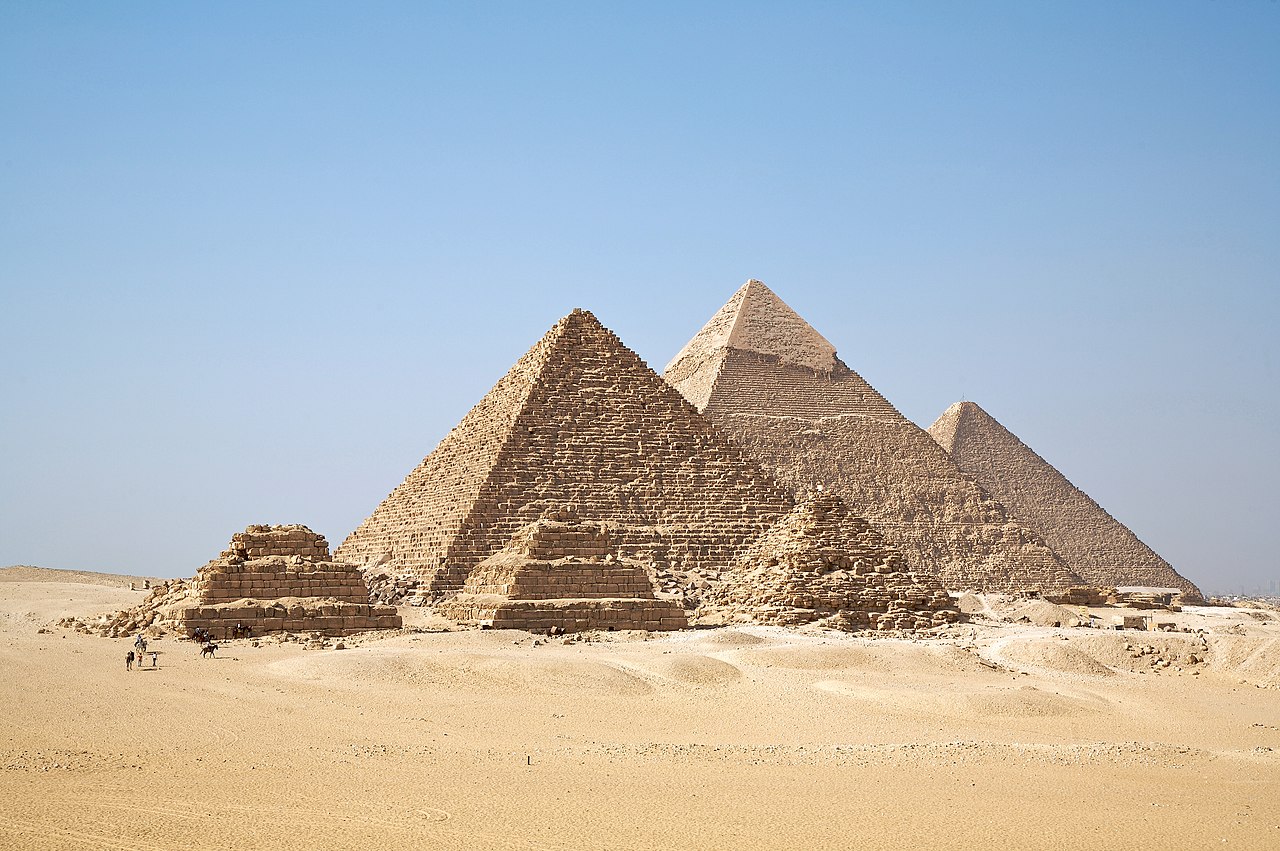
During the first two millennia, neolithic cultures developed, but without profound changes. However, from the fourth millennium, contacts with Sumeria brought about a mutation. Egypt developed new techniques including construction of brick, boat building, artistic motifs, and writing. Unlike Mesopotamia, vulnerable to invasion from every direction, Egypt was isolated and defended by deserts and seas. The Nile enabled the king to govern the country by a centralized administration. Thus, it came to be that the country was constituted by a rural mass ruled by an incarnate god- the pharaoh. The pharaohs were crowned and ruled for three thousand years. The pharaoh, incarnate god, established the new world- much higher and complex than the neolithic villages.  Since he was immortal, his death meant his translation to heaven.  The translation of one incarnate god to another insured the continuity of the cosmic order.1   

Cosmogonies

The Egyptians adopted several cosmogonic myths. Some of the themes belong to the most archaic such as the emergence of a mound, lotus, or egg above the primordial waters. This emergence signifies the beginning of not only earth, but life, light, and consciousness. A certain sun temple at Heliopolis was identified with the primordial hill. Its lake was where the lotus emerged. Other versions recall the primordial egg which contained the bird of light.  Or of the lotus that created the sun child or of the serpent who was the image of Atum. Others speak of a city in which Re created the first divine couple. In short, the Egyptian theogony and cosmogony involve creation by the power of thought and the word of a supreme god.  We have here the highest expression of Egyptian metaphysical speculation. The myths involving the origin of man involve men being born from the tears of the solar god Re.2 

The Role of The Pharoah and Life After Death

Re is the first king, and he transmits this function to his son and successor- the pharaoh.  indeed, the pharaohs actions are said to be in line with those of the god Re. Res’s creation is said to put order in place of chaos and these same terms are applied to the pharaoh. The pharaoh is the incarnation of maat– which is translated as truth, but more appropriately designates good order, right, and justice. As an incarnation of maat, the pharaoh constitutes a paradigmatic example to all his subjects. The work of the pharaoh ensures the continuity of life. The pharaoh’s political activity repeats Re’s exploits; when the pharaoh wins in combat, it reproduces Re’s triumph. The cult was celebrated by the pharaoh, but was relegated to the priests of the different temples. The daily cult was addressed to the statue of a god in the temple. The priest performed a ritual purification, and then purified the statue.3 

The Pyramid Texts reveal conceptions regarding the postmortem destiny of the pharaoh. The formulas state that the pharaoh cannot die and that his body will not suffer decomposition. Other formulas refer to the pharaohs celestial journey. He flies away in the form of a bird. Sometimes the king ascends to the sky by a ladder. Before arriving at the field of offerings, the pharaoh undergoes certain ordeals. The entrance is defended by a lake with winding shores and a ferryman. The pharaoh must then accomplish ritual purifications. Arrived in the afterlife, the pharaoh is received by the sun god and continues his earthly existence. He is seated on the throne and is surrounded by a number of his subjects.  The Pyramid Texts are written in a poetry of exceptional quality and stress the privileged role of the pharaoh.4

Osiris and Developments in the Afterlife

Osiris was a legendary king who was murdered by his brother Seth. His wife, Isis, becomes pregnant with the dead Osiris. She burry his body and takes refuge in Delta and gives birth to Horus in papyrus thickets.  Grown up, Horus revolts against his uncle. Seth removes one of his eyes but combat continues and Horus wins. He recovers the eye and gives it to Osiris who had returned to life. But Seth cannot be finally destroyed. Horus is then crowned king- his fathers legitimate successor. In the story, Osiris is always shown as powerless And passive. However, Osiris is reanimated as a vital energy. He will insure vegetable fertility and reproduction. Osiris, the murdered king, guarantees the prosperity of the kingdom ruled by his son, Horus. We can see the relation between re and the pair Osiris-Horus. The sun and tombs constituted two sources of sacrality. The pharaoh was re but was also horus. This cult was already popular in the old kingdom but became more popular in the classic period of Egyptian civilization.5

In 2200 BC, Egypt was shaken by civil war, the state collapsed, and anarchy entered the country. The period of anarchy was known as the First Intermediate period.  It weas during this period that the “democratization” of the afterlife took place. People copied the pyramid texts that had been reserved exclusively for pharaohs and the pharaoh was accused of weakness and immorality. If the pharaoh no longer behaves like an incarnate god, things become doubtful including the meaning of life and the post existence of the soul. Men destroyed tombs, threw out the bodies, and carried off the stones. The downfall of traditional institutions brought about an agnosticism and a pessimism and a religious devalorization of death. Several new texts take up new views of the afterlife during this time. The compositions of the Intermediate Period continued to be copied long into the middle kingdom.6

Solarization and the Unsuccessful Reform

The middle kingdom experienced a period of economic expansion. During this time, Amon merged with Re to become Amon-Re- being identified with the sun. Because of this “solarization,” Amon became the universal god- overriding that of the Old and Middle Kingdoms. This was the result of the invasion by the Hyksos. The Hyksos imparted Syrian Gods- Baal and Teshub- whom they identified with Seth. A century later, the war of liberation began and the empire was reinstantiated. Thus began the decline of traditional Egyptian culture and an opening up to a cosmopolitan culture and foreign divinities. The solarization of Amon facilitated religious syncretism and the restoration of the solar god to the supreme rank. The worship of the solar god as the supreme god gave way to a religious unity. This solar theology was involved in political tensions and a struggle of power between the high priests and pharaoh.7

In 1300 B.C., Aton, the solar disk, was advanced as the supreme divinity by Amen-hotep to free himself from the high priest. The pharaoh removed the high priest of Amon’s powers and then changed his name to Akh-en-Aton. He abandoned the old capital and built a new capital just north where he built palaces and temples of Aton. The pharaoh made a number of innovations. He removed Amon and all other gods in favor of Aton, the supreme god. There has been discussion of the “monotheistic” nature of the reform. After the pharaoh died, his successor resumed relations with the high priest of Amon and returned to Thebes. The traces of the Atonist reform were mostly gone. This- the end of the eighteenth dynasty- marks the end of Egyptian creativity. Aton was worshiped long before the Atonist reform.8

Identification and the Book of the Dead

In the new empire, emphasis was placed on the complementary nature of opposed gods. Here Re is identified with Osiris. these two gods merge together in the dead pharaoh. Numerous texts emphasize the twofold aspect of Re: solar and Osirian. Re and Osiris are complimentary forms of a deity. These associations and identifications of gods were familiar to Egyptians from early antiquity. This identification reveals the complementarity between life and death. From the eighteenth dynasty, Osiris becomes the judge of the dead. A “trial” and a “weighing of the heart” takes place in the presence of Osiris. the Book of the Dead is the supreme guide to the soul’s journey after death. These books intend to facilitate the soul’s journey and ensure success in these ordeals- describing one’s descent through a subterranean world filled with obstacles. One of the most important chapters is devoted to the judgement of the soul in the great hall of two Maats. The deceased heart is suspended on one pan of a scale and the other is a feather or eye. The deceased must recite a prayer and make a declaration of innocence. This meditation on the mystery of death marks the last Egyptian religious synthesis. The twilight of Egyptian civilization will be dominated by magical beliefs and practices.9

Mircea Eliade

Mircea Eliade: The Magico-Religious Behavior of the Paleanthropians

Add picture

In his book A History of Religious Ideas Volume 1, Mircea Eliade gives his description of the religion of the paleanthropians during the last ice age. The development of religious behavior is associated with the “hominization” of man- that is his development into a vertical posture. Equally important is the development of tools and the domestication of fire. It is true that animals use tools, but the paleanthropians produced tools to make tools. Additionally, their tools are much more complex. The imagination of the paleanthropians is presumed not to have differed much from that found among contemporaries. But it is the development of a hunting civilization that created a unique set of relationships between the hunter and the animal.1  

Weapons and Burials

In the main days of evolutionism, when similarities to primates had been shown, it was believed that the paleanthropians were nonreligious. However, their works demonstrate a religious intelligence. It is now generally agreed that the paleanthropians had a religion, but it is difficult to determine to what extent. The historical documents are “opaque” and not very various. In some cases, there is certainty of a religious intention, but the majority of the early documents reveal only utilitarian value. It can be inferred that tools contained a sacrality and inspired a mythology. One can compare this to the primitive hunters of today. The magico-religious value of a weapon can still be found among primitive Europeans. It is above all the projectile weapon which gave rise to myths- for example, lances that pierce the sky or arrows that transfix demons. Moreover, it also seems possible that there were animalistic beliefs among the paleanthropians. Contemporary hunting people, for example, regard animals as being endowed with supernatural powers, that the souls of the dead can enter animals, and that there are special relationships between people and animals. This can be interpolated to a certain extent onto the paleanthropians due to the remains of offering of skulls and long bones.2

It seems that belief in survival after death is confirmed by burials. The paleanthropians would have buried the dead in order to guarantee proper survival into the next world. Additionally, the paleanthropians used red ocher as a symbol of life which is documented among primitive hunters of our time. This survival could be purely spiritual, i.e. simply a postexistence of the soul. However, there are cases in which the corpses are bent which could represent a precaution against the possible return of the deceased or simply hope of rebirth. Among the best examples of burials with magico-religious signification, we mention the one near Teshik Tash in Uzbekistan, the one at Chapelle-aux-saints in Correze and the one in Farassie in Dordogne. During the upper paleolithic, the practice of burial appears to have become more general. Corpses are buried in which a certain number of objects intended for personal adornment (shells, pendants, necklaces) have been found. The prescence of personal objects implies the belief that the deceased will continue his particular activity in the other world.  To sum up, the burials confirm belief in survival and furnish some additional details.3

Bone Deposits and Cave Paintings

Deposits of bones of bears- discovered in the alps- are among the most numerous and debated documents concerning the religious behavior of the last interglacial period. These regard deposits of bones of cave bears discovered in niches in caves such as that in Styria in which bear skulls are deposited in cave walls 1.20 meters above the cave floor. These deposits appear to be intentional, so scholars have attempted to decipher their meaning. Some scholars have compared them to offerings made by certain arctic peoples to a supreme being. Several scholars accept this and believe this is proof that the primitive hunters of the last interglacial period believed in a lord of wild beasts. These interpretations were questioned by one scholar who believes these deposits result by chance by bears scratching among the bones. This critique appears to be convincing, but the bones are found in a number of caves all one meter above the ground. In any case, the interpretation of deposits as offering to a supreme being has been discarded. What seems probable is that these deposits are an expression of a magico-religious intentionality.  It has been proposed that these deposits have been made in hope that the animals will be reborn in the flesh.4

Some of the most important documents of the paleolithic are cave paintings, which are found mostly between the Urals and the Atlantic. Most of the paintings are confined to Spain, France, and southern Italy with the exception of the painted cave found in the Urals. These paintings are very hard to reach- being necessary to travel for hundreds of meters and journey for several hours. Pictures of bears, lions, and other wild animals riddled with arrows has been interpreted as proof of hunting magic. This seems plausible, but these works could just as well be reactualizations of a primordial hunt. One celebrity painting is the “great magician.”  An early sketch shows a figure with the face of an owl, the ears of a wolf, and the beard of a chamois, the arms ending in bear paws, and a horse’s tail, but the limbs of a human. In recent photographs, the picture is less impressive. This figure can be interpreted as a lord of wild beasts. Another painting subject to controversy is a picture of a bison thrusting its horns toward a man who is apparently dead and lies on the ground; near the man is a perched bird. This scene has been interpreted as a hunting accident. However, it has also been proposed as representing a shamanic séance.  This has been disputed, but the presence of a certain type of shamanism during the paleolithic seems certain.5

Feminine Statuettes

Feminine representations from the last ice age have been discovered from southwestern France to Siberia and in Italy. The statuettes range from 5 to 25 centimeters in height and are carved in stone, bone, and ivory. They have been called “Venuses” although this is arguably unjustifiable. They come from places of habituation making them related to domestic religion. The ones discovered at Mezine are strongly stylized with geometric elements. It is impossible to determine the religious function of the figurines, however they presumably represent feminine sacrality. One scholar has illuminated the central function of polarities in Paleolithic art, i.e., stone statuettes and slabs and rock paintings. This scholar has concluded that the figures and signs are interchangeable and there is a pairing of male/female values. Leroi-Gourhan’s theory has been criticized in that there is an inconsistency in his reading of figures and signs. However, his contribution is important: he has shown the complementarity of the signs “male” and “female.”6

Conculsion

Recent discoveries have shown the origin of man to be earlier than known. One scholar has shown the existence in the last ice age of a temporal notation based on the moon. The lunar cycle was used for practical purposes. This means the paleolithics made use of periodical ceremonies and mythologies. Pictures engraved on objects or painted on cave walls constituted a system of signs and symbols which refer to certain stories related to the seasons and game. From these images can be extrapolated magico-religious behavior. We can reconstruct to a certain extent the religion of the last ice age by considering the behavior of primitive hunters today and hunting communities today constitute a sort of living fossil of the last ice age. A certain ecstasy of the shamanic type seems to have been known in the last ice age; the “circular dance” was probably known in the last ice age. The paleolithics probably knew multiple myths, i.e., cosmogonic myths and myths of origin; there were probably myths on the origin of fire and relations between the hunter and game. To conclude, the religious formation of the paleolithic already displayed a complexity.7

Mircea Eliade

Mircea Eliade: Zoroastrianism

In his book A History of Religious Ideas Volume 1, Mircea Eliade gives his description of the Iranian religion of Zoroastrianism

Iranian religion is full of surprises and disappointments but contributed to the religious formation of the West. If linear time (as opposed to cyclical time) was already known to the Hebrews, a number of other religious ideas were discovered, revised, or systematized in Iran. The articulation of some dualistic type of system; the idea of a savior; the elaboration of an eschatology proclaiming universal salvation; the doctrine of the resurrection of bodies, for example. However, the nonspecialist will be thrown off by the sources.  Most of the Avesta has been lost; only the gathas are enticing to the nonspecialist. The rest of the Avesta is characterized by dryness. It is probably obvious that Zarathustra was a historical personage who turned into a paradigmatic model. Zarathustra’s activity should be placed somewhere between 1000 and 600 B.C. Zarathustra addressed his message to sedentary herders whom he attacked in the name of Ahura Mazda. It is possible to decipher in the gathas a few indications of Zarathustra’s missionary activity- he preached to a group of friends called the “poor” and asks them to drive away the evil spirit.1

The above description falls short of constituting a full biography. Certain scholars have argued that these scattered references do not necessarily represent historical realities. However, the historicity of Zarathustra appears from concrete references to real persons and events and the authentic nature of the gathas. It would be difficult to justify the presence of so many concrete details if he did not represent a real historical person. The texts dwell on Zarathustra’s celestial preexistence. He was born at the midpoint of history and was enveloped in radiating light. The village he was born in showed signs of prerecognition of his birth. He came into the world laughing. Zarathustra’s ordeals follow the example of a divinized savior. Zarathustra’s ordeals contain the repetitions of the motif of radiating light.2

Some scholars have argued that Zarathustra’s religious experience can be compared to that of the central Asian shamans. Perhaps he used shamanic techniques in order to obtain ecstasy. For example, in the Avesta, Zarathustra enters trances and it is probable that song played a role in the cult. Shamanic elements can be found in the scenario of the Cinvat bridge. However, the allusions to specifically shamanic techniques can be found only in the late texts and reflect a foreign influence and the ecstasies found in the gathas and elsewhere in the Avesta do not show a shamanic structure. Thus, shamanism does not play a central role in Mazdeism.3  

Main Doctrine

Zoroastrianism follows the revelation given to Zarathustra directly by Ahura Mazda. Man is free to choose between good and evil. Ahura Mazda holds the first place and is good and holy. Ahura Mazda is succeeded by two twin spirits: Spenta Mainyu (the beneficent spirit) and Angra Mainyu (the destroying spirit). Of the twin spirits, one is holy and the other is wicked, and they differ by choice rather than by nature. Zarathustra’s theology is not strictly speaking dualistic since Ahura Mazda is not confronted by an anti-god. Ahura Mazda is sometimes said to be identical to the holy spirit and is not responsible for evil since he did not father Angra Mainyu. This theology has as its prehistory the mythico-ritual systems of bipartitions and polarities and alternations and dualities. The primordial separation between good and evil is just the consequence of a choice, inaugurated by Ahura Mazda and repeated by the twin spirits. Despite his reform, Zarathustra accepted many original Iranian beliefs. For example, he takes up the original belief of the journey of the dead but stresses judgement: the just will be admitted into paradise, while the sinners will remain in the house of evil.4

The world is inhabited by two types of angelic beings: the asuras and the daevas. Since the gods of original Iranian religion- the daevas– chose deceit, Zarathustra demands his disciples no longer worship them. But Zarathustra does not doubt that the daevas will be annihilated and the just will triumph over the wicked. Thus, Zarathustra calls for the “transfiguration” of the world. The wicked will be punished and the world will be renewed in an eschatological ordeal. Mythico-ritual scenarios for the renewal of the world were known in the past to the Indo-Iranian’s and were usually celebrated at new year’s festivals but a new interpretation is given by Zarathustra who announces a definitive transfiguration effective once and for all. Being a private religion, Mazdeism developed a ritual dimension. A fire sacrifice is performed to offer an ecstatic experience and contribute to the restoration and transfiguration of the world. Additionally, the priest imbibes the drink haoma during the ceremony. It is difficult to determine if this cult was completely formulated in Zarathustra’s time. But it was certainly to be found with the Indo-Iranians in the sacrifice of the Vedas.5

Eschatological Sacrifice, the Souls Journey after Death, and the Resurrection of the Body

As with other Indo-Iranians, the concept of fire plays a capital role. But in Mazdeism, the function of sacred fires took on a meaning beyond previous religions. The Mazdeans take supreme importance in building a temple, furnishing it, and appointing priests to it. The sacrifice is designed to separate from those involved their spiritual essence from their corporeal nature. Additionally, the fire sacrifice contributes to the regeneration of the world and reinforces the eschatological drama of the struggle against the daevas and the waiting and preparation for the renewal of the world. The sacrifice given by the priest mimics the sacrifice by which Saoshyant will effect the renovation. When the eschatological drama occurs, the dead will return to life and Saoshyant will affect the final restoration.6

In certain hymns we find a description of the soul’s journey after death: the soul remains close to the body for three days. At the end of the third, he comes across his daena, a copy of oneself in female form- fifteen years old with upward pointing breasts, vigorous and of beautiful appearance. The daena is an archetypized version of one’s self but presents itself under a female form while preserving one’s concrete appearance; it is the result of his religious activity on earth. One then travels to the spheres of earth moon and sun and enters paradise. In other hymns, Zarathustra speaks of the Cinvat Bridge: the daena arrives with its dogs and leads the soul to the bridge and over the cosmic mountain. The soul is judged on this bridge- widening under the feet of the just and turning into razors for the unjust.7

Another eschatological myth common to Indo-Iranians is centered around Yima. A winter three years long destroys humanity and Yima is asked to build an enclosure to save the best of humans.  This is an archaic eschatology that Eliade does not believe corresponds to the Zoroastrian vision. The eschatological idea of the resurrection of bodies is introduced into Zoroastrianism. In this connection, certain hymns speak of the “resurrection of the dead” accompanied by the arrival of the “living one;” that is the Saoshyant. This resurrection is accompanied by the final Renovation, which includes the universal judgement. The new world invoked in the renovation will be a new creation that will no longer be accompanied by the attacks of the demons. After Saoshyant performs his sacrifice, the universal renovation will occur. The resurrection of bodies represents a daring development in Zarathustra’s eschatological vision.8

History and Development

The opposition between the asuras and the deavas was already taking shape in the Indo-Iranian period since Vedic India opposed the daevas to the asuras. However, in Iran, the the relation between the asuras and the daevas went in an inverse direction; in India the daevas are the true gods and the asuras are made evil; in Iran the daevas are demonized. The supreme position of Ahura Mazda was not instantiated by Zarathustra; Ahura Mazda was worshiped in Iran before Zarathustra. It can be argued that the Achaemenids worshiped Ahura Mazda without adopting any of the more characteristic features of Zoroastrianism. However, if the Achaemenids were not Zoroastrians, their theology was similar to that of the gathas– it contains abstract expression and is filled with moralistic considerations.9

Darius advocated the new year festival, which when enacted was designed to renew the world by symbolic repetition of the cosmogony.  This cosmogony involved the familiar scenario the victorious combat of a god against a monster or dragon. The Iranian king was thus responsible for the preservation and regeneration of the world. As it spread westward, the Mazdeism of the Achaemenids did not remain unchanged. A subject of controversy is the relation of the Magi to Zoroastrianism. They have been regarded either as a tribe of sorcerers and necromancers responsible for the degradation of Zoroastrianism or as the true disciples of Zarathustra. In any case, the Magi ended up adopting a number of Zoroastrian customs and rites.10 

In the Yasna with Seven Chapters, haoma acquires an important place in Zoroastrianism. Many interpret this exhalation of hoama as a syncretism between the prophet’s message and the traditional religion. However, Zarathustra accepted the cult of haoma, and this represents rather an elevation of the values of the religion.  It should be noted that the hoama right is extolled in Mazdeism. Another development in Mazdeism is the Mihr Yast– a long hymn in honor of Mithra. Here, Mithra is elevated to the position of Ahura Mazda and the two gods are even united. We can decipher from the hymn moments of a theogony- a series of gestures by Ahura Mazda directed toward the advancement of Mithra. He is a god of contracts, a god of war, is all seeing, omniscient, and a provider of the fields.11

Mircea Eliade
Greek Mythology vs Christian Mythology

There are many types of myths. However, some myths such as the Christian myth are easily accepted as fact, while other later myths such as king author, Beowulf, and finally culminating in Tolkien are more easily seen to be fiction. Where to place the Greek myths? Myths can be real, but it only makes sense that over time, a group of people would add made up stories on top of it.

Greek Mythology

Along Eliade lines, the mythology of the Hittites and Canaanites is rooted in crop cycles- making their mythology fact, or at least potentially fact. What happened is over the course of years the cultures would observe variations in crop cycle patterns and other phenomenon and they would infer from this the interference of gods from an outside source. However, once you get to Greek mythology the myths become much more elaborate and deal with historical phenomenon and so forth. What in crop cycles could possibly be meant by the battle with the typhon or the Iliad, for example? These stories are more elaborate and cannot be easily related to crop cycles. Thus, it can be seen that the Greeks really made the first steps in the direction of fiction. Greek mythology is thus really a very interesting mix of fact and fiction and blurs the line between fact and fiction. Some of it may be true and may not be true. Some of the myths can be seen as rooted in crop cycles and other parts such as the dialogs of Zeus and his wife, the Iliad, and the battle with the typhon seems to have nothing to do with crop cycles. Perhaps they were recalling the past and doing so in a correct or incorrect manner.

Yuga periods and the scientific method

On the other hand, Christian mythology seems to be more rooted in fact. The events of the bible have more likelihood to be real historical phenomenon. Using the scientific method introduced by the Italian humanists, the bones of the Titans, for example, have never been found. Nothing in the Bible deals with bones of giants, which have never been found. The events involving esoteric phenomenon have been documented and the events of Moses and Abraham could plausibly have happened. In addition, the Gods of the Romans are more centered in processes as well. This makes the Italians and the Greeks two very different types of people, one being more rooted in fact, and the other being more rooted in fiction. Both are southern European but one is more rooted in fact and the other is more rooted in fiction.

The Greeks have a way out in that the Greek philosophers made the suggestion that the titans aren’t actually made of bones they are made of water and fire and so forth, so the previous yuga periods as documented by the Greeks could really have happened as Evola suggests. But along Eliade lines as initiated by the scientific method instantiated by the Italian humanists, the previous yuga periods probably were milder than documented in Greek texts.

Mircea Eliade

Mircea Eliade: The Religion of the Hittites and Canaanites

The Hittites

In his book A History of Religious Ideas volume 1, Mircea Eliade gives his account of the religions of the Hittites and the Canaanites. The Hittites were a group of people that existed in Anatolia (modern day Turkey) from the seventh millennium BC to the beginning of the AD period. Their divinities were believed to have great force and the pantheon was very large. The divinities were believed to live in the temples. The pantheon was believed to be a family with the leaders being the storm God and his wife. Black magic was forbidden in Anatolia, but white magic was allowed.1

Two Myths

One of the Hittite myths is the myth of the god who disappears. This protagonist is Telepinus but other texts make the protagonist the storm god. Nobody knows why the god disappears but bad things happen once this occurs. Fires go out, grain stops growing, animals and men stop having relations. A bee is sent to find him and stings him to wake him up. Telepinus then becomes furious and sends calamities on the land. Finally, Telepinus is relieved of his anger and things resume to normal. The myth of Telepinus may have roots in vegetation practices. But the fact that the myth is often assigned to the storm god and others suggests that this refers to the mystery of creation.2 Another myth is the myth of the battle between the storm god and the dragon. In the first version, the storm god is defeated by the dragon to help him, the goddess Inaras invites the dragon to dinner. She asks the help of a mortal who consented on condition that she sleep with him. The Dragon eats so much that he can’t move and the mortal binds him with a rope. The Storm God enters and kills the Dragon. The fight between a god and a dragon can be found in later mythico-ritual themes. For example, the fight between Zeus and the typhon. This myth was ritually recited during the new years festival.3

The Hurrito-Hittite Theogony

Of particular interest is the Hurrito-Hittite theogony– that is, the story of the creation of the gods. Alalu was king and anu was subservient to him. Nine years passed and kumarbi attacked anu. Anu flew into the sky and kumarbi threw him to the ground and bit off his loins. Part of anus virility entered anus body hids body and kumarbi became pregnant with three gods. Anu has children with teshub and they dethrone kumarbi. In order to take back what teshub had taken, kumarbi impregnates a rock with his semen. This creates ulikummi- a stone giant ullikummi threatens to destroy the gods and so the go to ea. The gods then seek an old knife from the storehouses and saw off the stone giants feet. Finally, teshub overthrows the kumarbi.4

After the first translations of the hurratian/Hittite text, analogies were drawn between it and Greek mythology. In Greek mythology, the first god elioun corresponds to alalu Uranus corresponds to anu and kronos corresponds to kumarbi. Until Ugaritic literature was found there was doubt concerning trhe genuineness of this tradition. But the succession of divine generations is documented in canaaniter mythology.5

The Canaanites

The Canaanites were a semitic speaking group of people from modern day Syria that appeared shortly before 3000 BC. They were urban and practiced agriculture, but absorbed the cultures of herders and seminomadic warriors, including the Amorites. Before 1929, most of the information regarding the Canaanites came from the Old Testament and fragments from ancient Greek authors.  However, the Old Testament contains polemics against paganism and the work of the Greek authors is too fragmentary. After 1929, a large number of texts have been discovered in the port city of Ugarit in Syria. These texts come from the twelfth and fourteenth centuries, but contain conceptions that are much earlier.6

Conflict Between El and Baal

The head of the Canaanite pantheon is El. He is a personal god among the West Semites. He is powerful, holy, merciful, and very wise. He has two wives: Asherah, and Anath. All of the gods come from El and Asherah except for Baal. However, despite these titles given to El, he is described in some other texts as indecisive, weak, and resigned. Baal steals his two wives and El is replaced by the more dynamic, younger Baal. Baal and his support attack El by surprise in his palace on Mount Sapan and tie him up and wound him- castrating him. El is forced to take refuge at the bottom of the world.7 El first summons Yam- the seven-headed dragon- for help- who blesses yam and declares him his successor. Yam and Baal engage in combat. Baal equips two magical cudgels which have the ability to propel themselves from the user’s hands like arrows. The first arrow hits Yam on the shoulder but Yam is alright; the second hits him on the forehead and Yam is killed.8

Anath decides to throws a banquet in Baals honor in order to celebrate his victory over the dragon. Soon after Anath begins a homicidal rampage and kills all of the banquet’s hosts. She then relishes in the blood of her victims. This episode is significant and parallels can be found in Egypt and India. This myth probably has its roots in agriculture. At this point, Baal realizes that he is a god without a palace and must build one in order to secure his place as the new head god. However, he realizes he needs El’s approval for this and sends Anath over to beg for his recommendation. El consents and Baal builds his palace using the blacksmith who gave him his magical cudgels. This building of the palace marks Baal’s advancement to the supreme rank.9

Baal is getting out of control, so El next summons Mot- “death.” Mot is of particular interest because he represents the only known near Eastern personification of death. Baal descends into the underworld. It is unclear whether Mot kills him or whether he succumbs to Mot’s terrifying presence. Interestingly, Baal the head of the new pantheon goes to the underworld and perishes like vegetation gods. This causes the structure of the universe to receive its present form. El is immediately saddened by his deed. El tells Asherah to name another God as Baal’s replacement. Meanwhile, Anath prepares to burry Baal’s corpse. Once again Yam returns to life and seven years later, Mot again enlivens, and even Baal returns.10

Analysis

Eliade believes that it is possible that Mot’s victory represents the cycle of seven dry years. This particular myth seems to represent the more or less periodical disappearance and reappearance of vegetable life governed by the gods. It is probable that the myth of the combat between yam and Baal was recited during a new year festival and the myth of the Baal-mot conflict at the harvest season. But no known texts mention these facts. This religious vision was not exclusively Canaanite.11

Elements of the myth of the Canaanites can be found the Old Testament. Echoes of the Baal-Mot conflict can be seen in the Old Testament as well as analogues of certain rituals. The priests mentioned in the texts have the same name as in Hebrew. when the Israelites entered Canaan, they were met with a type of religion that was counter to Judaism. Baal represented a personality that did not share the same attributes as Yahweh. However, Canaanite religious elements were absorbed by the Israelites. Thus a conflict between Baal and Yahweh ensued with Yahweh seeming to resemble El despite its riddance of his dismembered form. Ultimately Yawhwinism prevailed.12    

Mircea Eliade

Mircea Eliade

The Magico-Religious Behavior of the Paleanthropians, The Religion of the Egyptians, The Religion of the Hittites and the Canaanites, The Religion of the Israelites, Zoroastrianism, Mircea Eliade on Myth and Reality, Greek Mythology vs Chrisitan Mythology, Bibliography: Eliade, Mircea. Trans W. Trask. A History of Religious Ideas Volume 1; University of Chicago Press, 1978. Eliade, Mircea. Trans W. Task. Myth and Reality; Harpers and Row, 1998 o.p. 1963.