First Experiences in Pixelated Subjective Idealism

Sit in the back of a room. Sit in the very back corner of the room so you can see most of the entire room with your vision. Begin to look at the rooms occupants- perhaps there are people sitting at desks and perhaps there are people walking around. But now look at one of the occupants in the room. Concentrate on the occupant and begin to notice it. Perhaps one of the occupants drops his pencil. The question now becomes- is the pencil causing the sound in the ear or is the ear causing the pencils sound? The sound actually exits the persons ear and causes the pencils sound. Not just the sound of the pencil but the pencil itself is being caused by the eye. This is different from Fichte since each individual pixel is being simultaneously created by the mind, i.e. independently. Don’t care about what happens behind you because what happens behind you really happens in front of you. This can lead to some interesting results such as that the objects in your vision being created in your vision and diverting into the light. This idea can lead to some interesting results such as multiverse, reality of hallucination, mind body problem, time analysis, life after death, and the perennial structure of religion.

Defense Against Beiser’s Transcendent Interpretation of Schelling

In Frederick Beiser’s book German Idealism: the Struggle Against Subjectivism, he gives a transcendent interpretation of Schelling’s philosophy. Beiser produced a mammoth document that contains good material, but which has original insights that are a bit convoluted. Beiser was in his 60s when he wrote the book and this goes to show that with age your rational capabilities go downhill. Beiser wrote a very good book: on German philosophy between Kant and Fichte when he was a decade younger and it turned out very good. Beiser’s main insight is that German idealism was a struggle against subjectivism- which he believes he has demonstrated with recent documentation that has surfaced. However, this can be diverted if one places more of an emphasis on the structure of what the original philosophers are saying and placing less of an emphasis on side declarations made by the author. I agree with Beiser’s interpretation of Kant and the Romantics, but disagree with his interpretation of Fichte and Schelling.

Beiser claims that shelling is advancing past Fichte with his absolute ego, and making a mystical claim which has been made many times before. However, I believe Schelling is continuing under Fichte’s transcendental framework and once you look at the structure of what he is saying, a more neutral position is reached. Once you do that everything falls back into place and all of the developments that took place after German idealism in the early nineteen hundreds become bona fide developments. In particular Giovanni Gentile’s idealism was the definitive development in the metaphysical foundation of fascism and was not simply a reiteration of Schelling and certainly not Neoplatonism. I am not sure whether Gentile was continuing within a transcendental framework or leaping into the transcendent, but it was a bona fide development past what was reached in German idealism.

Defense against the transcendent interpretation of Schelling

It seems as though Schelling is hinting at a transcendent consciousness with his absolute ego given the wording he uses. However, once you look at the structure of what Schelling is actually saying, it becomes clear that he is describing a purely immanent consciousness.

For example, Beiser mentions how Schelling regards the absolute as not being found anymore inside oneself than outside oneself.1 This is Schelling hinting at his later Naturalphilosophie and is not representative of a transcendent ego. Schelling writes that the ego contains a being that precedes all thinking and representing.2 This is not hinting at a transcendent consciousness but can designate the cause of something purely immanent. Indeed, Beiser then says that Schelling’s ego begins to resemble mere existence- something purely immanent. Beiser claims that Schelling gives the absolute ego a constitutive and not a regulative status.3 According to my interpretation, Fichte gives the ego a constitutive status and Schelling is simply reiterating Fichte. This simply means he is making a Bona fide metaphysical claim that the world is contained in the mind and is not suggesting a transcendent consciousness.

Further, Schelling claims that the ego “exists absolutely, containing all being or reality within itself.” It is “infinite, the immanent cause of all things”, and has “absolute power and infinite attributes.”4 Again,  he is saying immanent here and the rest of his language is completely explainable by an immanent consciousness that holds the world in its place through other beings without relying on a transcendent consciousness. This is again reiterating Fichte. Indeed, Beiser then alludes to the idea that Schelling is probably describing something purely imminent. Schelling says that the I is more that merely the formal unity of our representations.5 The I is the cause of our experience in the Fichtean sense but not transcendent consciousness. He says we cannot conceive or describe the I6 suggesting something mystical but the Beiser says how this simply means that that is because it is the condition under which we apply concepts. We know that the I exists because it is the referent of the self-confirming proposition I am.7 This is simply intellectual intuition in the Fichtean sense suggesting free will.

Further Considerations

All of this shows that Schelling was simply reiterating Fichte’s ego in his absolute ego and the bona fide departure from Fichte was not made until Schelling made his Naturalphilsophie. There, Schelling is truly departing from Fichte where he places the source in nature as opposed to the subject and creates a metaphysical biological idealistic approach to the philosophy of nature.

Even if Schelling did posit a transcendent absolute ego, it can be argued that Schelling’s absolute ego still does not have the same robustness as Gentile’s actual idealism for a foundation for fascism. The absolute ego places the focus purely on the subject, while the actual idealism accounts for all of the minds within a totality. Thus, it probably would be naive to skip Gentile’s idealism and Gentile’s idealism is probably the bona fide metaphysical development in the foundation of fascism. However, Gentile was working off of German idealism in order to come up with his work so credit should be placed where credit is due. But Gentile, Croce, Evola, and the Italian idealists were intimately connected with the socialist and fascist scene of their time and probably should not be overlooked.

German Idealism; British and Continental Idealism

Intellectual Biography of Julius Evola

 Early Experiences

    Keeping in the spirit of his philosophy, Evola does not list autobiographical details from his youth. Perhaps there was some abuse in the family and perhaps there was not. Any ways, Evola was born into a Catholic family. However, from an early age, Evola found himself with a predisposition for and an interest in “transcendence.” The other thing was Evola initially found himself attracted to mathematics in his youth.

     In Evola’s early twenties he found himself attracted to the philosophical movement in Italy known as “futurism.” The futurists lead themselves to a rejection of both all things academic and all things Bourgeoise. Its main goal was progress and action. The futurists enjoyed things such as cars, airplanes, and youth. Meanwhile Evola was undergoing studies at an academic college as an electrical engineer. But Evola- true to the spirit of his philosophy- dropped out one year before the completion of his phd. He says there are two types of people: those that have degrees and those that do not. During this time, the first world war broke out of which Evola was assigned a spot as an artillery officer on the front line.

     After the war, Evola became involved in the Dadaism movement- another artistic movement in Italy during the early 1900s. Dadaism was one of the first artistic movements in Europe to move away from the realism found in medieval and early modern art into a form of abstract expression. Dadaism was an Avant guard movement which pushed traditional boundaries and disrupted traditional aesthetic categories. they affirmed a unity between order and disorder. Evola describes Dadaism as “sensorial idealism.” According to Evola, Dadaism made use of “pure means of expression,” removed from “all emphasis on content” in order to evoke absolute freedom. Evola was one of the main figures in the movement and personally knew many of the other leading figures of the movement. One of Evola’s main achievements was an exhibition of fifty-four paintings held in 1920 in Rome.

The Speculative period of magical idealism 

    It was around this time that Evola experienced an existential crisis. It was around this time that Evola began to experiment with mind altering drugs-particularly psychedelics- although they were not called that at the time. These experiences provided him with not only “inner phenomena,” but also certain understandings with regard to doctrinal matters that would have been hard to obtain otherwise without the use of alternative techniques. Rather than following the path of the existentialist, Evola found himself absorbed in transcendent issues. This began with his philosophical period of magical idealism- between 1921 and 1927. Evola started with a translation of the tao-te-ching by Lao Tzu. In the book, Evola wrote an introduction in which he interpreted Taoism as a form of idealism- and the rest of the book is clouded in idealist terminology. This decision, Evola later regretted- opting in later editions to see the tao-te-ching in Eastern spiritual contexts. After this, Evola turned his attention and began to systematically study post Kantian German idealism.  The Italian heads of this tradition: Giovanni Gentile and Benedetto Croce appeared to Evola to be endorsing a convoluted, academic, and bourgeoise version of this theory- so Evola turned his attention to the direct study of the original documents. Evola admits the influence also of Nietzsche on his thought but to a lesser extent than his predecessors. From these sources, Evola constructed his theory of magical idealism in which he posits four fundamental principles of the individual: (a) solipsism, (b) projection of the past from the present, (c) absolute freedom, and (d) oscillatory relationship between the subject and the physical world.

Evola’s Esoteric Phase

     Now begins Evola’s second distinct phase of his career. He had invented a new form of idealism which was arguably an inspiration behind Mussolini’s rise to power. That would be enough to make a great philosopher. However, Evola now begins his esoteric phase. Evola believes esoteric practices and the resulting customs and practices should be practiced exactly as they are handed down throughout history- making him a traditionalist. However, Evola does not necessarily believe in an underlying unity behind all religions, making him not a perennialist like Guenon.

Tantrism and the UR group

     In the mid-1920s, Evola found himself attracted to the works of tantrism- a controversial Hindu and Buddhist metaphysical doctrine in which the entirety of civilization is identified with a feminine goddess. Tantrism is rooted in metaphysics but is based on spiritual experiences. Even though the West is typically characterized by an affirmation of the will to live and the East a denial, tantrism focuses on harnessing metaphysical power in order to affirm “the transcendental affirmation of the I.” Shakti– the feminine principle- manifests itself in a form of cosmological magic with “transbiological energies.” On the practical side, Evola discusses many practical and taboo techniques of the practitioner in order to affirm the power of the “I” such as yoga, meditative exercises and ritual practices. Around this time, Evola also wrote his book Pagan Imperialism, in which he recommends infusion of spiritual and religious ideals into the fascist state.

     In 1927, Evola joined the mysterious magical order: the “UR Group,” which was led by Evola and Reghini. The UR Group successively wrote “Introduction to Magic” in three volumes between 1927 and 1929- an esoteric magazine. The focus of the UR group was not on magic as it was popularly known throughout the medieval period and renaissance but focused instead on “high magic”- that form of magic that is conducive to initiatory wisdom. The aim was threefold: an outline of methods, disciplines and techniques, publishing of rare Eastern and Western texts, and critical investigation into the subject matter. One of the original ideas expounded in the magazine was the idea of “conditioned immortality”- which is the notion that the individual is not endowed with a soul that is by rights immortal. Evola’s work in the UR group would later form a basis for his later work.

The hermetic tradition and critique of contemporary spirituality

     In 1931, Evola published the book The Hermetic Tradition. In the book, Evola documents an original interpretation of hermeticism along traditionalist lines- focusing on alchemical Hermetica– which consists of those hermetic texts of mythical origin which originated with the Greeks, continued with the Arabs, and reached the European West during the renaissance. These texts discuss chemical and metallurgic operations- “particularly the production of gold, of the philosophers stone and the elixir of wisdom”- discussed at times in coded and symbolic language and incorporating the myths of antiquity. According to Evola, the singular importance of alchemy is the transformation of the individual, with secondary importance in the transforming of metals due to supranormal abilities in the self-transformed initiate. He particularly points out that substances mentioned in the texts are actually symbols embodying forces present in man and nature. 

     In Evola’s The Mask and Face of Contemporary Spiritualism, published 1932, Evola defends traditionalism against contemporary spirituality. He argues that two opposite realms into the transcendent exist which naturalism is situated between- that of the “subnatural” and “subpersonal,” and that of the “supernatural” and “super-personal.” The former process is inferior to it and is most commonly pursued in contemporary spiritualism. The latter process is superior to it and is pursued in the realm of tradition. Evola then goes on to critique several contemporary currents. He describes psychical research as self-transcendence by descent since it attempts to apply the scientific method to a realm where it cannot be applied. Steiner’s anthroposophy is dismissed due to its muddled, convoluted framework and its original insights which is typical of the subpersonal. The descent into the primitivism of savage people- which is typical of contemporary thought- is described as regressive. In one of Evola’s chapters, he gives a positive description of Catholicism. Catholicism is to be held in higher esteem than primitive Christianity and is full of traditional structure, which has a greater inner seriousness than profane philosophy and intellectualism.

Revolt Against the Modern World

     In 1934, Evola wrote his main book on traditionalism- Revolt against the Modern World. Revolt is a study of the decline of the West throughout history. The common error that causes this to arise is the mistaken optimism in “progress.” They thus regard degeneration to be achievement. Evola contrasts the “world of tradition” and the “modern world.” The world of tradition incorporates two opposing orders: the physical and the metaphysical. The latter order is superior while the former order is inferior. It is the goal of a traditional civilization to lead one to the superior mode of operating. This is initiated into the public through a higher authority. Evola outlines in a traditional civilization things such as law, ritual, relation between the warrior and priestly caste and relation between the sexes. Evola then outlines the morphology of civilization- beginning from prehistory. He contrasts the doctrine of evolutionism with the doctrine of devolution. In the book, Evola ends up merging the Western and Eastern yuga periods each of which number four. The modern period can be seen as the kali-yuga (dark age) of the Hindus. History is marked by a shift of power from the highest caste down slowly into the lowest castes- shifting from the spiritual authority into the warrior authority into the merchant class with the bourgeoise, and finally into the peasants. It is important to note that Evola does not necessarily mean by revolt a return to ancient paganism, but a return to ancient spirituality of the previous yuga periods. Also, Evola’s suggestion for a return to the past is non-Eurocentric- as he gives equal weight to all civilizations.

Mystery of the Grail and the Doctrine of Awakening

     In Evola’s The Mystery of the Grail, published 1938, the book contains an analysis of the myth of the holy grail from the medieval period which is rooted in Christian tradition but contains much that is not Christian.  This deals with King Author and his court within the Celtic and Nordic tradition. The king looses his strength and in order to regain it, must use the grail. The myth can be seen as containing an initiatory (as opposed to a mystical) character. Evola regards the myth as representing a precise historical moment. He sees the myth as an expression of the medieval attempt to unify Europe in contrast to the spiritual world of the church. Evola then describes those groups which are the inheritors of the myth of the grail such as the Freemasons and the Rosicrucians.

     In the late 1930s, Evola concentrated on his most important Eastern texts- The Doctrine of Awakening and The Yoga of Power. However, these were not published until 1943 and 1949, respectively. The Yoga of Power is the definitive treatment of Evola’s work on Tantrism from the 1920s. In The Doctrine of Awakening, Evola reveals the initiatory character of Buddhism. This is expressed in the doctrine of awakening- a text written by Buddha which had supposedly been lost throughout the centuries until rediscovered by Buddha. Evola maintains that Buddhism transcends religion while retaining an initiatory aspect. Evola outlines the theoretical aspect of Buddhism but also concentrates on the practical aspect, that is asceticism.  The fundamental feature of Buddhism, according to Evola, is its practical aspect. Evola then goes on to treat later developments in Buddhism: Hinayana and Mahayana.

Issues in Race and Political Philosophy in Men among the Ruins

     Although racism has been associated with the more problematic features of the third Reich, Evola developed his own philosophy of race. Evola distinguishes between three types of race: the race of the body, the race of the character, and the race of the spirit. Evola argued that it is the inner race that is to be considered the most important. I think what Evola is getting at here is that he believes in racial differences but at the same time he believes in identicality of the intellect so there is relative uniformity among the races. At the same time, he is an idealist, so he is removing the brain, so there is no biological guarantee which race a person is. In other words, you should eyeball it. This gives the Hindu’s something to improve upon, for example. They should retain the castes but level out the equality of each caste. It is important to note that Evola’s philosophy of race is not anti-semitic in nature. Evola’s philosophy of race ended up becoming the philosophy of race of the Italian fascists- allowing them to adopt a philosophy of race similar to the Nazis but retain their own original impulse.

     Evola’s Men among the Ruins, published 1953, was Evola’s attempt at a genuine reestablishment of the Right. In it, Evola rejects liberalism as an attempt to subvert and control the world. However, Evola is not endorsing the “capitalist right,” but simply the religious and political right.  The true state is thus controlled by some kind of higher order which is embodied in an authority. This authority creates “stability” and “unity” in the political organization. This is best found like that in Rome with religious warrior ideals- used to “nourish,” “awaken” and “sustain” the individual’s ability to “act,” “think,” and “fight.” Thus, the state forms an organic unity with just inequality. This is in sharp contrast to the totalitarian state. In doing so, Evola distances himself from dictatorships. He also wishes to distance himself from any society that places economy first. So, Evola emphasizes an organic, hierarchical unity, rejecting purely economic considerations.

Metaphysics of Sex and Ride the Tiger

     In 1958, Evola published Metaphysics of Sex, in which Evola uses metaphysics in the broad sense of any claim about the fundamental nature of reality that transcends the physical. In it, Evola contrasts his metaphysical interpretation of sex from biological/psychoanalytical descriptions in which sub-personal instincts are aimed at the repropagation of the species. Evola argues that sex brings about a shift in consciousness that gives one a glimpse of the metaphysical.  Sex is also aimed at reintegration of the partner within himself, perhaps involving a merging of his soul with his partner.

     In Evola’s Ride the Tiger, he describes the path of the man of tradition in the present world. Nothing can be done to change the present situation in which a lack of tradition reigns supreme. This man, according to Evola, should not abandon the contemporary world altogether but should accept it while retaining an element of traditional character. This is precisely what “riding the tiger” means: allowing those forces which according to contemporary society foster destruction and allowing them to act in a way to cause liberation. Riding the tiger pertains only to the inner life of the individual and in no way applies to “external goals” and the future.  Even though the doctrine of cycles plays a crucial role in traditional doctrine, it should not be able to stop one’s inner life in the present. He points out areas of dissolution in contemporary society and explains how the man of tradition may handle it. However, Evola is again clear that he sees contemporary spirituality as a form of decomposition, which serves as a bad replacement for religion.

Back to British and Continental Idealism; Back to Traditionalism

An Interview with Salvador Dali

     I recently came across an interview from the 1950s which was an American television interview with Salvador Dali- the early twentieth century surrealist painter. I am not aware of who the interviewer is, but every professional talk show host in America probably knows exactly who he is. This came at a time in the fifties when, although usually seen as a reductionist and Freudian age, Atkinson and Evola were in full swing. It is interesting to see what happens when two heavyweights of philosophy go at it. The guy giving the interview is a law of attraction person; there looks like there is a magnet literally coming out of his head and his teeth are pearly white. He actually gives a commercial for a cigarette company himself right on the talk show- unlike the commercial cuts that happen today- and his last sentence comes straight from the law of attraction- “pay the rich because we like to pay them.” Meanwhile, Dali is sporting and Evolianism: he only cares about himself- a solipsist. He mentions his girlfriend who he tried to win over- taking very unusual and eccentric steps to winning her over- absolute freedom. Finally, he actually mentions how the fifties are a Freudian age and how he is the only surrealist left and surrealism coming from its height a decade ago has collapsed into a mere nonentity- the oscillatory relationship.

     So, Dali is the Evolian, and the talk show host is a law of attraction person. Atkinson treats Evola with suspicion and Evola treats Atkinson with suspicion. And this really goes on into the 21st century. Atkinson has control over the West, and Evola has some degree of control over the East- Evola treats Atkinson with suspicion and Atkinson treats Evola with suspicion. No one really tries to assume a philosophical role anymore with the continuing unfolding into reductionism. What was once obvious to the public has now become lost. What the public today often overlooks is that the four fundamental metaphysical principles layed down by Evola are in fact the basis behind that kind of eccentric mode of behavior found in so many southern Europeans throughout the 1900s. Many adopt a more watered down version of Evolianism than Dali. I will provide a link to the interview below.

Salvador Dali Interview with Mike Wallace (1958)

Back to British and Continental Idealism; back to New Thought; back to Traditionalism

Defense of Evola’s Oscillatory Relationship

    Evola’s oscillatory relationship replaces prayer with wishing- a form of magic. However, Evola regards his oscillatory relationship to be a form of high magic, to be distinguished from graded lower forms of magic such as superstition.

     In relating the ensuing event to the wish at the very moment of the wish calls for a denial of the law of causality and goes beyond any potential planning on the individual’s part. For even though one could plan past this point and try as hard as he could to obtain the result, the chances that it would occur in the very moment of the wish could be very slim calling for a denial of the law of causality. For example, suppose one has just lost a tennis match to a 3.5 tennis player at the local country club at the age of 18 and then makes the wish that he will become a top ranked tennis player- and then it actually happens. Nothing at the moment of the wish would suggest that this is a genuine possibility- in this extreme hypothetical case. The chances could be 1%. Once it becomes true, it is only a 1 in 100 chance that the wish was not involved.  One thus, under this form of metaphysical realism gains a metaphysical intuition and attempts this again and if it happens again, he can assume it is working. What is really involved here is luck and Evola really gives a way of controlling luck. Luck means the exterior circumstances involved that are beyond one’s control. If there were no such thing as luck, this would seem to make less sense, although in actuality, it would still make sense. But once luck is involved, it is impossible to know at the moment of the wish whether he will be lucky or not without the wish. Evola was in fact working off of the I-Ching when he wrote the books.

Further considerations

     The law of causality still holds except at a singularity and so tables, maps, and so forth and other forms of discursive knowledge can still be used. However, Evola’s maneuver can still work even if it creates a hindrance to discursive reasoning. And this is what many people do not realize that a philosophy can still work even if it creates a disturbance to discursive reasoning. Many contemporary professionals deny that there is any amount of luck in an individual’s attempt at development and attempt to gain full control over the law of causality. However, this is really nonsense and denying luck if there is such thing as luck leads to as much of a cognitive error as affirming luck when there is no such thing as luck. What comes across as bizarre to the American pragmatist or realist sits real cozy to the European foundationalist and makes complete sense to the Chinese- the inventors of luck.

     Evola’s idea makes sense as a cognitive enhancer if even if claims to metaphysical realism are dismissed. The cognitive device found in many current self-help books was in fact invented by a metaphysical realist about 100 years ago and the original form of the claim was as a form of metaphysical realism. The cognitive version is that when you are at a low point, always believe you will be able to get to a high point again. Many cognitive devices found in self-help books were in fact invented by idealists- such as solipsism. What is the basis behind acting only for yourself and asserting yourself over others? – believing you are the only perception that exists. The metaphysical realism version of these claims has a harder edge, however, than the cognitive version. The realistic version is more akin to prayer and the individual truly believes that it is ontological that he will Get up when he is down and treats it as a real phenomenon.

Back to British and Continental Idealism; back to Traditionalism

Julius Evola’s Magical Idealism

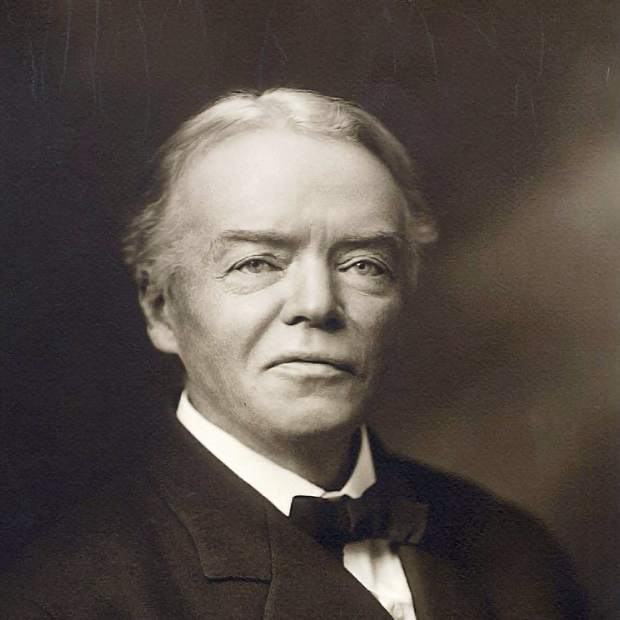
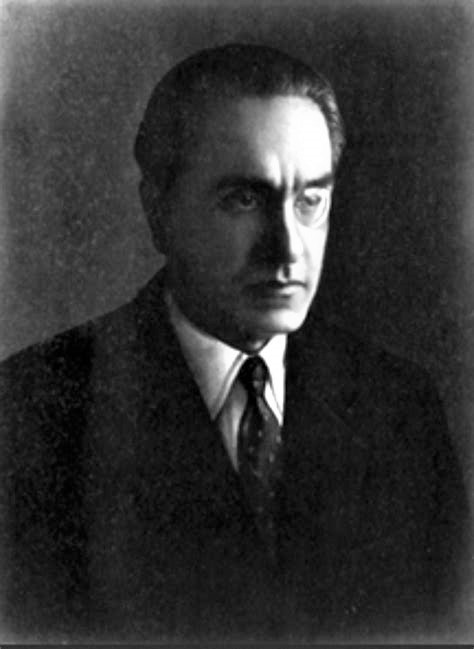
Julius Evola (1898-1974)

    In the mid to late 1920s, Julius Evola- the Italian idealist, esotericist, and political philosopher- came up with a system he termed magical idealism. Magical idealism is so called because of its idealistic component and its esoteric component. Later on, Evola actually ended up becoming a full blown esotericist, but that is another story. Unfortunately, these books on magical idealism are some of the only books written by Evola that are not translated into English. Magical idealism is a metaphysical doctrine that has applications both to the arts (which Evola was involved in) and politics. In the arts, Evola was involved in the dadaism movement, which eventually grew into the surrealism of which Picasso and Dali were major figures. Here we give a description of magical idealism coming from Evola’s The Path of Cinnabar- an intellectual autobiographical book written when Evola was in his 60s.

     Julius Evola in his magical idealism proves four fundamental metaphysical principles: (a) solipsism, (b) projection of the past from the present, (c) absolute freedom, and (d) oscillatory relationship between the subject and the physical world. We treat each in turn. (a) To advance past Fichte, Evola uses nondiscursive intuition. The world- like a dream- is full of creatures that appear real and even terrorize us, but are mere projections of our fancy. Thus there is nothing truly objective and which does not submit to one’s own conditionality- thus the world collapses into one’s own position. The “I” is thus a pure and detached “I” which is a pure being and an absolute form of self-evidence, and an absolute principle onto itself.  The “I” becomes truth, action, and will. (b) As the only perception that exists, the past becomes a creation of the present moment. One sees a one-to-one correlation between the present circumstances and past events and it becomes equally likely that the present is creating the past than that the past is creating the present. Using nondiscursive intuition, one can come to the immediate certainty that he is creating the past. (c) the mind has the ability to act purely spontaneously in a matter unhindered by psychological considerations. Evola thus defines a type of freedom which is pure will, and which can unconditionally to choose both an option and the negation of that option; in other words, the “I” can choose both value and nonvalue as two equally available options. The I thus has an ability to act in a purely spontaneous manner free from existential and psychological deficiency; or rather to acknowledge the existence of this deficiency but render oneself superior to this deficiency and facing it and enduring all its weight. (d) I will later attempt to give a defense of this version of causality. However a mystery remains and that is how to explain the condition of “privation”, that is why the “I” initially does not experience itself as an absolute individual. This privation, however, exists only as a potentiality and has the power to unfold into something greater. This results in a dialectical procedure In which the individual transforms himself into the absolute individual.  Thus, a thing is not true because it submits to the law of causality, but a thing is true because it has been wished. It is worthwhile here to note that Evola regards solipsism as transcending stoicism since it links the “I” to the world in such a way that the “I” cannot escape the world as his representation. The “I” here does not isolate himself from the world by opposing the value of his “I” to a lack of value in the world, for he is also responsible for the world.

Possible Involvement in Fascism and Further Considerations

     In the 1920s, logical positivism was being used to outmaneuver the Italian public. Fortunately, what is in my opinion the culmination of modern idealism was reached in the works of Julius Evola; this was used as a radical method to confront reductionism. Evola is not typically associated as one of the forerunners of fascism, but I’m not sure, and actually I list Evola as one of the central figures. Evola’s works were written just years before the rise of Mussolini, although there may or may not be any direct written documentation of a carryover from Evola to Mussolini. Many modern scholars will equate reality with what is documented in writing, but I’m not so sure. Many times we see in the current society a philosopher come out and this trickles down into society and very often affects people without them knowing it. For example, one person directly reads the paper, and this carries over to his entourage, and that carries over to the next group of people, and pretty soon a person is affected without him knowing it. Thus from my perspective, it is impossible to know what philosophers were direct or indirect influences on a personality with any degree of certainty. Indeed there are philosophers such as Evola’s precursor, Fichte, who I believe actually had indirect influence on scientists such as Einstein. Indeed, it seems like the half-hazard way in which Mussolini got into power was through the use of the oscillatory relationship evoked by Evola, along with identicality of the intellect. I can very easily see how projection of the past from the present could have been used to counter the media at the time as well as the solipsism. It also certainly seems like Mussolini is invoking absolute freedom when he is at the podium stand. As such, I would certainly list Evola as one of the main precursors to fascism.

     The oscillatory relationship is part rational and part irrational. One can set up a situation in which the world is a product of the mind with an I and not-I. There is thus a positing and a counterpositing explaining how the oscillatory relationship works; however, there is no way of knowing how this oscillatory relationship works beyond this, hence, resulting in an irrational component. It should be noted that the oscillatory relationship is metaphysical in nature and transcends the physical, i.e. stamina.  In magical idealism, one sees something in the world go his way such as an event happening, and then when the forward progression is at its height he would notice something bad happen in world, and this transcends the body. This process indeed does not reduce to another person’s stamina either. The logical positivist attacks the philosopher on grounds that are very difficult to defend through second order experience. In fact, one could make the argument Evola would at the same time through his idealism reject principles such as stamina resulting in something quite different than what the ordinary man would experience. This phenomenon is alluded to in many movies from modern cinema.

Back To British and Continental Idealism; Back to Traditionalism
Royce’s Defense Against Bradley’s Monism

(Revise) (Add picture)

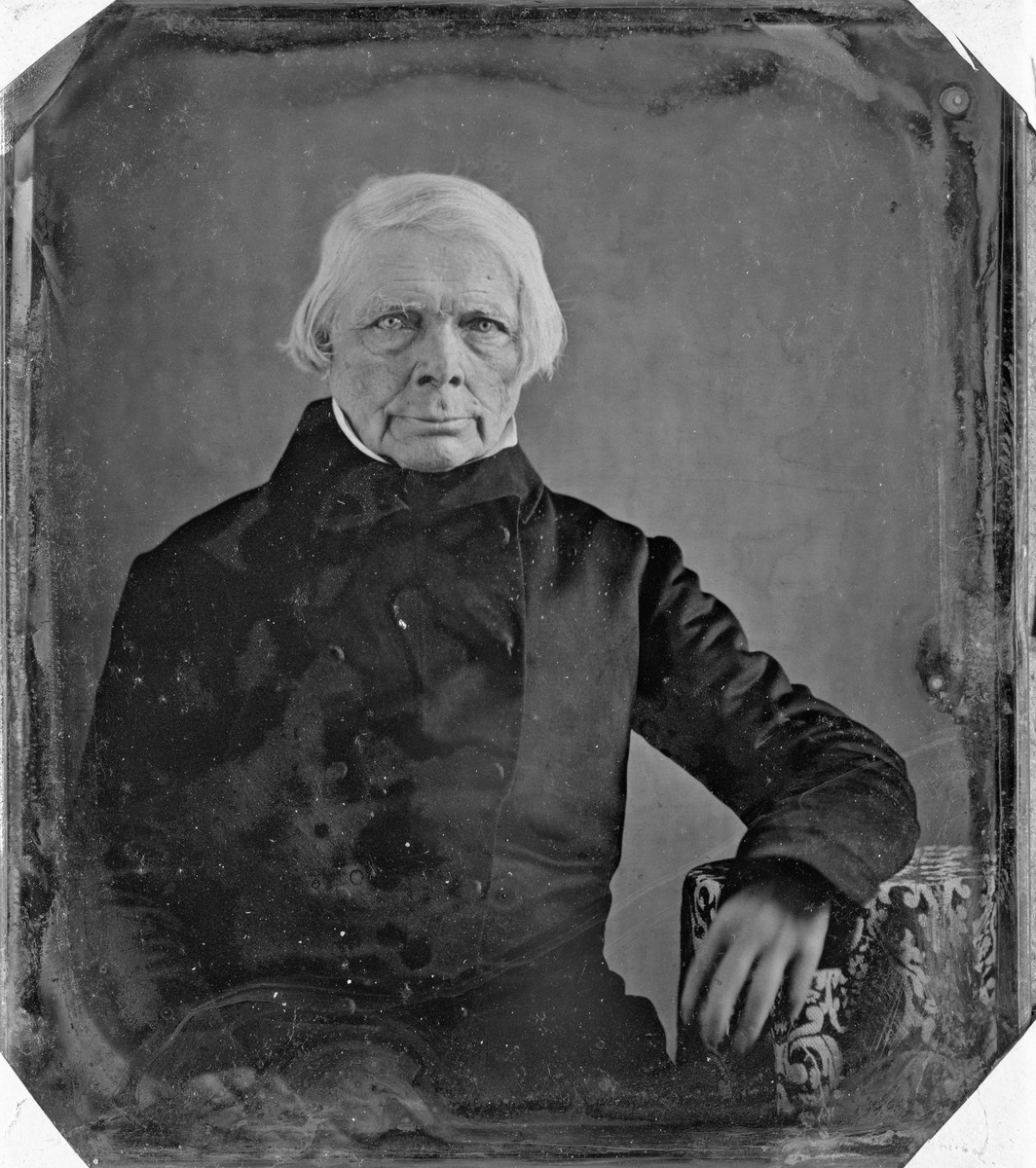
Josiah Royce (1855-1916)

     In his book Appearance and Reality, F. H. Bradley gives a conception of the absolute as an abstract monism. The argument is that between any two objects of experience, such as a glass and a container sitting next to each other, there must be a relation between the two such as that one is taller than the other. This creates a relation between that relation and the original objects and a relation between that relation and the original objects and so on leading to an infinite regress. Thus, what is real is a relationless abstract monism in which unity and diversity hold, but of which it is impossible to know how this university and diversity interact. In order to refute Bradley, Royce compares the infinite regress of relations to the whole number sequence, which forms a self-representative system.

     But how is it possible for reality to be both determinate and infinite? The answer is that the actual infinite must be a possible that is nowhere present to thought. In order to see how the infinite is a concrete conception, the infinite will have to be a determinate infinite in which what is only concerned is the relation between the object and thought, taken without external meaning. There are thus infinitely many ideas that are from the absolute perspective contrary to fact. Royce agrees with Bradley that no infinite is determinate which looks for an object without end. However, the endless series is presented only as a negatively presented result. However, this infinite series is presented all at once to the absolute. For example, consider the ordered series of whole numbers 1, 2, 3, . . . and those numbers raised to the rth power. Then there exists a unique rth member in the sequence of numbers that are squared or numbers that are cubed and so on. This is a one-to one relation of the whole numbers to their 1,000th power in such a way that if you attempt to take the 1,000th power of 80,000,000 by hand, the result is left as a bare possibility. It is mathematically fixed, but left as a negatively presented result. Unlike Bradley’s infinite the individual members are themselves determinate. But the question now remains what to make of the whole- is it simply a formless, and unindividuated realm, where chaos reigns? No for three reasons: first the whole must conform to an ideal definition, the whole must remain the limit of what is obtained in individual experience, and third the whole must be such that no other type would meet the purpose.

Subjective Idealism: Argument for the Reality of Hallucination

     Here we give an argument that we live in a real hallucination. This was said by the Frenchman Hippolyte Taine although perhaps in less rigorous form. Subjective idealism is the belief in which the world is a product of the mind.  In Pixilated subjective idealism (PSI), the world is posited a product of the mind, but each individual pixel is independently projected by the mind. This can be generalized using a modified phenomenological procedure to include substance. This says two things at once – that we live in a real hallucination and that all hallucinations are at least partly real. The only thing distinguishing a reality from hallucination is the grade of empirical reality it contains. This philosophy can be seen as part of the structuralism movement a movement originating in the late 1800s, in which a metaphysical system is distinguished by the rational structure that it adheres to. The general understanding is that the structuralists added additional structure on top of that given by the German idealists. And a different metaphysical structure leads to a different ethical structure.  

     If it can be shown that living in a real hallucination is equally consistent with our reality as  materialism, in which there is an external object in which light bounces off the object in pixilated form, then a person should have no reason to choose materialism over PSI. To prove equal consistency, one must demonstrate inner consistency of the system – including how the light bounces off the object, other areas of the philosophy of perception, the mind body problem and time analysis, multiverse versus universe. A similar line of argumentation was given by the French-Jewish philosopher Henri Bergson in his book Matter and Memory. This is more along the lines of a solipsistic version of subjective idealism although can be generalized to include other minds and allows for psychic phenomenon. This creates a type of nonhierarchical metaphysics somewhat along the lines of the Aztecs’ philosophy in which all hallucinations are at least partly real. PSI may very well be the metaphysical equivalent of the atom in which all metaphysical systems can be embedded, thus giving metaphysicians a way of getting along and combating the empirical atom.

How Berkeley, Fichte, and PSI distinguish  reality from hallucination

     According to Berkeley, ideas of the mind are distinguished from ideas of reality by the force vivacity, and strength of the idea. The latter are held in place by God’s consciousness. If an idea has less empirical reality than the rest of experience, then it is not created by God making the idea unreal. For example, a hallucination of an object with certain properties can be determined to not have the properties that that object is supposed that can be found out thought the structures of experience. Therefore, that object is determined to be an object of the mind and not real. The same argument holds for perceptual illusions. If one sees an oar in the water, for example, and it appears bent, one can discriminate through the higher levels of empirical reality that a straight oar in water appears bent, and all one needs to do is remove the oar from the water to verify that it is straight. Thus Berkeley allows for a sundering of reality and hallucination. That is, there are only two types of ideas i.e. ideas created by God and ideas created by the mind. All of the former are considered real and all of the later are considered unreal.

     According to Fichte, the mind imposes the form and structure, also known as the categories onto experience. This would be, for example, the shape of the table in front of the observer. If something appears in your vision that does not correspond to all of the categories such as a hallucination of a kaleidoscopic object, then this object is deemed unreal.  The reason is the hallucination does not subscribe to the category of causality, since there is nothing in the world to cause the hallucination. The only thing else to defend against is Hegel’s conceptual idealism. Indeed, British idealists such as Royce would conclude that the world is a conscious construction. How do we distinguish between PSI and Royce? The ordinary language movement would now declare a language ambiguity. In order to decipher this, it is necessary to understand that the ordinary language movement was primarily directed against British idealism, of which I am admitting there were many language ambiguities and sloppy metaphysical arguments. However, in order to know what Royce meant by this, it is best to trace Royce’s argument to Hegel, of whose absolute idealism Royce was copying. And Hegel’s precise metaphysical structure can be shown to differ from PSI.

     Now we show how pixilated subjective idealism distinguishes reality from hallucination. Suppose a person has a hallucination and it does not operate according to all of the categories found in real experience. By the very nature of pixilated subjective idealism, the hallucination is given same ontological status as real experience since the hallucination is projected from the mind in the same sense as reality. So, the defining factor of PSI actually “cuts” into any attempt to completely sunder reality from hallucination- which can be verified by regressive analysis on “cuts” through reduction ad absurdum. Thus, we have the picture of things in which every hallucination has some degree of reality. If it operates according to one of the categories it has the lowest grade of reality, if it operates according to two of the categories, it has a higher degree of reality than if it operates under one of the categories, and so on all the way up to the highest degree of reality which operates according to all of the categories. Everything is a projection of the mind in distinct substantial quanta, with the only thing distinguishing reality from hallucination being its degree of empirical reality.