Berkeley on Abstract Ideas

Revise

Locke believes words signify thing by signifying ideas. Ideas intervene between words and the world and their intervention determines what in the world the words refer. On Berkeley’s account of Locke, a word signifies a class of things because the intervening idea is somehow abstract or general in its own right. General words come to be made by being made the signs of general ideas which in turn become general by being separated from ideas that are linked to a particular existence. In this way they can represent more individuals than one each having conformity to the abstract idea. But this is suspicious to Berkeley because it is difficult to see what this idea would be like. For example, with the general idea of man, it cannot represent a particular man because that idea has already been assigned. Since a word must be fully determined by the associated idea allowing an idea to represent sometimes a particular and sometimes a general result in a looseness of fit between ideas and the world. Thus, the idea of a general man must be the product of some kind of mental manufacturing. For example, the idea of a general man must have color and shape but it cannot have a particular color and shape without endangering its generality. Because there cannot be abstract images, there cannot be abstract ideas. A similar problem arises for colors. A specific color such as scarlet cannot be abstracted from its shape therefore there are no general colors.1

A general idea can be seen as a separation of the general quality of manhood from specific qualities of individual men thus a general idea is actually a complex of ideas. Each of the ideas in the complex will be general rather than specific. In abstracting the general quality we separate each of the general qualities from the specific qualities falling under them.  We form a number of abstract ideas and keep t5hem together in a cluster separated from specific qualities but not from each other. Berkely thinks this calls for an image it is beyond our capacity to form. Few contemporary philosophers have been convinced by this argument. His argument will miss the mark if we think of ideas in another way. Berkeley’s failure is a personal one and if we cannot conceive of a general idea, we must confess to inattention. Yet these complaints are less important and Berkeley’s argument goes deeper than it.2

Argument and Objections

Abstraction is the belief the mind can separate what is common and alike in objects considering apart and separating out that which is common and alike in all forming an abstract idea. This is a process of generalization. For example, a person sees multiple people and separates out from them the general idea of man. In Berkeley’s argument against abstraction, consider the idea of a triangle. This involves the separation of triangularity- the complex of qualities triangles share- to the inessential qualities some triangles have and others lack.  Clearly, triangularity occurs whenever triangles do. However, the question is whether triangularity can exist by itself. Berkeley believes this is not true, claiming that all entities are particular. Berkeley is contrasting his position to the position of Locke. It follows that the content of our thinking is determined by the idea we confront in thought. Therefore, there is no way of distinguishing between conceiving nothing but triangularity and conceiving of the separate existence of triangularity. It follows that forming the separate existence of triangularity is impossible. Since what is impossible is inconsistent, and what is inconsistent cannot be conceived, it follows that there is no such thing as abstract ideas.3

It can be objected that god really can create the abstract ideas that Berkeley expounds. Berkeley thinks abstract ideas are, like four sided triangles, inconsistent. But Wrinkler believes abstract ideas are different.  The idea of a particular triangle is consistent, so how can we come up with something inconsistent simply by removing a certain part of it? Wrinkler believes Locke accepts every premise in Berkeley’s case against abstraction. However, the argument depends for its success on a suppressed premise. Locke makes the distinction between conceiving of nothing but triangularity and conceiving of its separate existence. Thus, Locke sees abstraction as selective attention- the abstract idea of a triangle involves looking at different triangles and focusing on what they have in common.  To conceive of triangles as selective attention is to deny the content assumption– the assumption that the content of thought is determined by its object. On the view Wrinkler is suggesting may be Locke’s, we think of one triangle or triangularity in general depending on how much of the idea we attend to. So Berkeley’s argument only succeeds ad hominem in that it attacks not any position but the position of a concrete opponent. Several scholars have argued that Locke conceives of abstraction as selective attention.4

Analysis

First, I want to say that Berkeley conceiving of abstraction as selective attention is a much milder form of abstract ideas than most versions. Thus it is more permissible than other variants. Secondly, I deny that Locke actually accepts every premise that Berkley endorses or that Locke actually denies the content assumption. These innovations are probably more recent and reflect the construals of analytic philosophy. Thirdly don’t believe the content assumption can be denied. For suppose you are abstracting in the sense of focusing on what different triangles have in common. If you are doing that you are either focusing on the original triangle or you are superimposing an additional triangle on top of the original triangles. In order to abstract the triangles you must picture an entirely different triangle in which case you are adding a specific color to that triangle just as the original triangles. There is no such thing as sele3ctive attention any selective attention requires a completely seperate image which requires its own unique colors and traits.

Berkeley

Berkeley’s Semi-phenomenalism

In Kenneth Wrinkler’s book Berkeley an Interpretation, Wrinkler lays out what he believes to be a new interpretation of Berkeley. There are two standard interpretations of Berkeley’s idealism. The first interpretation is that unperceived objects continue to exist when no one is there to see them because they continue to be held in place by God’s consciousness. This interpretation is sometimes augmented by the idea that God does not perceive as we do since he is perfect, and so they are held in place in his mind without willing. This is called the external-world interpretation. The other interpretation dispenses with external objects without putting anything in their place. Instead of viewing an unperceived table in a room as my idea, your idea, or God’s idea the phenomenalist replaces these statements with statements about the possible existence of the objects. This is the phenomenalist interpretation.1

Berkeley mentions in the notebooks the idea of the denial of blind agency which was not mentioned elsewhere in his writings but was a commonplace assumption among seventeenth century philosophers such as Descartes, Malebranche, and Locke. This is the assumption that judgement and volition are inseparable from perception. This idea of Berkeley’s is central to Wrinkler’s dismissal of the external world interpretation. Wrinkler makes the argument that in the Dialogues and the Principles, Berkeley does not abandon this principle, but simply takes it for granted.2

Berkeley’s semi-phenomenalism and objections

It may seem that in the external-world interpretation, God must perceive in the broader sense of perceiving not only the world but all possible worlds to accord with his omnipotence. However, this is inconsistent. Indeed, Wrinkler does not believe Berkeley offers support in the dialogues for the external-world interpretation. To move forward, Wrinkler advances his own interpretation that is half way between the phenomenalist and external-world interpretations. Wrinkler agrees with the external-world interpretation that objects exist if and only if God perceives them. But he adds that by the denial of blind agency, God perceives every idea only by his intention to cause it. Objects owe their existence to divine volitions, but those volitions do not matriculate apart from the individual’s perception. Thus, the texts usually offered on behalf of the external-world interpretation are consistent with thew phenomenalist interpretation once it has been supplemented by the denial of blind agency.  The mistake of the external-world interpretation lies in supposing that God’s contribution to the perception of things is distinct from his volition. On Winkler’s interpretation, god perceives all things, but this perception is nothing more than the perception inevitably involved in his volition. God’s knowledge of things therefore derives entirely from acquaintance with his will.3

A standard objection is that divine ideas in Berkeley’s system are superfluous. It is right to assume that since Gods’ ideas are passive and inert, they can make no causal contribution to the reality of things. But despite all this, God’s ideas are not superfluous since without them, god would not only be unable to perceive, but unable to will.4 Two more objections are in order. The first objection is that Wrinkler’s interpretation still runs into contradiction with Berkeley’s statements on external objects. However, in view of the modifications to the phenomenalist interpretation and the rereading of passages on external objects, the inconsistency of this interpretation with Berkeley’s statements on external objects is reduced. The second objection is that outside of the notebooks, the derivation of Wrinkler’s interpretation cannot be found. For example, in certain passages, Berkeley passes up perfect opportunities to make use of the denial of blind agency. However, these passages do not necessarily create stumbling blocks for his interpretation. His interpretation does better than other interpretations in terms of consistency. The phenomenalist interpretation calls for supplementation. Indeed, Wrinkler’s interpretation creates the position of most coherence.5

Analysis

Although I like Wrinkler’s interpretation, perhaps it is best to go back to the traditional phenomenalist and external-world interpretations of Berkeley. The traditional reading of Berkeley attributes the phenomenalist interpretation to the Principles and the external-world interpretation to the Dialogues, these two interpretations being consistent, yet inconsistent with each other. I like the external-world interpretation.  I think this interpretation has much less paradox in it than attributed to it by recent authors. For example, I do not believe that God must perceive not only the world but all possible worlds to accord with his omnipotence. That being said, I am fine with the phenomenalist interpretation. Berkeley is attempting to hold in place religious beliefs which is reinforced by his later Alciphron. One way to refute the problem of evil is to deny anything exists outside your immediate experience. This interpretation is supplemented by Wrinkler’s modification since the original interpretation can run into moral issues. Additionally, Berkeley means by his semi-phenomenalism the classic statement that we live in a dream.  In following this doctrine, the world begins to loosen up and the colleges begin to function more properly again. However, Berkeley’s phenomenalism was different from and less developed than what came in later centuries.

Berkeley

On the Pragmatics of Berkeley’s Idealism

This photo will be replaced with non copyrighted

On the Pragmatics of Berkeley’s Idealism

     It is in fact the idealism that is inducing the heterosexuality among the public. The theory of vision attributable to Berkeley creates the framework necessary to appreciate the female form, and the female form tends to favor the skinny over the fat.  His idealism is further generating features that are conducive of the woman. The lower libido associated with idealism cuts out any attempt at living a hedonistic life. Finally, the free will allows the mind the conscious decision not to engage in questionable behavior. Berkely’s theory of vision creates a flat vision plane which favors the features of the woman over the man. Berkely’s negation of the theory of abstract ideas rests on his idealism. Regarding the lower libido, You can say that this is regarding idealism to be a force. However, this can be adjusted to the philosophical framework in that subjective idealism causes one not to be concerned with external objects. I think heterosexuality ultimately rests on the conscious decision not to engage in homosexual behavior. Color schemes induced by Bekrleyianism tend to be dark reds and blacks as opposed to the turquoise, purples, and pinks that many women dress in today.

Comparison with Avveroism and Reductionism

     Whereas Avveroism induces a medium to strong-built man and a neutral yet somewhat flashy woman, the subjective idealism of Berkeley induces a medium to light-built man and a flashy woman. The free will together with the reduced mind body interaction and existence of the soul produces these features. It may seem as though Berkeley is simply copying Averroes’s neutral monism under a slightly different guise- of the new philosophy instantiated by Descartes- which would have been pointless if Berkeley would have had knowledge of Avveorism in the first place. Nonetheless, this new idea results in a slightly different cognitive framework. It also grew into the entire edifice that is German idealism, which is quite distinct from everything that occurred before. So, we can see how detachment from the past results in new ideas. Avveorism is a neutral monism which creates a consistent framework throughout the entire body. This results in a sturdier framework that what occurs in idealism.

     is reductionism inducing heterosexuality? No, it is the idealism that is creating the cognitive function in the mind. This then carries over and all the reductionism is doing is cutting off people’s knowledge of why there are heterosexuals in the first place. Logical positivism although helpful in partially refuting certain metaphysical doctrines also serves as a tool to prevent people from knowing the truth. And that is that the idealism is creating the cognitive function in the mind. I believe what logical positivism is still inferior to the idealism of the early modern period. It is simply cfreates a higher libido, a lack of free will, and belief in nonidenticallity of the intellect. The heterosexuality of the modern period is in fact being induced by the idealism and if your not heterosexual you should learn idealism.

Impact of Berkeley’s idealism on American movies

     You can see the impact of Berkelyianism in the American movies where there are often a bunch of guys who are crazy over a girl. I can recall a movie I just saw in which a couple of guys sneak up to a girl’s cabin at a summer camp. They creep up and the girls look very good and one of the girls is dressed in red- how wonderful. Finally, the girls recognize that the boys are there and they sneak up on the boys and start picking on them. Oh well, so much for that. At least the guys are straight.

Berkeley

Biography of George Berkeley

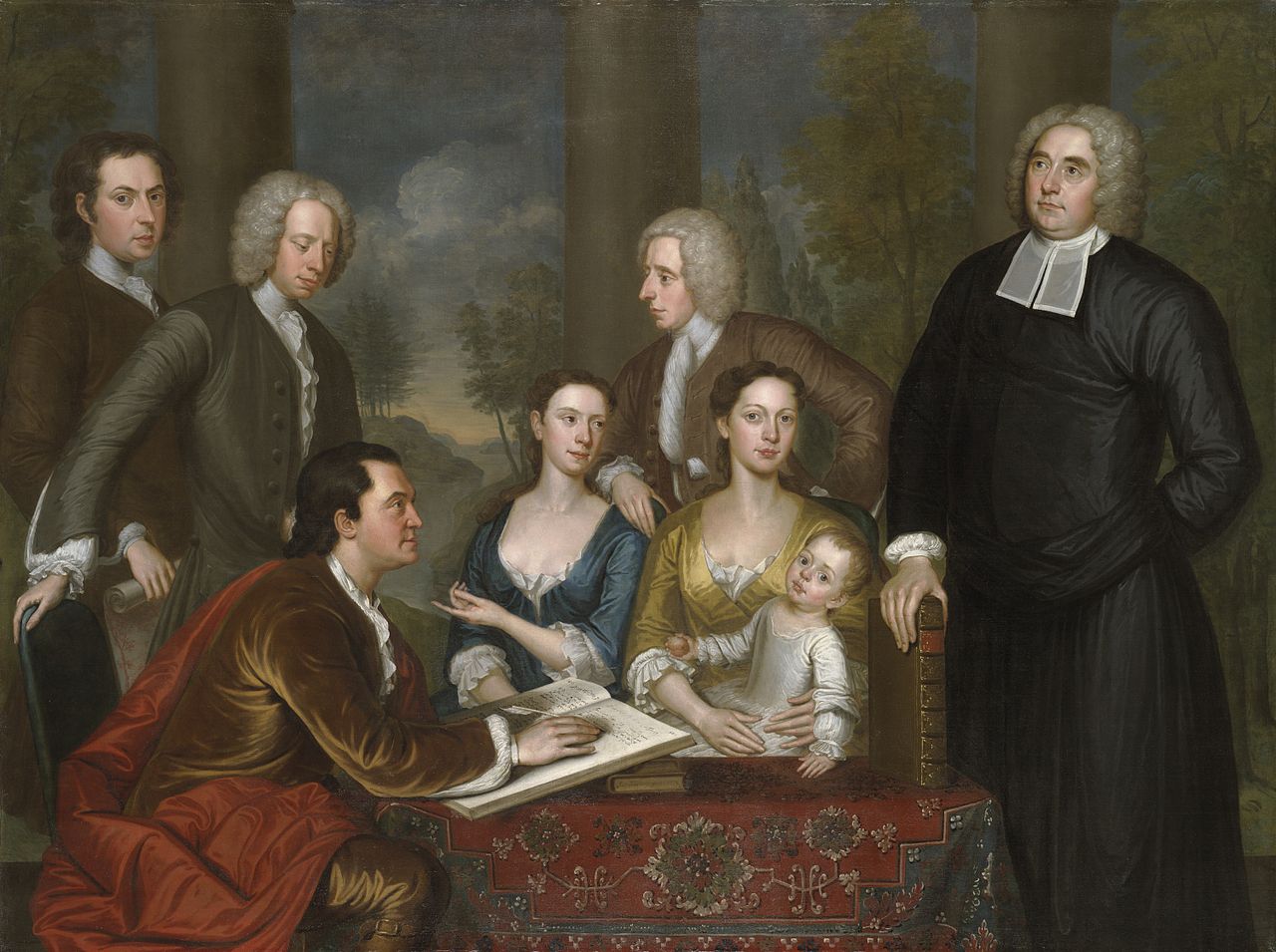
Berkeley and his entourage

George Berkeley (1685-1753) was the 18th century idealist from England. He is generally considered to be the second of three in the line of British empiricists starting with Locke and ending with Hume. Berkeley, although probably taking inspiration from Averroism, was the original Western idealist.  

Early Years

George Berkeley was born the eldest of six sons in 1685 in Ireland to and English father and an Irish mother. Berkeley went to a prestigious secondary school and was known to be a daydreamer as a child. Berkeley entered Trinity college Dublin in 1700. There Berkeley experienced the new philosophy of Newton, Locke, and Hobbes and became equated for the first time with the ideas of the freethinkers- a group of minds that were against metaphysics. In 1704, Berkeley wrote An Essay Towards a New Theory of Vision. In the book, Berkeley argues that distances perceived in space are an illusion. All inferences of distance based on optic axes from the object to the eye are not actually perceived but are inferred from fluctuations in movement. Thus all notions of distance simply signify that if one were move toward such and such an object, then he would experience it through touch.

In 1709, Berkeley was ordained a deacon. In 1710, Berkeley wrote his second and main book: Treatise Concerning the Principles of Human Knowledge. In it, Berkeley argues that the world must be contained within mind or spirit. To say, for example, that a chair exists in another room simply means that if one were to go into another room under such and such a circumstance, he would see it. Berkley uses his claim to demonstrate the existence of God and the existence of the soul. Treatise was received with mixed reviews with many people misconceiving what Berkeley had to say. Many took Berkeley to be denying a sensible world, which Berkeley in fact confirmed- albeit a world contained in a mind.

In order to settle these misconceptions as well as expand upon the Principles, Berkeley wrote Three Dialogues between Hylas and Philonous in 1712. In the book, Berkeley develops several new arguments. Among them are the assimilation argument which argues that qualities such as heat are indistinguishable from sensations such as pain, and so the qualities must be dependent on the perceiver and the argument for conflicting appearances which argues that if there is no perceptual error, then the conflicting perceptions reveal the mind-independent world to be inconsistent.

In order to print and commercialize his book, Berkeley traveled to London in January 1713 to meet “men of merit.” Berkeley wrote to his colleague that he enjoyed the views of rural England on his trip to London much more than anything in London itself. Berkeley met many famous intellectuals in London including Steele and Addison. Berkeley had a good time in London. Berkeley’s three dialogues was published in June, and we find Berkeley in Oxford. Berkeley then spent ten months in France and Italy in the suite of Lord Peterborough. Thus began Berkeley’s 20 years of travel and social activity in which metaphysics and authorship was in the background. There Berkeley met, for example, Malebranche- the French philosopher.

Middle Life

In 1723, Berkeley made the decision to sail to Bermuda with several of his close freinds from London. Meanwhile, Berkeley received funds from his patent and from a diseased woman who decided to leave her fortune in his name. In 1728, Berkeley married Anne, a daughter of a chief justice of the house of commons. They sailed to Rhode Island that year with a small entourage. Pictured is a portrait taken by Smibert (pictured left) of Berkeley and his entourage. Berkeley stayed with his wife for several years in Newport in a farm house with a view of orchards and the ocean in the distance- mixing with the people of Newport occasionally. It was at this estate that Berkeley wrote Alciphron– Berkeley’s main book on the philosophy of religion. In the book, Berkeley argues that religious beliefs are a type of belief that goes beyond what is received through nature. Moreover, virtue and faith in God are consistent with happiness. Belief in beauty and goodness are inadequate for the highest good and something higher is needed to direct us. Berkeley then goes on to discuss his famous doctrine in which the universe is given to us in a visible language. Finally, Berkeley argues that Christianity is the highest form of religion. Berkeley returned to London in 1732. Many of his friends from his early years had now died including Steele and Addison.

Later Years

In 1734, Berkeley was ordained a bishop of Cloyne. At Cloyne, Berkeley was almost as removed from the world as he was at Rhode Island- Cloyne being 20 miles from Cork.  Berkeley then spent 18 years in Cork- serving the diocese. Berkely enjoyed his surroundings- mainly the Irish and a small group of English settlers. Meanwhile, Berkeley’s philosophy was finally beginning to receive detailed attention. At this point, famine and disease were widespread in Ireland, and because of this, Berkeley began to study the medical values of tar water. Berkeley thus wrote Sirus: Inquiries Concerning the Virtues of Tar Water. Berkeley, here, discloses his idealism in mature form mixed with his analysis about tar water. Tar water is a medical substance that can cure disease. Similar to work in the Greek vein, tar water works through interaction with the non-mechanical fire and aether that permeates the cosmos. Thus, tar water can be seen as a form of alternative medicine.

Berkeley had three sons; one died young, the second did not live very long after Berkley died and the third became a student at Oxford. In 1752, Berkeley went to live in Oxford. He was becoming weak at this point. Not much is known of Berkely’s life at Oxford. At some point, Berkeley’s health improved and he even began to study again. Berkeley died in 1753.

Berkeley

Berkeley’s idealism and a Defense against Georges Dicker

. . . Here we discuss only Berekley’s Principles of Human Knowledge. The Dialogues can be handled separately. It is interesting to note that Berkeley does very little positive metaphysics, other than saving free will and the soul (allowing for life after death) from materialism, and giving a rationalist explanation for miracle. However, he did foundational work in subjective idealism, which was used by many of the German idealists and Indian philosophy, Aztec philosophy, and so forth. Berkeley uses the word idea for what was later known as representation by the German idealists onward.

     Berkeley uses the words mind, spirit, sand soul interchangeably. Berkeley begins with the opening syllogism: (a) all objects of human knowledge are either ideas imprinted on the senses, ideas involving the operations of the mind, or ideas formed in the imagination by compounding ideas impressed on the senses, (b) ideas cannot exist unperceived mind, so (c) the objects of human knowledge cannot exist unperceived the mind. Since tables chairs, trees and so forth are objects of human knowledge, it follows that tables, chairs, trees and so forth cannot exist unperceived by a mind. If we examine the tenet that objects exist independently of the mind we find that it is impossible to separate these things from perception. Since these objects are contained within the mind, it follows that there is no substance other than spirit. To say that something exists means that it is experienced or would be experienced under appropriate conditions. For instance to say thsat the chair one sits on exists means that you see and feel it, and if you are out of the room, it means you would perceive it. This means that things are created anew and destroyed upon opening and closing one’s eyes. Tables chairs trees and so forth really exist, but they exist only in the mind of the perceiver or some nonhuman spirit. Any time a person attempts to conceive a book exising in a room by itself for instance, with no one perceiving it, they are simply admitting that if they were were in the room at that time time they would percieve it that way.

     Berkeley then goes on to gives a series of indirect arguments for idealism.  (1) An idea can be like nothing but another idea, a color can be like nothing but another color. It is impossible to conceive anything unlike them that they resemble. Are the things that they resemble perceivable or not? If they are perceivable, then they are ideas, and if they are not, they have no qualities, and how can an idea be like that? (2) Berkeley distinguishes between primary and secondary qualities. The understanding is that primary qualities such as solidity, shape, rigidity exist independently of the mind, while secondary qualities such as color, taste, heat exist only in the mind. However it is asked if it is possible in any mode of thought to abstract primary qualities from secondary qualities, and this indeed impossible to do.  Since secondary qualities exist only in the mind, it follows that primary qualities exist only in the mind. (3) If we attempt to inquire into what is meant by material substance, we find that this is a meaningless term, and no matter which way one attempts to frame it, it leads to contradiction. Therefore, there is no reason to posit material substance as existing. (4) Even if matter existed, it cannot be demonstrated through reason since it is possible that all of our senses are produced without any object corresponding to them. Thus it is impossible to know whether material objects exist.

     Ideas must have a cause, and this cause cannot be matter so that this cause must be spirit. The mind acts upon ideas, so we can have no idea of mind, However, we can have some notion of mind since we can be aware of its actions. Once the nonexistence of the external world is demonstrated, the soul becomes immortal. We can make ideas of imagination at will but our sense perceptions are more coherent than the ideas of our imagination and don’t depend on our will. Therefore, they must be held in place by some nonhuman spirit. The blemishes in creation should be seen as ways of augmenting the beauty of the rest of nature.  The uneasiness that comes with the world can be seen as the effects of imperfect finite spirits. The world is contained within the mind and things at a distance are just as close to the mind as near things. We see in two dimensions. The three dimensional appearance of things are fluctuations in appearance when the person moves. It can be objected that Berkeley’s idealism comes into contradiction with the natural sciences since it cannot explain the complexities of animal bodies, why food nourishes, and so forth. For instance, why is this done without all the apparatus. The reasoning is that these are simply secondary manifestations of what happens directly in the mind. If someone finds the cause fire in terms of its chemical properties and so forth, these chemicals only exist under the microscope they are being observed, and indicates simply a sign as to when the fire will occur. Miracles are explainable through Berkeley’s idealism as God overturning the laws of physics and producing something according to his will in his mind.

Defense Against Georges Dicker

     To refute Berkeley, Dicker argues that Berkeley successfully refuted Locke’s representationalism in which there is an external object, but that object is unperceivable. Dicker creates a two-term theory of perception in which there is an external object that we indirectly perceive and has the disposition to create the secondary qualities in the mind. Objects have a dispositional aspect as well as a manifest aspect.  The color red is simultaneously the disposition of an object to look the color red under normal light and the conscious episode of the object appearing red. The problem with this version of representationalism is that it leaves the object undefined and there is no way of defining what this object is. The only options would be to define the object as a bundle of primary qualities without any secondary qualities. But this is impossible to do as described below since there is no way to abstract the primary qualities from the secondary qualities, and other aspects of perception such as zooming and weight.  It can serve as a useful heuristic to help one function in the world, but the empirical reality of experience can be accounted for from a purely idealistic perspective, and this can be done in many ways. There is further paradox that comes into place with this perspective such as the inability to handle free will and the existence of the soul.

     Dickers’ first two refutations ultimately rest on the error of him leaving his notion of the object undefined. Berkeley tries to derive the statement that an idea can be like nothing but another idea from the statement that a sensible quality can be like nothing but another sensible quality. The argument is (a) all sensible qualities are things that can resemble only sensible qualities (b) sensible qualities are identifiable with ideas, ∴(c) ideas can resemble only ideas. Dicker argues that Berkeley is begging the question since an idea can resemble something that is not an idea, namely, an object. Dicker resorts to his two-term theory of representationalism in which we immediately perceive an idea, but we indirectly perceive an object. However, Dicker again leaves this object undefined. There is no way to define this object without making it an idea since by (a), sensible qualities can only resemble sensible qualities. If the object has no color then there is no way for the noncolor to resemble the color. It cannot be a more exact copy of our ideas since that is still an idea. The more exact copy would be as perceived by someone with more exact vision. It is still unnatachable from perception. How far do you zoom in to that exact copy? It cannot be all at once. If immediately perceive means we can know its nature only on the basis of the perceptual experience, Dicker says it does exclude the possibility of us indirectly perceiving an object, but again,  this object is undefined. If immediately perceive means it is necessary that something neither identical with it nor a part of it is perceived, again he says this does not conflict with the idea that a material object is perceived. But again, there is no way of defining this object without resorting to ideas. An unknowable thing-in-itself has been advanced by philosophers such as Kant and proves to be no better of an alternative than a pure idealism.

     Dicker explains that you cannot make the argument that whatever is perceived is immediately perceived since when you perceive, for example, a white rhomboidal patch you are perceiving something that is not identical with an envelope. However an argument can be advanced like that of Sprigge that the envelope is really the totality of different perspectives of the envelope compounded together as a concrete universal. But we can say the white rhomboidal patch is an envelope without appealing to this description by appealing to hallucinations and dreams. Certainly if we dream an envelope as simply a white rhomboidal patch we can regard it as an envelope without appealing to a physical object.

     Next, we turn to Dicker’s defense against Berkeley’s attack on the theory of primary and secondary qualities. Berkeley’s argument comes in three steps: (a) primary qualities cannot be abstracted from secondary qualities, (b) secondary qualities exist only in the mind, ∴(c) primary qualities exist only in the mind. Dicker argues that this argument has an error since one need not accept (a). Dicker resorts to his two-term theory of representationalism in which we immediately perceive an idea, but we indirectly perceive an object. Dicker says the dispositional aspect of a shape can be abstracted from the manifest aspect of a color since there properties of shapes that do not reference perception such as a square object not being able to fit into a circular hole. Dicker is again leaving the object undefined. The argument does not work because although this is less dependent on perception than the manifest aspect of a color, you are still visualizing it in order to make that statement, and so you must ascribe secondary qualities to the object when making that statement. Dicker goes on to defend an argument in which only the visual manifest aspect of a shape is nothing but a sensation in the mind, but this is in error, because he still has not been able to detach the dispositional of a shape from its manifest aspect. You can allow an object to exist beyond perception, but it is immediately diagnosed as paradoxical, that is it has paradox in it. Because that object is still part of perception, and is simply an idea in the mind. If that object has its colors, and so it must be perceived by a mind. There are other secondary qualities that must be attributed to a perciever in order for it to make any sense such as weight

     We now move to Berkeley’s positive metaphysics, which should be taken independently of his proof of idealism.

     According to Berkeley, ideas are dependent beings that exist in the mind or spirit. He argues that ideas must have a cause, and this cause is not material, so that this cause must be a mental substance. So Berkeley locates the soul in a nonspatial location situated in the mind. We can have no idea of the soul since the mind is the active creator of ideas, so no idea can be like it. This raises the objection that our ideas could simply be collection of sense impressions without any substance underlying them. Dicker argues that Berkeley to be consistent should have rejected spiritual substance for the same reason as rejecting material substance. However, Berkeley’s point is that his idealism demonstrates the possibility of the soul. In materialism, there the soul is difficult to argue for, while Berkeley’s idealism leaves open the possibility of the soul. If one system makes a positive claim that another cannot, one should accept the system holding the positive claim.  Clearly, there is a mind and the question becomes whether this is synonymous with mental substance. We have a notion of mental substance since we see ourselves acting, and we have memories and traits that remain the same throughout our life that can be obtained through introspection. So the soul can be argued for a posteriori. We should distinguish between the soul and the self, and the notion of a self has been argued to be self-contradictory by philosophers such as the Buddhists. But it can be argued that there are errors in the argument. The only material substance that can be argued for that is not self-contradictory is a completely unknowable thing-in-itself, and we can have no notion of this thing-in-itself. And reality remains consistent for the most part when the thing-in-itself is denied.

     Berekeley next demonstrates the existence of God with the argument that (a) we produce some of our ideas voluntarily, but our ideas of perception do not depend on us, (b) this cause must be some nonhuman spirit, (c) these ideas have an amazing degree of clarity, order, and beauty, ∴(d) this spirit must be God. Dicker finds error in the teleological argument for Gods existence, however, I do not believe this is Berkeley’s main point. First of all, the teleological argument for Gods existence is not a mathematical proof of God but it is certainly a solid proof of Gods existence as no a posteriori proof is completely infallible. It must be remembered that Berkley’s idealism is subjective, making what the subject experiences in first order experience most important. Secondly, this is where religion with its revelation takes over. Again, philosophy must not necessarily detach from religion and it is an equally valid abstraction for philosophy to attach to as the sciences. Berkeley’s main point is that some nonhuman spirit’s consciousness is enough to hold the empirical reality of experience in place. Berkeley then says that God imprints these ideas on the human mind. And I think this is appropriate because if this sprits ideas were independent of the human mind and the human then perceived these independent ideas, you would run into issues of causality such as how a human can perceive another idea. Therefore it is best to think of this spirits ideas as existing one with our ideas and imprinted on our ideas. Also I believe there should be regarded an element of externality to these ideas, that they are external, but what is external exists in the mind.

     Two points are in order. First, Dicker, says that one runs into issues such as how this spirits ideas can cauase the human body when clearly, Berkely argues for free will and this runs into paradox. However, Betcher’s argument holds and that is that the body is simultaneously an idea of imagination and an idea of the world and this is the same argument Fichte uses when he derives the body within the world. Another way of looking at it is that the soul extends into the body. Another issue involving the mind body problem is how an object be caused by the mind when every object must be the cause of an idea, which Dicker terms CCP.  And this makes sense because we have the standard model of how the light bounces off the object and creates and penetrates the retina. There are two ways around this difficulty. The first is to accept CCP, exept adding an additional component where all of this takes place within a mind. But also we must remember that CCP has errors in it and that is that there is no way of translating that frequency that turns into beats in the brain into the actual representation. This is demonstrated with arguments for qualia that necessarily are necessarily metaphysical and Schopenhauer raises this objection. So CCP runs into paradox with Berkeley, but there is paradox within CCP itself. So we have the well known problem of CCP running running into paradoxes with idealism and idealism running paradoxes with CCP. Further it can be argued that that piece of information is only for the natural scientist according to Berkeley.  For the ordinary person, this can be ignored.  That is, there is no evidence of the light bouning off the object to ordinary vision, and the internal consistency of taking mind first and science secondary allows one to ignore this information.

. . .