The Shedding of Jain Karma as described in the Tattvartha Sutra

     The Tarttvartha Sutra is a systematization of Jain philosophy as found in the Jaina Sutras written by the jain philosopher-monk Umasvati in the second century. It covers the ontology and cosmology of Jainism; it is accepted by both the Digambaras and the Svetembaras. Here we give as description of the shedding of Jain Karma taken from Chapter 9 of the Tattvartha Sutra. I am thinking about developing a spiritual variant of Jainism. Spirituality uses a looser epistemological framework in which to make transcendent metaphysical claims. This entails retaining the karmic atom found in Jainism but reinterpreting the behavior of the atoms. This may sound uncalled for, and even dangerous, given the frequent assurances of Jainism that it must be accepted exactly as it are handed down through history. However, I am not so sure. Indian religion took on a spiritual direction in the latter half of the AD period with Saiva, Sakta, and Vaisnava, for example. Therefore, it would make sense to continue in a spiritual direction. This spiritual variant would probably remain a Western religion of some sort. Really, I am for a retaining of old religions but slow forward progress, if any, into the new.

The Shedding of Jain Karma

     There are two types of karmic inflow: instantaneous and long-term. The Tattvartha sutra traces the stages of spiritual development starting with (1) a deluded world-view and transitioning into (2) an enlightened world view with and without restraint and laxity, (3) self-restraint without passions but with knowledge inhibition, and finally (5) complete knowledge of all things. At each stage of development, there are karmic inflow which are inhibited at the next stage. Inflow is inhibited by (1) guarding, (2) careful movement, (3) morality, (4) reflection, (5) conquering hardships, and (6) enlightened conduct. (1) means enlightened control of body, speech, and mind such as blocking the mouth to prevent injury to lifeforms. (2) means to move in a manner that is approved by monastic rules; for example, speaking correctly involves speaking words that are measured, controlled, and meaningful. (3) means acting in a way that involves right behavior. There are ten moral principles that Jainism advocates. For example, controlling anger and practicing tolerance in adverse situations (forgiveness), subduing pride about one’s individual circumstances (humility), sincere and honest intention (straightforwardness), and mortification of the body for the regeneration of the soul (austerity).

     (4) is the process of contemplating the Jain theory. There are twelve reflections that Jainism advocates and generally represent the basics of Jain theory. For example, reflection on the helplessness of the soul means reflecting on a world beset with miseries, misfortunes of birth, old age and death, etc. Reflecting on the on the otherness of the soul from the body means focusing on the intrinsic purity of the soul and the body as an insentient object. (5) is the twenty-two hardships that occur on the spiritual path and of which enduring them wears off karma.  These hardships are associated with different types of karma such as troubles in learning being associated with knowledge covering karma, loss of faith and lack of gain being associated with view-deluding and obstructive karma, and hunger, injury, and ailment being associated with sensation karma.  For (6), after one undergoes the twenty-two hardships, one undergoes the five stages of conduct: initiation, ordination, purification through service, self-restraint, and perfect conduct. The Tattvartha sutra also recommends external and internal austerities- e.g. reduced diet, lonely habituation, and mortification of the body, and scriptural study and meditation.

     There are four kinds of meditation: (1) mournful, (2) wrathful, (3) analytic, and (4) white. People at lower stages of spiritual development fall into mournful and wrathful meditation. (1) is to concentrate on getting rid of unpleasant feelings, removing contact with disagreeable objects, and increasing contact with agreeable objects. (2) is focusing on violence, falsehood, theft, and preservation of one’s possessions. Analytic and white meditation are practiced by many Westerners such as, for example, in the sciences. (3) is withdrawing into ones head and focusing on elements of Jain theory such as the scriptural commandments and the nature of karma while perhaps pacing around the room. The four varieties of (4) are (a) multiple contemplation, (b) unitary contemplation, (c) subtle infallible physical activity, and (d) irreversible stillness of the soul. In (a), the meditator, guided by scriptural contemplation, concentrates from different philosophical standpoint moving from any of the activities of body speech and mind to any of the others. In (b), the meditator focuses on a single entity and (c), all activities of body are absolutely stopped while one continues to engage in contemplation. In (d), irreversible stillness takes place, even the residual subtle activities while one continues to engage in contemplation.
René Guénon on Tradition

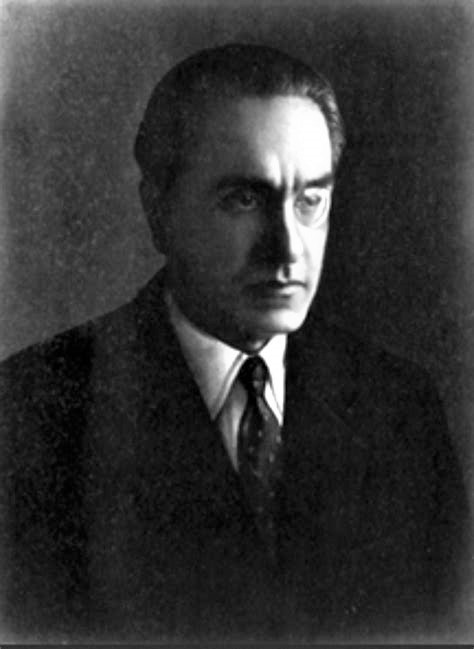
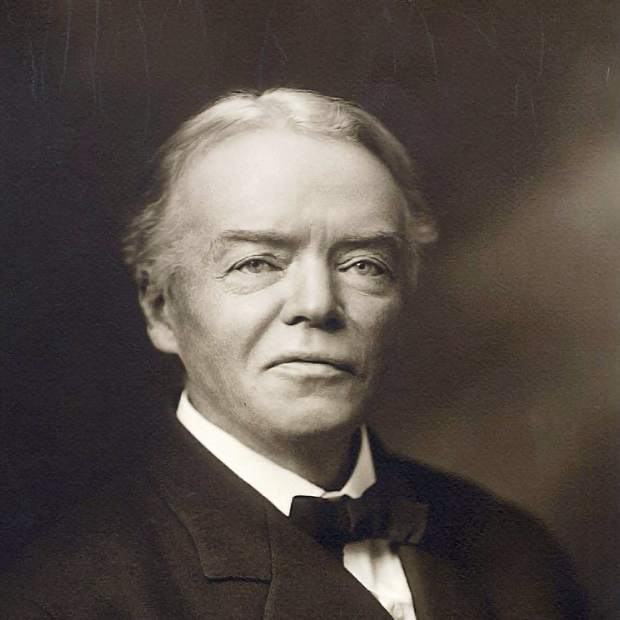
    René Guénon (1886-1951), the French esotericist and philosopher of religion was the originator of the doctrines of traditionalism and perennialism. Traditionalism is the belief that the world’s esoteric doctrines and the resulting customs and practices should be practices exactly as they are handed down through history. This is thus closely related to conservatism, the belief that customs and practices should be conserved as they were in the past dependent or independent of a metaphysical doctrine.Perennialism is the belief that the world’s religions reflect a universal truth that is common to all traditions. As such, Guénon would be labeled both a traditionalist and a perennialist.

Materialism, Tradition, and Perennialism

    Materialism means in the theoretical sense the belief that nothing exists except matter and its derivatives. Indeed, what is called “spiritualism” in the philosophical sense, or “idealism,” is usually only a sort of transposed materialism. Indeed, idealism and Materialism cannot be understood apart from each other and are inverses of each other– which combat each other as the sole description of reality. Thus, these two supposed opposites are close to being simple equivalents and the pretended opposition amounts to no more than a verbal dispute. Modern science actually does not possess the character of disinterested knowledge but in fact hides purely practical considerations. It is the practical results of the sciences which gives prestige in the eyes of the public. This forms the materialist tendency of “common sense” consisting of ignoring all that does not have immediate practical appeal- making intelligence an instrument subordinated to the most corporal part of the human individual. Even if it is admitted that material development does have advantages, it is to be questioned whether the advantages really in fact outstrip the inconveniences. If the loss of higher knowledge, intellectuality, and tradition is taken into account, the result may well prove to balance negatively. The inventions, which are growing at an ever-increasing pace, are all the more dangerous in that they bring into existence forces whose real nature is unknown; and this is the best demonstration of the worthlessness of modern science. Contemporaries claim they increase the “welfare” of the public, but what about those of which have had materialism thrust upon them? Those of the material world regard themselves to be “superior” and seek to impose their materiality on the East but the East simply participates to defend itself. They regard those who do not participate in materiality lazy. For this reason, it is not difficult to understand why the Anglo-Saxon mania for sport gains ground day by day.

     Tradition, according to René Guénon, is something that may be in either written or oral form which comprises of the whole body of techniques, institutions, and beliefs common to a group of people during a certain time. The identification of tradition with the entirety of the civilization is certainly justifiable, especially in the east, but Guénon tends to reserve the word tradition for the most “intellectual” of its components. The worlds esoteric traditions designate a single doctrine, which is cyclical and primordial- i.e., passed down from an ancient prehistory, existing at the beginning of the current cycle. This wisdom was known to the scholastics of the Middle Ages except perhaps in a more convoluted form. This designates the common and fundamental esoteric core to all traditions, which is far from covering the entirety of the tradition. This core assumes different modalities according to the tradition it finds itself in. This sacred structure soon degenerated into the profane, with things coming from outside the esoteric domain. There are thus, for example, two sciences: one from a traditional point of view than from the profane point of view- the sciences being valid insofar as they adhere to universal principles as applications of the primordial tradition. Thus, the primordial tradition is the one true tradition and it is this esoteric core that can be regarded as truly essential. Due to its erosion over time the primordial tradition has become inaccessible to ordinary humanity. Every tradition is a reflection, but only a “substitute,” for the primordial tradition- which is the original form from which all those traditional forms proceed. It is an error to assimilate the original primordial tradition to any particular tradition. Not even the Hindu tradition should be considered the primordial tradition, although it can be linked the most to the primordial tradition, being the first on the list of traditions.

Further Thoughts

     Guénon regards the true domain of metaphysics to be the esoteric domain, which was supposedly handed down from an ancient past. In doing so, Guénon actually rejects not only most of the rational metaphysics of the presocratics, but also much of what occurred during the modern period. It is interesting to note that Guénon defines the distinguishing feature of religion to be the esoteric component and subordinates the rational component. This is in stark contrast to Immanuel Kant’s critical mystical conception of religion in which there is a critical or philosophical portion and a mystical or transcendent portion (I assume when Kant says critical mysticism he means critical esotericism, as he was combating the works of Swedenborg at the time, which could possibly be labeled as esoteric as it is mystical). Thus, while Guénon rejects the Western philosophical tradition and retains religion and esotericism, Kant rejects the Western esoteric tradition and retains religion and western philosophy. The esoteric perspective really doesn’t make sense to the philosophical perspective as much as the philosophical perspective doesn’t make sense to the esoteric perspective. The esotericist says how can you possibly gain ontological knowledge into the world through reason when it is in contradiction with tradition and tradition is the truth? On the other hand, the rationalist will be very skeptical of the entire esoteric tradition. For what evidence of that do you have of that through first order experience? Thus, the only option is to speculate rationalistically. I for the most part take a neutral stance, as we have had rational theories definitively turn into empirical theories since the time of Guenon such as the atom of Democritus turning into the empirical atom. Also, idealism seems to gain knowledge into the world through its reduction of libido, argument for the identicality of the intellect, and so forth. This may however not be as important as the esoteric tradition and can perhaps be said to be useless when it comes into contradiction with the esoteric traditions.

Julius Evola’s Magical Idealism

Julius Evola (1898-1974)

    In the mid to late 1920s, Julius Evola- the Italian idealist, esotericist, and political philosopher- came up with a system he termed magical idealism. Magical idealism is so called because of its idealistic component and its esoteric component. Later on, Evola actually ended up becoming a full blown esotericist, but that is another story. Unfortunately, these books on magical idealism are some of the only books written by Evola that are not translated into English. Magical idealism is a metaphysical doctrine that has applications both to the arts (which Evola was involved in) and politics. In the arts, Evola was involved in the dadaism movement, which eventually grew into the surrealism of which Picasso and Dali were major figures. Here we give a description of magical idealism coming from Evola’s The Path of Cinnabar- an intellectual autobiographical book written when Evola was in his 60s.

     Julius Evola in his magical idealism proves four fundamental metaphysical principles: (a) solipsism, (b) projection of the past from the present, (c) absolute freedom, and (d) oscillatory relationship between the subject and the physical world. We treat each in turn. (a) To advance past Fichte, Evola uses nondiscursive intuition. The world- like a dream- is full of creatures that appear real and even terrorize us, but are mere projections of our fancy. Thus there is nothing truly objective and which does not submit to one’s own conditionality- thus the world collapses into one’s own position. The “I” is thus a pure and detached “I” which is a pure being and an absolute form of self-evidence, and an absolute principle onto itself.  The “I” becomes truth, action, and will. (b) As the only perception that exists, the past becomes a creation of the present moment. One sees a one-to-one correlation between the present circumstances and past events and it becomes equally likely that the present is creating the past than that the past is creating the present. Using nondiscursive intuition, one can come to the immediate certainty that he is creating the past. (c) the mind has the ability to act purely spontaneously in a matter unhindered by psychological considerations. Evola thus defines a type of freedom which is pure will, and which can unconditionally to choose both an option and the negation of that option; in other words, the “I” can choose both value and nonvalue as two equally available options. The I thus has an ability to act in a purely spontaneous manner free from existential and psychological deficiency; or rather to acknowledge the existence of this deficiency but render oneself superior to this deficiency and facing it and enduring all its weight. (d) I will later attempt to give a defense of this version of causality. However a mystery remains and that is how to explain the condition of “privation”, that is why the “I” initially does not experience itself as an absolute individual. This privation, however, exists only as a potentiality and has the power to unfold into something greater. This results in a dialectical procedure In which the individual transforms himself into the absolute individual.  Thus, a thing is not true because it submits to the law of causality, but a thing is true because it has been wished. It is worthwhile here to note that Evola regards solipsism as transcending stoicism since it links the “I” to the world in such a way that the “I” cannot escape the world as his representation. The “I” here does not isolate himself from the world by opposing the value of his “I” to a lack of value in the world, for he is also responsible for the world.

Possible Involvement in Fascism and Further Considerations

     In the 1920s, logical positivism was being used to outmaneuver the Italian public. Fortunately, what is in my opinion the culmination of modern idealism was reached in the works of Julius Evola; this was used as a radical method to confront reductionism. Evola is not typically associated as one of the forerunners of fascism, but I’m not sure, and actually I list Evola as one of the central figures. Evola’s works were written just years before the rise of Mussolini, although there may or may not be any direct written documentation of a carryover from Evola to Mussolini. Many modern scholars will equate reality with what is documented in writing, but I’m not so sure. Many times we see in the current society a philosopher come out and this trickles down into society and very often affects people without them knowing it. For example, one person directly reads the paper, and this carries over to his entourage, and that carries over to the next group of people, and pretty soon a person is affected without him knowing it. Thus from my perspective, it is impossible to know what philosophers were direct or indirect influences on a personality with any degree of certainty. Indeed there are philosophers such as Evola’s precursor, Fichte, who I believe actually had indirect influence on scientists such as Einstein. Indeed, it seems like the half-hazard way in which Mussolini got into power was through the use of the oscillatory relationship evoked by Evola, along with identicality of the intellect. I can very easily see how projection of the past from the present could have been used to counter the media at the time as well as the solipsism. It also certainly seems like Mussolini is invoking absolute freedom when he is at the podium stand. As such, I would certainly list Evola as one of the main precursors to fascism.

     The oscillatory relationship is part rational and part irrational. One can set up a situation in which the world is a product of the mind with an I and not-I. There is thus a positing and a counterpositing explaining how the oscillatory relationship works; however, there is no way of knowing how this oscillatory relationship works beyond this, hence, resulting in an irrational component. It should be noted that the oscillatory relationship is metaphysical in nature and transcends the physical, i.e. stamina.  In magical idealism, one sees something in the world go his way such as an event happening, and then when the forward progression is at its height he would notice something bad happen in world, and this transcends the body. This process indeed does not reduce to another person’s stamina either. The logical positivist attacks the philosopher on grounds that are very difficult to defend through second order experience. In fact, one could make the argument Evola would at the same time through his idealism reject principles such as stamina resulting in something quite different than what the ordinary man would experience. This phenomenon is alluded to in many movies from modern cinema.

Back To British and Continental Idealism; Back to Traditionalism

Hermeneutics of the Qur’an according to Ibn Al-Arabi

     Although Wujud can also be interpreted as being/existence, the Sufis use the term wujud to stand for the opening up to the inrushes of knowledge and awareness. Thus, wujud means an ecstatic discovering of the truth. Ibn al-Arabi sees the two senses of wujud (being/existence and “listening”) as essentially identical; in short, we find the existence of God through listening to the divine speech. Gods reveals himself as light, to which he assigns whomsoever he wills. Like wujud, light is both ontological and epistemological. the receiving of light by the individual is called by many names, self-disclosure being the most common one. Since knowledge is intrinsic to light, God gives knowledge through light. Self-disclosure is of many types such as that from light with rays and light without rays. Ibn al-Arabi uses a number of terms to refer to perception of gods self-disclosure, the most general being “unveiling” (kashf). One of the words that is used as a virtual synonym for unveiling is “tasting” (dhawq). Unveiling usually means something that one sees outside of himself, while tasting usually means something one sees inside oneself. That which comes from God is always colored by the receptacle that receives it which is important from ibn al-Arabi’s perspective since this explains the diversity of views found within Islam and religions in general. This explains why every gnostic has a different description of Islam- i.e. each person that has travelled the path to God speaks from his own viewpoint and recalls his own experience. The forms in which the Real shows Himself are not the real Himself but the veils that hide the essence.

     The ideal rational faculty is used to accept unveiling and not to try to go beyond its limitations by reflection. Hence the virtue of reason is to accept unveiling and revelation. The only goal of rational reflection is to recognize the existence and unity of God. This is important because if one fails to use reason, he can risk associating other gods with God. The Arabic word qur’an means to gather together everything in an all comprehensive way. The Qur’an thus gathers together all other scriptures that were sent down before it and therefore all knowledge of God. Muhammad is seen as the perfect and all comprehensive prophet. Ibn al-Arabi gives long and frequent commentaries to show his superiority over all other messengers, prophets, and friends of God. Muhammad was a prophet even when Adam had not yet been created.  the law of the qur’an has been set down through him. Many commentators will describes ibn al-Arabi’s interpretation of the Qur’an as out of context given that modern scholars interpret the Qur’an through historical and literary contexts and traditional Muslims interpret it as the speech of God, escaping all attempts to delimit and define it. However contemporary rational faculties cannot be described as sound since they are the products of a materialistic age. A sound rational faculty would at least have faith in the divine origin of the Qur’an. Once the divine origin is accepted, there it is a question of debate what god meant by certain passages. 

    Ibn al-Arabi sees major differences between the tasfir performed by the folk of Allah and the ta’wil of the men of reason.  Since the philosophers and theologians do not have unveiling, they try to pass from the inward esoteric sense to the outward exoteric sense. But in this crossover, they let go of the inward sense. God created no one more troublesome for the folk of Allah than the exoteric scholar. Yet the folk of Allah are the gnostics.  Every verse has a sense from within and a sense from without. The sense from within is called an “allusion,” by which they can defend themselves against the jurists and exoteric scholars with their unbelief. The exoteric scholars should take things into account when they interpret a verse with an outward sense. Some of these interpretations are better than others yet all of them walk the same path. Although the denounce the folk of Allah, the folk of Allah are the inheritors of the truth. The exoteric scholar believes he is one of the folk of Allah because of that which they know that surpasses the common people. However what god intends in his book is a type of mystical understanding. He is ignorant of those who say “god has given for me to understand.” Thus, a special place is reserved for the exoteric scholar along side the community where they can perform their calculations. He does not disrupt the folk of Allah but he can inform them from time to time.

Royce’s Defense Against Bradley’s Monism

(Revise) (Add picture)

Josiah Royce (1855-1916)

     In his book Appearance and Reality, F. H. Bradley gives a conception of the absolute as an abstract monism. The argument is that between any two objects of experience, such as a glass and a container sitting next to each other, there must be a relation between the two such as that one is taller than the other. This creates a relation between that relation and the original objects and a relation between that relation and the original objects and so on leading to an infinite regress. Thus, what is real is a relationless abstract monism in which unity and diversity hold, but of which it is impossible to know how this university and diversity interact. In order to refute Bradley, Royce compares the infinite regress of relations to the whole number sequence, which forms a self-representative system.

     But how is it possible for reality to be both determinate and infinite? The answer is that the actual infinite must be a possible that is nowhere present to thought. In order to see how the infinite is a concrete conception, the infinite will have to be a determinate infinite in which what is only concerned is the relation between the object and thought, taken without external meaning. There are thus infinitely many ideas that are from the absolute perspective contrary to fact. Royce agrees with Bradley that no infinite is determinate which looks for an object without end. However, the endless series is presented only as a negatively presented result. However, this infinite series is presented all at once to the absolute. For example, consider the ordered series of whole numbers 1, 2, 3, . . . and those numbers raised to the rth power. Then there exists a unique rth member in the sequence of numbers that are squared or numbers that are cubed and so on. This is a one-to one relation of the whole numbers to their 1,000th power in such a way that if you attempt to take the 1,000th power of 80,000,000 by hand, the result is left as a bare possibility. It is mathematically fixed, but left as a negatively presented result. Unlike Bradley’s infinite the individual members are themselves determinate. But the question now remains what to make of the whole- is it simply a formless, and unindividuated realm, where chaos reigns? No for three reasons: first the whole must conform to an ideal definition, the whole must remain the limit of what is obtained in individual experience, and third the whole must be such that no other type would meet the purpose.

The Samkhya System

Note: fix special characters.

     The notions of prakrti and the gunas were first mentioned vaguely in the Vedas and then later on more explicitly in the Upanishads. First mentioned fully in the Svetasvatara Upanishad, elements of the Samkhya can be found in the katha Upanishad and the maitrayani Upanishad, among others. The svetasvatara Upanishad contains a developed account of prakrti and the gunas. The maitrayani Upanishad is familiar with the three gunas and the distinction between spirit and nature. In the Mahabharata of the epics, we see a development of Samkhya in full. It is easy to assume that the earliest Samkhya was a realistic theism. The Samkhya system is usually attributed to Kapila, who extrapolated and systematized the main doctrines from the Vedas, likely in the century preceding Buddha. The actual texts of the Samkhya, however, usually date to the AD period.

Doctrine

    The general notion of causation as seen in the west is that the cause precedes the effect- i.e., the effect cannot be seen as existing before it is produced by some cause. For if the effect existed in the cause, we could not explain how the activity of the efficient cause is necessary for the production of the effect, and moreover, if the effect were contained in the cause, it would follow that the effect is indistinguishable from the cause. The Samkhya repudiates this view and establishes the theory of satkaravada- i.e., that the effect exists in the material cause before it is produced. For if the effect did not exist in the cause no amount of effort could bring it into existence and the cause can only produce that effect of which it is materially related. Moreover, if the effect were not contained within the cause, any cause could produce any effect. These are some among multiple arguments in support of satkaravada.

    The Samkhya attempts to explain nature in terms of an ever-changing teleological substance- prakrti, and its modes, or attributes: the gunas. If an infinite regress is to be avoided, there must be an uncaused cause. From the principle of causality, it is deduced that the ultimate basis of the empirical universe is unmanifested prakrti. Prakrti is argued for on the following grounds: (1) since individual things are limited in magnitude, and limited things cannot be the source of the universe, they must be dependent on something more pervasive than themselves, (2) All things have certain common characteristics, thus implying a common source to which they were issued, (3) evolution implies a principle that cannot be equated with any one of its stages (4) the effect differs from the cause, and so we cannot say the world is its own cause, (5) there is a unity to the universe suggesting a single cause.  We cannot know the true nature of prakrti in its entirety since it is in part transcendent, but it exists as pure potentiality behind the world as we see it. The Samkhya has some resemblance to materialist theories, although prakrti is ultimately purposive while matter is unpurposive; samkhya approa-ches things metaphysically while materialism approaches things physically. Prakrti functions according its three modes: sattva, rajas, and tamas; these are not perceived but can be inferred from their effects. Sattva is represented by upward movement, and stands for pleasure. Rajas is represented by activity, and stands for pain. Tamas resists activity, and stands for indifference and sloth. The three gunas interact with one another, and all differences in the world are caused by different combinations of the gunas.

     Here we give the Samkhya psychology and theory of evolution.  purusa, or the soul, actually comes before prakrti and causes prakrti. The first product of prakrti is buddhi, which is the psychological part of the individual, and its attributes of knowledge, lordship, and equanimity, which is not to be confused with incorporeal purusa.  Buddhi, unlike purusa, is material and is regarded as the subtle substance of mental processes. As a material substance, buddhi operates under the three gunas; for example, its knowledge and freedom from desire is produced by sattva, its desires is produced by rajas, and its ignorance, negligence is produced by tamas. Ahamkara, or the principle of individuation, arises after buddhi. Ahamkara produces the manas, the five organs of perception and action, and the five fine elements. Manas is the organ which synthesizes the sense-data into precepts, suggests alternative courses of action, and carries out the will through the organs of action.  The five fine elements or tanmatras correspond to the five sense-organs and combine to form the five gross elements of ether, fire, water, air, and earth. The whole evolution from purusa to the five gross elements numbers twenty-five and is the ground through which the gunas operate.

     The Samkhya puts forward several arguments to establish the existence of purusas: (1) the aggregate of things must exist for the sake of another, (2) all objects have three gunas, so they must presuppose a self devoid of the gunas, (3) there must be a pure consciousness which coordinates all experience, (4) since prakrti is nonintelligent, there must be someone to experience the products of prakrti. Purusa is not the body and is different from buddhi but is what holds the consious states together. Purusa is static and is not subject to change, and is consciousness without feelings and emotions; it simply illuminates the world of thought and feeling. There are many purusas since different people have different physical, moral, and emotional levels, for example; the differences individuals can be seen as deriving from different effects of prakrti. Purusa is unrelated to prakrti and is a mere passive spectator; prakrti and purusa are opposed in nature- prakrti being nonconscious, active, and characterized by the three gunas, and purusa being conscious, inactive, and devoid of the three gunas. It is Buddhi that discriminates between purusa and prakrti. The ego is the conflation of buddhi and purusa, while feeling is the result of buddhi reflecting on the objective world with purusa the passive onlooker.

Theory of Knowledge, Future Life, and God

    The Samkhya accepts the three forms of knowledge of perception, inference, and scriptural testimony. The Samkhya accepts two types of perception: indeterminate and determinate. indeterminate perception is when one glances at an object without noticing its particular qualities, and determinate perception is when one takes a second look and consciously takes in all of its specific features of the object. Yogic perception is allowed in which one takes in objects of the past and future. Inference is said to be of two kinds: affirmative and negative. The Samkhya admits five-membered syllogism and restricted generalization. The Vedas are written in divine language and cannot be the work of persons; however, they cannot be inferred to be eternal. The Vedas, on account of the fact that they are not authored by people are free from doubts and discrepancies, and are regarded as having self-evident validity.  Although Samkhya admits there are other systems that profess to be revealed, reason will then have to be used to decide which is the correct source of revelation- the untruth of the other systems being due to them making unreasonable assertions which cannot be true.

     According to the Samkhya, the soul exists endlessly through both directions of time. The ligedaha, or subtle body, is what migrates through successive births, and ids composed of buddhi, ahamkara, the five tanmatras, and the gross elements, which serves as the basis through which the physical body grows. The subtle body retains the impressions from deeds performed in previous lives. The linga, or character, of the person creates misery when conjoined with purusa. The portion of linga deriving from the mother and father perishes at death. Although the Samkhya of the epics was theistic in nature, the classical Samkhya is atheistic in nature. Kapila regarded theism to be an extravagant claim- used to lure people into excessive contemplation of an eternal god and impede true discursive knowledge. The later thinkers of the Samkhya found it impossible to reconcile a theistic god and the acts of prakrti. For if God had selfish motives, then he would not be free and if he is free, then he would not involve himself in the act of creation. The eternal purusas are inconsistent with a creator god since if souls have a beginning, they need not be immortal.

Subjective Idealism: Argument for the Reality of Hallucination

     Here we give an argument that we live in a real hallucination. This was said by the Frenchman Hippolyte Taine although perhaps in less rigorous form. Subjective idealism is the belief in which the world is a product of the mind.  In Pixilated subjective idealism (PSI), the world is posited a product of the mind, but each individual pixel is independently projected by the mind. This can be generalized using a modified phenomenological procedure to include substance. This says two things at once – that we live in a real hallucination and that all hallucinations are at least partly real. The only thing distinguishing a reality from hallucination is the grade of empirical reality it contains. This philosophy can be seen as part of the structuralism movement a movement originating in the late 1800s, in which a metaphysical system is distinguished by the rational structure that it adheres to. The general understanding is that the structuralists added additional structure on top of that given by the German idealists. And a different metaphysical structure leads to a different ethical structure.  

     If it can be shown that living in a real hallucination is equally consistent with our reality as  materialism, in which there is an external object in which light bounces off the object in pixilated form, then a person should have no reason to choose materialism over PSI. To prove equal consistency, one must demonstrate inner consistency of the system – including how the light bounces off the object, other areas of the philosophy of perception, the mind body problem and time analysis, multiverse versus universe. A similar line of argumentation was given by the French-Jewish philosopher Henri Bergson in his book Matter and Memory. This is more along the lines of a solipsistic version of subjective idealism although can be generalized to include other minds and allows for psychic phenomenon. This creates a type of nonhierarchical metaphysics somewhat along the lines of the Aztecs’ philosophy in which all hallucinations are at least partly real. PSI may very well be the metaphysical equivalent of the atom in which all metaphysical systems can be embedded, thus giving metaphysicians a way of getting along and combating the empirical atom.

How Berkeley, Fichte, and PSI distinguish  reality from hallucination

     According to Berkeley, ideas of the mind are distinguished from ideas of reality by the force vivacity, and strength of the idea. The latter are held in place by God’s consciousness. If an idea has less empirical reality than the rest of experience, then it is not created by God making the idea unreal. For example, a hallucination of an object with certain properties can be determined to not have the properties that that object is supposed that can be found out thought the structures of experience. Therefore, that object is determined to be an object of the mind and not real. The same argument holds for perceptual illusions. If one sees an oar in the water, for example, and it appears bent, one can discriminate through the higher levels of empirical reality that a straight oar in water appears bent, and all one needs to do is remove the oar from the water to verify that it is straight. Thus Berkeley allows for a sundering of reality and hallucination. That is, there are only two types of ideas i.e. ideas created by God and ideas created by the mind. All of the former are considered real and all of the later are considered unreal.

     According to Fichte, the mind imposes the form and structure, also known as the categories onto experience. This would be, for example, the shape of the table in front of the observer. If something appears in your vision that does not correspond to all of the categories such as a hallucination of a kaleidoscopic object, then this object is deemed unreal.  The reason is the hallucination does not subscribe to the category of causality, since there is nothing in the world to cause the hallucination. The only thing else to defend against is Hegel’s conceptual idealism. Indeed, British idealists such as Royce would conclude that the world is a conscious construction. How do we distinguish between PSI and Royce? The ordinary language movement would now declare a language ambiguity. In order to decipher this, it is necessary to understand that the ordinary language movement was primarily directed against British idealism, of which I am admitting there were many language ambiguities and sloppy metaphysical arguments. However, in order to know what Royce meant by this, it is best to trace Royce’s argument to Hegel, of whose absolute idealism Royce was copying. And Hegel’s precise metaphysical structure can be shown to differ from PSI.

     Now we show how pixilated subjective idealism distinguishes reality from hallucination. Suppose a person has a hallucination and it does not operate according to all of the categories found in real experience. By the very nature of pixilated subjective idealism, the hallucination is given same ontological status as real experience since the hallucination is projected from the mind in the same sense as reality. So, the defining factor of PSI actually “cuts” into any attempt to completely sunder reality from hallucination- which can be verified by regressive analysis on “cuts” through reduction ad absurdum. Thus, we have the picture of things in which every hallucination has some degree of reality. If it operates according to one of the categories it has the lowest grade of reality, if it operates according to two of the categories, it has a higher degree of reality than if it operates under one of the categories, and so on all the way up to the highest degree of reality which operates according to all of the categories. Everything is a projection of the mind in distinct substantial quanta, with the only thing distinguishing reality from hallucination being its degree of empirical reality.

Egyptian Religion: Temples and Gods

     The temples in ancient Egypt were enormous containing huge sandstone columns and many different compartments to the temple; pictures of deities lined the walls. The sacred part of the temple was the sanctuary in which stood a statue of the resident god. The statues in the temples were made of electrum, lapis lazuli, turquoise, and precious stones. The ancient Egyptians did not regard the god to be manifest in the statue; however, the statue formed a receptacle to the essence (ba) of the god. The ba would enter the statue when cult rituals were performed. The Egyptians would not describe this ba in the abstract terminology of energy, but in the concrete terms of a falcon descending into the statue. To summon the god, the Egyptians would perform the daily offering ritual by physically maintaining the statue and presenting food and drink. The chief priest would be purified and joined by the other priests, before gathering the materials required. They would then proceed to the temple sanctuary and start with a series of recitations and preparations. The priest would scatter white sand on the floor and spray the statue with perfume. Then he would offer the god lengths of red, white, and green cloth and adorn the statue with jewelry. It seems as though the general population had knowledge of the cult rituals. For example, the priests were drawn from the community so that many had first-hand experience of the rituals, and there were pictures of the rituals on temple walls accessible to the public.

     The Egyptians had an close relationship with their gods and there were a variety of ways in which to contact the gods. Temples were mostly restricted to priests, however, parts of the temple were accessible to the public. Much of the worship of ordinary people took place outside the temple. For example, the triple shrine of Seti II  (which was not yet enclosed in a temple at the time of its construction) was a place of assembly. Some of the walls of a shrine or temple had holes cut into them to support fabric that fit over the individual to support privacy while they prayed. These shrines were associated with the more common of gods. Since not everyone was allowed in the temple, people instantiated private statue cults to be placed in the temple. The statues were placed there to absorb and transmit the prayers and rituals to their owners. The statues would not be made to resemble the purchaser, but would be inscribed with their name, The statue cults were mostly a phenomenon of the mid and upper elite. The Egyptians also placed votive figurines of women, animals, and gods in houses, temples, and tombs as offerings to the gods in thanks to a god or to get them to act on the petitioner’s behalf. Votive figurines were used in all the dynastic periods and different votive figurines were used for different purposes. Self-devotion to a particular god was rare, but on occasion, an individual would declare special devotion to a single god.