Anthroposophy on Martinism

In her book The Circle of Twelve and the Legacy of Valentin Tomberg, Claudia McLaren Lainson gives her description of Anthroposophy and Martinism.

Anthroposophy is a collection of original insights based on a new astrology. There are two streams of thought: the Platonic and the Aristotelian. The Platonic and Aristotelian streams need to work together in a harmony. The Platonists must be recognized.1 The Platonic stream is more revelatory and the Aristotelian stream is more sensed based. Platonic thinking relates more to the interplay between the astral and etheric bodies as it comes to expression by way of correspondences between “above” and “below” while Aristotelian thinking is thought of as living in the interplay between the physical and etheric bodies as this interplay comes to expression through metamorphosis. The Platonic stream is not necessarily idealism but uses a different mode of thought process than what is required in the Aristotelian stream.2 Tomberg was a Platonist who was aligned with Russian orthodoxy3. Tomberg is in the title of the book, but is mostly mentioned in the first third of the book and the rest of the text turns into a standard anthroposophy text. Tomberg belonged to a specific form of Platonism that emerged in the late 18th century called Martinism. Tomberg at first belonged to the anthroposophy movement in the 1930s, but later departed- which culminated in the writing of his major work Meditations on the Tarot.4

Excerpts and analysis

Lainson speaks of the flowering of the platonic stream that will occur at the beginning of the 21st century5. Really? Is Lainson suggesting these developments are temporary? Martinist doctrines usually last 100 or 200 years. As a vehicle for capitalism, these doctrines are probably slightly but only such less robust than the law of attraction, but this is forgetting the further developments in the doctrine. Once further developments are taken into consideration, this doctrine is perhaps more robust than the law of attraction. Indeed, there is some overlap between my analysis and Lainson’s. But in particular, my analysis implements a fictionalization of the yuga periods and a continuing within a semi-egoistic framework.

Lainson warns the public about the coming of Ahriman- he who attempts to mechanize society6. You can say the religious are not very smart as they are giving a made-up name to Nietzsche. However, Ahriman is not Nietzsche, he’s Nietzsche mixed with pragmatism, mixed with transcendent materialism, and a few other things. Notice there is an “h” in Ahriman for Johann. Ahriman switches the real Fichte into a fake Fichte. This is bad for a number of reasons. (i) it makes the Germans appear to be stronger than they really are- who made the switch into reductionism was the French not the Germans. (ii) it removes the stance taken at some point in history that all two men are born with identical intellects. (iii) it removes the statement of Fichte as the inventor of modern Fiction. And I’m outlining all of my reasons from the renaissance and modern periods why this should not take place. If you don’t take the philosophy of the past into consideration, you’re going to have to extend life to 300 years old to give back what they took away. Bergson does not want a large amount of duration- that’s a misunderstanding of Bergson’s philosophy. Bergson wants a medium amount of duration in order to slow time down.

Lainson also mentions a new culture that will emerge in the 20th century and will start around the year 2014 and I assume what she means is some of the stuff that is occurring on YouTube7. However, other than the monetary inequalities and some of the ideology involved, I take Freemasonry to Anthroposophy any day of the week. And the monetary inequalities result from the enlightenment ideals. Other than the enlightenment ideals, Freemasonry gets my stamp of approval- it’s a perfectly legitimate existential situation. And again, Bergson does not want a large amount of duration Bergson wants a medium amount of duration. Philosophy and the humanities are best approached through the colleges; philosophers don’t really like to compete in things. If the colleges are loosened up things will operate much more smoothly than they are now; and most of the people going on YouTube are northern European anyway. They are butchering history! The appropriate context to see history is through a philosophical framework par Gentile.

Martinism, Anthroposophy

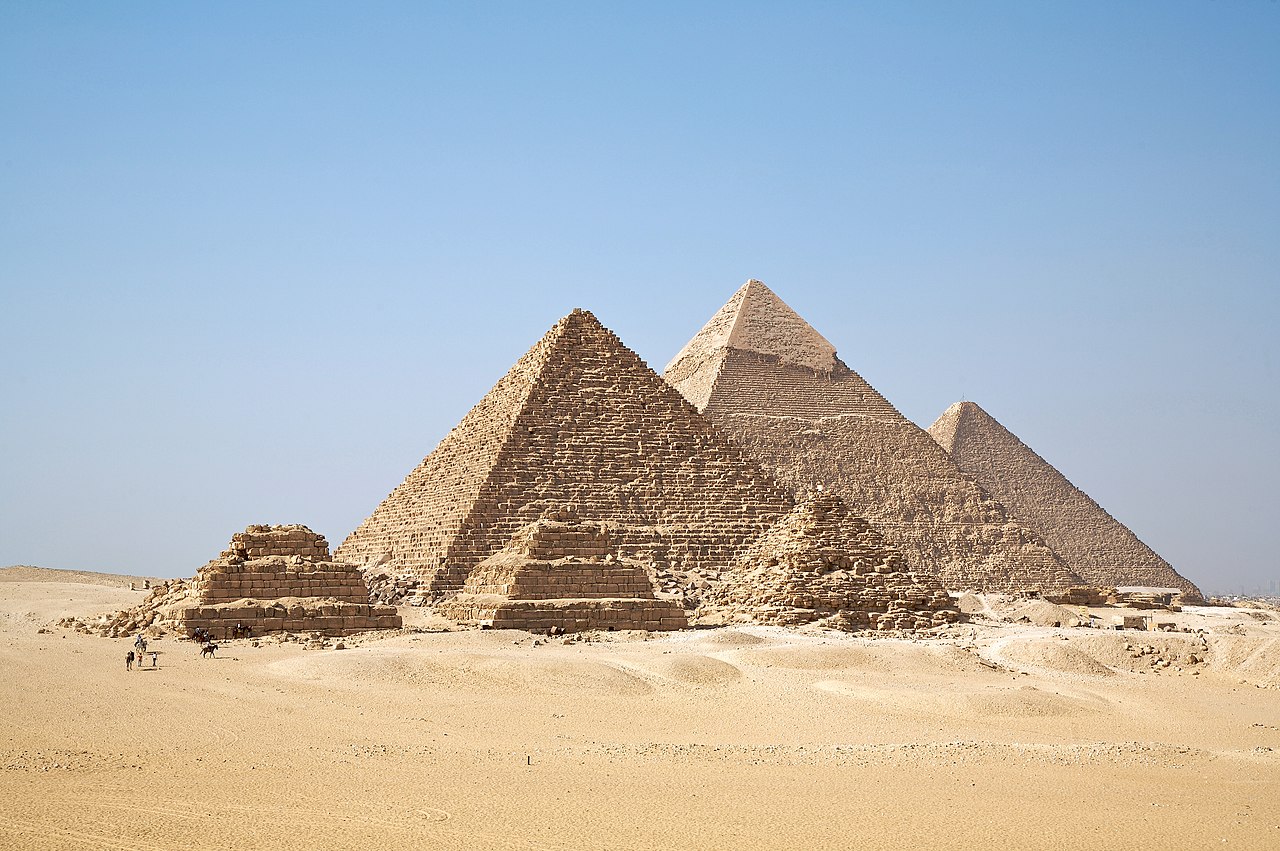
Mircea Eliade: The Religion of the Egyptians

During the first two millennia, neolithic cultures developed, but without profound changes. However, from the fourth millennium, contacts with Sumeria brought about a mutation. Egypt developed new techniques including construction of brick, boat building, artistic motifs, and writing. Unlike Mesopotamia, vulnerable to invasion from every direction, Egypt was isolated and defended by deserts and seas. The Nile enabled the king to govern the country by a centralized administration. Thus, it came to be that the country was constituted by a rural mass ruled by an incarnate god- the pharaoh. The pharaohs were crowned and ruled for three thousand years. The pharaoh, incarnate god, established the new world- much higher and complex than the neolithic villages.  Since he was immortal, his death meant his translation to heaven.  The translation of one incarnate god to another insured the continuity of the cosmic order.1   

Cosmogonies

The Egyptians adopted several cosmogonic myths. Some of the themes belong to the most archaic such as the emergence of a mound, lotus, or egg above the primordial waters. This emergence signifies the beginning of not only earth, but life, light, and consciousness. A certain sun temple at Heliopolis was identified with the primordial hill. Its lake was where the lotus emerged. Other versions recall the primordial egg which contained the bird of light.  Or of the lotus that created the sun child or of the serpent who was the image of Atum. Others speak of a city in which Re created the first divine couple. In short, the Egyptian theogony and cosmogony involve creation by the power of thought and the word of a supreme god.  We have here the highest expression of Egyptian metaphysical speculation. The myths involving the origin of man involve men being born from the tears of the solar god Re.2 

The Role of The Pharoah and Life After Death

Re is the first king, and he transmits this function to his son and successor- the pharaoh.  indeed, the pharaohs actions are said to be in line with those of the god Re. Res’s creation is said to put order in place of chaos and these same terms are applied to the pharaoh. The pharaoh is the incarnation of maat– which is translated as truth, but more appropriately designates good order, right, and justice. As an incarnation of maat, the pharaoh constitutes a paradigmatic example to all his subjects. The work of the pharaoh ensures the continuity of life. The pharaoh’s political activity repeats Re’s exploits; when the pharaoh wins in combat, it reproduces Re’s triumph. The cult was celebrated by the pharaoh, but was relegated to the priests of the different temples. The daily cult was addressed to the statue of a god in the temple. The priest performed a ritual purification, and then purified the statue.3 

The Pyramid Texts reveal conceptions regarding the postmortem destiny of the pharaoh. The formulas state that the pharaoh cannot die and that his body will not suffer decomposition. Other formulas refer to the pharaohs celestial journey. He flies away in the form of a bird. Sometimes the king ascends to the sky by a ladder. Before arriving at the field of offerings, the pharaoh undergoes certain ordeals. The entrance is defended by a lake with winding shores and a ferryman. The pharaoh must then accomplish ritual purifications. Arrived in the afterlife, the pharaoh is received by the sun god and continues his earthly existence. He is seated on the throne and is surrounded by a number of his subjects.  The Pyramid Texts are written in a poetry of exceptional quality and stress the privileged role of the pharaoh.4

Osiris and Developments in the Afterlife

Osiris was a legendary king who was murdered by his brother Seth. His wife, Isis, becomes pregnant with the dead Osiris. She burry his body and takes refuge in Delta and gives birth to Horus in papyrus thickets.  Grown up, Horus revolts against his uncle. Seth removes one of his eyes but combat continues and Horus wins. He recovers the eye and gives it to Osiris who had returned to life. But Seth cannot be finally destroyed. Horus is then crowned king- his fathers legitimate successor. In the story, Osiris is always shown as powerless And passive. However, Osiris is reanimated as a vital energy. He will insure vegetable fertility and reproduction. Osiris, the murdered king, guarantees the prosperity of the kingdom ruled by his son, Horus. We can see the relation between re and the pair Osiris-Horus. The sun and tombs constituted two sources of sacrality. The pharaoh was re but was also horus. This cult was already popular in the old kingdom but became more popular in the classic period of Egyptian civilization.5

In 2200 BC, Egypt was shaken by civil war, the state collapsed, and anarchy entered the country. The period of anarchy was known as the First Intermediate period.  It weas during this period that the “democratization” of the afterlife took place. People copied the pyramid texts that had been reserved exclusively for pharaohs and the pharaoh was accused of weakness and immorality. If the pharaoh no longer behaves like an incarnate god, things become doubtful including the meaning of life and the post existence of the soul. Men destroyed tombs, threw out the bodies, and carried off the stones. The downfall of traditional institutions brought about an agnosticism and a pessimism and a religious devalorization of death. Several new texts take up new views of the afterlife during this time. The compositions of the Intermediate Period continued to be copied long into the middle kingdom.6

Solarization and the Unsuccessful Reform

The middle kingdom experienced a period of economic expansion. During this time, Amon merged with Re to become Amon-Re- being identified with the sun. Because of this “solarization,” Amon became the universal god- overriding that of the Old and Middle Kingdoms. This was the result of the invasion by the Hyksos. The Hyksos imparted Syrian Gods- Baal and Teshub- whom they identified with Seth. A century later, the war of liberation began and the empire was reinstantiated. Thus began the decline of traditional Egyptian culture and an opening up to a cosmopolitan culture and foreign divinities. The solarization of Amon facilitated religious syncretism and the restoration of the solar god to the supreme rank. The worship of the solar god as the supreme god gave way to a religious unity. This solar theology was involved in political tensions and a struggle of power between the high priests and pharaoh.7

In 1300 B.C., Aton, the solar disk, was advanced as the supreme divinity by Amen-hotep to free himself from the high priest. The pharaoh removed the high priest of Amon’s powers and then changed his name to Akh-en-Aton. He abandoned the old capital and built a new capital just north where he built palaces and temples of Aton. The pharaoh made a number of innovations. He removed Amon and all other gods in favor of Aton, the supreme god. There has been discussion of the “monotheistic” nature of the reform. After the pharaoh died, his successor resumed relations with the high priest of Amon and returned to Thebes. The traces of the Atonist reform were mostly gone. This- the end of the eighteenth dynasty- marks the end of Egyptian creativity. Aton was worshiped long before the Atonist reform.8

Identification and the Book of the Dead

In the new empire, emphasis was placed on the complementary nature of opposed gods. Here Re is identified with Osiris. these two gods merge together in the dead pharaoh. Numerous texts emphasize the twofold aspect of Re: solar and Osirian. Re and Osiris are complimentary forms of a deity. These associations and identifications of gods were familiar to Egyptians from early antiquity. This identification reveals the complementarity between life and death. From the eighteenth dynasty, Osiris becomes the judge of the dead. A “trial” and a “weighing of the heart” takes place in the presence of Osiris. the Book of the Dead is the supreme guide to the soul’s journey after death. These books intend to facilitate the soul’s journey and ensure success in these ordeals- describing one’s descent through a subterranean world filled with obstacles. One of the most important chapters is devoted to the judgement of the soul in the great hall of two Maats. The deceased heart is suspended on one pan of a scale and the other is a feather or eye. The deceased must recite a prayer and make a declaration of innocence. This meditation on the mystery of death marks the last Egyptian religious synthesis. The twilight of Egyptian civilization will be dominated by magical beliefs and practices.9

Mircea Eliade

First Experiences in Pixelated Subjective Idealism

Sit in the back of a room. Sit in the very back corner of the room so you can see most of the entire room with your vision. Begin to look at the rooms occupants- perhaps there are people sitting at desks and perhaps there are people walking around. But now look at one of the occupants in the room. Concentrate on the occupant and begin to notice it. Perhaps one of the occupants drops his pencil. The question now becomes- is the pencil causing the sound in the ear or is the ear causing the pencils sound? The sound actually exits the persons ear and causes the pencils sound. Not just the sound of the pencil but the pencil itself is being caused by the eye. This is different from Fichte since each individual pixel is being simultaneously created by the mind, i.e. independently. Don’t care about what happens behind you because what happens behind you really happens in front of you. This can lead to some interesting results such as that the objects in your vision being created in your vision and diverting into the light. This idea can lead to some interesting results such as multiverse, reality of hallucination, mind body problem, time analysis, life after death, and the perennial structure of religion.

Evola on Vodou

In Julius Evola’s book Introduction to Magic Volume 2, he gives his interpretation of effigy magic. Here we discuss two closely related articles: the magic of effigies and the magic of Creation.

Effigy Magic

In effigy magic, one desires to act on a person, makes a statuette representing the person, or obtains something that belongs to him or her, draws certain signs on it and makes some invocations, and attempts to affect the person. The possibility of such a practice is based off of three laws: 1. Law of the power of the imagination. When an image is focused upon it tends to actualize. To optimize results, one must a. focus on one idea alone and this idea must be saturated with emotion b. one must neutralize the rational faculties. 2. law of transference of projection. Since an image has nothing corporeal about it, it is free from the spatial conditions essential to bodies. To optimize results, one must a. know how to objectivize the idea, releasing it from one’s own I. b. know the method of transmitting this state into the mind of another person. 3. Law of sympathy. When the mind takes the form of another mind, it can act on it through sympathy. Finished with the anatomy of effigy magic, it is time to move on to the physiology. The items work by adding a physical connection to the procedure through the law of sympathy. A material action will activate the will and complete the realization. Thus, we see that Haitian vodou, which is regarded by some to be a mere superstition, is more aligned with high magic than initially thought.1

Man participates in the higher magical form of creating. You will obtain knowledge of this act when you know thinking as something concrete, material, corporeal, and alive- not subject to all the laws of space. Know that every spiritual action causes a corresponding material reaction. Concentration is creating an energy flow that giving form top the thought force that comes from the depths of your body. It is an “entity” i.e. a being with a life of its own, a force of its own, that can act in space outside you. Suppose a magus wants a person to kill or kill himself: he forms the image of a violent action and in the fire of concentration that lasts for months saturates it with a force and develops around it a current of energy. He takes a suitable object, say as dagger, and binds his energy to it and delivers a thought impulse and this instantaneously discharges causing the chosen person to be possessed by the impulse to perform, that motion. You can induce an emotion on the soul of an entity by saturating an object with passion. There are cases in which meditation on an object causes peoples teeth to emanate light rays. By exalting these powers to a maximum, you can even obtain t6he supreme form of creation- the creation of a god.2

Analysis

In the standard interpretation of vodou, there are many supra-individual forces that underlie the cosmos. By performing a material action on an object, these forces will interact and cause an effect to occur. These forces are in the physical world and can cause effects in the world. This is regarded by Evola to be how lower forms of magic work, in its different lower grades of existence all the way down to mere superstitions.     

Even though Evola recommends putting vodou on high magical basis, I believe voodoo can still work under lower forms of magic. The understanding is that there are many subtle forces that underlie the cosmos and by performing a material action on an object, these forces can interact in unusual ways. This interpretation makes sense considering we do not exactly know how many of these forces there are and what kinds, and these forces may very well transcend rational explications as to how they operate. Thus, such extreme cases may occur such as bumping the doll into a doorknob and causing the individual to do the same. Evola does not disregard lower forms of magic. He regards his own species of magic- high magic- to be resembling initiatory knowledge the most, but Evola is accommodating of lower forms of magic and certainly does not disregard them. For example, Evola mentions in the magic of effigies a power under which a person would be under the influence of supra-individual forces, and that he may choose thew day and hour in which the forces with his goal are dominant coddling the object, wrapping it up, and having it ready for the opportune moment. In the same article Evola mentions hierarchies of invisible forces.3 Also, Evolas alludes to lower forms of magic in his article on the magic of creation

Traditionalism

Evola’s anti-perennialism

The World of Tradition

Traditional civilizations are controlled by people that have access to a higher order and a transcendent, supernatural dimension. These civilizations ignored the strictly intellectual domain for a metaphysical character. Ultimately, the king received the highest metaphysical rank, although later there developed a different kingly and priestly caste. In traditional societies, the law was intimately connected to the metaphysical order. The state had a transcendent meaning and purpose that went beyond the intellect. the rite binded the kings, priestly castes, and the households. It was performed in a precise methodological way and was a cornerstone of the state. Through the rite, supernatural powers would free themselves, react against themselves, and ascend to a higher plane of being. People were absorbed into the priestly and kingly castes through initiation. Often the person will evoke a ritual action that will actualize and renew transcendent influences. In traditional societies there is a normal hierarchical relationship between the royal and priestly castes– normally royalty enjoying primacy over priesthood. However, even in civilizations characterized mainly by the priestly caste, there is as correct relationship between these two castes. Finally, there is a warrior caste that is subordinated to these two.1

Evola, here, is talking about the general structure of religious organizations and is not alluding to an underlying perennial structure behind all religions. Look at the way Evola talks about religion. He is emphasizing diversity without necessarily alluding to unity. For example, Evola mentions in the Hindu and Buddhist tradition the doctrine of samsara, which understands life as a blind yearning, while in Hellenism, nature is seen as an embodiment of deprivation revealing a radical lack of purpose. Evola also mentions that in the Egyptian tradition, the king was equated with the sun and light, just like Ra, and in the Persian tradition, the king is said to be the same stock of the gods and Mithras, lord of peace, and made of gold. In the Indo-Aryan tradition, the king is the radiant force who personifies the divine fire. Another example is the ashavan and the anashvan in the ancient Persian tradition- the ashavan being the pure ones, beings of light, lords of fire, and beings of war, and the anashvan being the impure ones who are without law and oppose the principle of light.2 Thus, it can be maintained that Evola places a greater emphasis on the exoteric domain of religion than Guenon.

The Genesis of the World

The first age was the golden age in which people were most in conformity with the traditional spirit and we find characteristics of the highest form of regality. In this age, people did not die and lived like gods; There was also no disease and there was spiritual stability.  This age was characterized by gold- characterizing what is incorruptible, solar, luminous, and bright. The location of this first era was said to be in the north- the island being a real location situated in the arctic. In the next age, a feminine symbol, portrayed by the mother, was introduced; this corresponds to the silver age where there is a mingling of north and south. This corresponds in western expositions to the age of Atlantis, where there is a lunar spirituality; technically, Atlantis corresponds to the west and Lemuria corresponds to the south. This era was characterized by the metaphysical view of the woman as the supreme principle and every other being as being subordinated. A feminine spirituality dominated; men regarded themselves to be free and equal, cast and class distinctions did not apply, and a general pleasure and promiscuity was widespread. The next age was the cycles of decadence and the heroic cycle in which a race of giants roamed.  This age was filled with violence and materialism- thus resulting in the catastrophe of the flood. The Titans refer to the spirit of a violent and materialistic race that no longer recognized the authority of spiritual principle. Thus rose the amazons, a group of feminine warriors, who attempted to reinstantiate the feminine, lunar principle. Finally arose the civilization of the heroes.3

Unlike Guenon who places the source of the perennial philosophy in Egypt, Evola places the source in the west and merges the Greek and Indian yuga periods– emphasizing the European variants. Evola will sometimes mention the primordial state. But this is the primordial state as it exists in the previous yuga periods according to Greek mythology. Evola treats the genesis of creation in Greek and Hindu myth as a real entity without necessarily relying on any scientific data. As examples of Evola adopting the Hindu variants into the Greek yuga periods, Evola refers to a lack of advanced technology and a lack of monsters. For example, Evola mentions the mistake of conceiving the existence of other races that because of some geophysical factor have left very few traces of their existence. Indeed man possessed an ancient science, but that science was very different from the one of today. And the ancient myths about a struggle with monstrous entities may represent struggles of the primordial man against animal potentialities.4

Traditionalism

Berkeley’s Semi-phenomenalism

In Kenneth Wrinkler’s book Berkeley an Interpretation, Wrinkler lays out what he believes to be a new interpretation of Berkeley. There are two standard interpretations of Berkeley’s idealism. The first interpretation is that unperceived objects continue to exist when no one is there to see them because they continue to be held in place by God’s consciousness. This interpretation is sometimes augmented by the idea that God does not perceive as we do since he is perfect, and so they are held in place in his mind without willing. This is called the external-world interpretation. The other interpretation dispenses with external objects without putting anything in their place. Instead of viewing an unperceived table in a room as my idea, your idea, or God’s idea the phenomenalist replaces these statements with statements about the possible existence of the objects. This is the phenomenalist interpretation.1

Berkeley mentions in the notebooks the idea of the denial of blind agency which was not mentioned elsewhere in his writings but was a commonplace assumption among seventeenth century philosophers such as Descartes, Malebranche, and Locke. This is the assumption that judgement and volition are inseparable from perception. This idea of Berkeley’s is central to Wrinkler’s dismissal of the external world interpretation. Wrinkler makes the argument that in the Dialogues and the Principles, Berkeley does not abandon this principle, but simply takes it for granted.2

Berkeley’s semi-phenomenalism and objections

It may seem that in the external-world interpretation, God must perceive in the broader sense of perceiving not only the world but all possible worlds to accord with his omnipotence. However, this is inconsistent. Indeed, Wrinkler does not believe Berkeley offers support in the dialogues for the external-world interpretation. To move forward, Wrinkler advances his own interpretation that is half way between the phenomenalist and external-world interpretations. Wrinkler agrees with the external-world interpretation that objects exist if and only if God perceives them. But he adds that by the denial of blind agency, God perceives every idea only by his intention to cause it. Objects owe their existence to divine volitions, but those volitions do not matriculate apart from the individual’s perception. Thus, the texts usually offered on behalf of the external-world interpretation are consistent with thew phenomenalist interpretation once it has been supplemented by the denial of blind agency.  The mistake of the external-world interpretation lies in supposing that God’s contribution to the perception of things is distinct from his volition. On Winkler’s interpretation, god perceives all things, but this perception is nothing more than the perception inevitably involved in his volition. God’s knowledge of things therefore derives entirely from acquaintance with his will.3

A standard objection is that divine ideas in Berkeley’s system are superfluous. It is right to assume that since Gods’ ideas are passive and inert, they can make no causal contribution to the reality of things. But despite all this, God’s ideas are not superfluous since without them, god would not only be unable to perceive, but unable to will.4 Two more objections are in order. The first objection is that Wrinkler’s interpretation still runs into contradiction with Berkeley’s statements on external objects. However, in view of the modifications to the phenomenalist interpretation and the rereading of passages on external objects, the inconsistency of this interpretation with Berkeley’s statements on external objects is reduced. The second objection is that outside of the notebooks, the derivation of Wrinkler’s interpretation cannot be found. For example, in certain passages, Berkeley passes up perfect opportunities to make use of the denial of blind agency. However, these passages do not necessarily create stumbling blocks for his interpretation. His interpretation does better than other interpretations in terms of consistency. The phenomenalist interpretation calls for supplementation. Indeed, Wrinkler’s interpretation creates the position of most coherence.5

Analysis

Although I like Wrinkler’s interpretation, perhaps it is best to go back to the traditional phenomenalist and external-world interpretations of Berkeley. The traditional reading of Berkeley attributes the phenomenalist interpretation to the Principles and the external-world interpretation to the Dialogues, these two interpretations being consistent, yet inconsistent with each other. I like the external-world interpretation.  I think this interpretation has much less paradox in it than attributed to it by recent authors. For example, I do not believe that God must perceive not only the world but all possible worlds to accord with his omnipotence. That being said, I am fine with the phenomenalist interpretation. Berkeley is attempting to hold in place religious beliefs which is reinforced by his later Alciphron. One way to refute the problem of evil is to deny anything exists outside your immediate experience. This interpretation is supplemented by Wrinkler’s modification since the original interpretation can run into moral issues. Additionally, Berkeley means by his semi-phenomenalism the classic statement that we live in a dream.  In following this doctrine, the world begins to loosen up and the colleges begin to function more properly again. However, Berkeley’s phenomenalism was different from and less developed than what came in later centuries.

Berkeley

Biography of Rene Guenon

Rene Guenon (1886- 1951)

Early Days

Rene guenon was born November 15, 1886 to a 56-year-old father- Jean-Baptiste- and a 36-year-old mother in France. Guenon was entirely French in ancestory and his family owned a vineyard. however, by the time he was born, they were living in a small house in Bloise. When he was seven, they moved to a bigger house with a garden, which is where the formative years of guenon’s childhood were spent.  Guenon suffered ill health as a child and his family was very religious. Guenon was talented in school, always coming first or second in the class. This was obtained all while guenon was experiencing frequent bouts of ill health and consequent time off school. Guenon soon became a loner among his peers and believed his teachers had it in for him. Because of this, Guenon moved to a new school in 1902, which had an excellent reputation. At this school, despite continued bouts of ill health, he continued to do very well and was particularly good at math, philosophy, and religion. Guenon entered the College Rollin to study advanced math in 1904, but he fell behind due to ill health and homesickness to the extent that he needed supplementary coaching. He left in 1906 and established himself in a small flat in the Ile St. Louis in Paris. The Ile St. Louis was in the center of Paris surrounded on all sides by a river. The flat had an interior courtyard and winding staircases. Guenons’ room had a spacious kitchen and dining room lit by gas and two bedrooms all with simply furnished rooms.1

Middle Years

Guenon’s decision to not obtain an academic position was a crisis point in his life. His admiration for philosophy and religion had been instantiated back in school. Now guenon attempted to access a more attractive and immediate form of metaphysical knowledge which led him to attempt to access the occult societies of Paris. At this time, Guenon was initiated into the Martinist order lead by Papus (real name Gerard Encausse) an energetic read bearded man some twenty years older than Guenon of French and Spanish descent based on the works of the Eighteenth-century Spanish philosopher L.C. de Saint-Martin.  Guenon went to Papus’s school of occult studies based on a recommendation of a friend and Papus had himself been a student of the College Rollin. In 1908, Guenon began to fall out with Papus mainly because he wished to revive the Order of the Temple. There were three more main organizations which appealed to both the general public and the occultists of France: the theosophical society of America, the spiritualism of America and France, and the freemasonry of England. Guenon was attracted to certain fringe masonic groups and spiritualist movements but eventually turned away from them.2

By this time, Guenon began to fall out with Papus along with two of his close friends: Champrenaud and Pouvourville. Guenon founded a periodical called La Gnose with these two when he was initiated in 1912 into a Sufi order lead by al-Kabir. Guenon made translations of important Sufi mystical texts and continued to work on La Gnose. Guenon’s interest in the Hindu doctrines had been stimulated by his contacts with the theosophical society which is linked to Indian philosophical teachings though much adulterated by madame Blavatsky’s vision. However, the Vedanta was now somewhat popular in Europe. Guenon claims to have received his teachings directly from Hindu masters. Back in 1912, Guenon also married a young woman who was an assistant to his aunt. The marriage was Catholic as Guenon was still Catholic.3

Publishing of Main Works

From now von, Guenon’s life changed because he now had family responsibilities and had to earn a living, but also because he increasingly disapproved of the occultists of his time. He retained his interest in masonry and became affiliated with the Thebah lodge associated with La Grande Loge de France. The following year we find him associated with a leading anti-masonic writer: Abel Clarin de la Rive. Anti masonry was initiated into the public by Taxil some 40 years earlier. He revealed, for example satanic rites practiced by masons which in actuality may have had nothing to do with masonry. Guenon was initiated into an anti-masonic magazine through his contacts with La Gnose. Many have commented on Guenon’s writing for an anti-masonic magazine while being a member of a masonic organization, but Guenon’s approach to masonry was idealistic. guenon seems to have retained a belief in masonry as a preserver of the primordial tradition.4

During the first world war he was exempted from military service due to poor health and had to take up teaching in order to pay the rent. He taught at a high school during the 1915-16 years and after his mother died in 1917 was appointed lecturer in philosophy at Setif in Algeria.  In 1918, he returned to France and settled with his wife and aunt in his old family home in Bloise and was appointed lecturer in philosophy at his old school.  Guenon was introduced to a circle of young philosophy students who had gathered around the Institut catholique de Paris. By this time, Guenon had ceased to be the wild occult experimenter of his youth and was now an academic bourgeoise engaging in intellectualism. During this time, guenon wrote his first book Introduction to the Study of the Hindu Doctrines which was submitted for a doctorate but was rejected since it failed to display the sort of evenhanded documentation required for such theses. Nonetheless it was accepted for publication. In 1921, guenon published Theosophy: History of a Pseudo-Religion. This book was exceedingly well documented although much more is now known about the ludicrous and fantastic side of the religion.5

Guenon life now began to change in that he now became increasingly absorbed in his writings. During this time guenon published several new books including The Spiritist Fallacy in 1923 and East and West in 1924. This helped Guenon gain some readers, but he was still being somewhat ignored by both the general public and academics. In 1924, Frederic Lefevre, editor and chief of a prestigious religious journal decided to hold a press conference with some leading religious experts of the time. Rene Grousset, an expert on China, Jacques Maritan, a Christian neo-Thomist, and Rene guenon, and expert on Hinduism, were invited to take part. One more event to be noted is Guenon’s relationship with the journal Regnabit– a Christian religious journal. Here, guenon developed some of his ideas on symbolism. From 1924 onwards, Guenon taught at a private all-girls school. However, in 1928 Guenon’s wife died and nine months later his aunt died. His supporters tried to keep him tied to the catholic religion but this double blow caused him to seek to eventually retreat into the safe haven of the east.6

Later Years

Guenon was not good at being a bachelor, and needed the support of a wife and a secure home background. He attempted a second marriage, but was refused.  Thus in 1930, he made the decision to travel to Egypt with a wealthy widow- madame Dina- planning to found a publishing house there to translate original texts illuminating the primordial tradition. Three months later, madame Dina returned to France and the plans for the publishing house folded. Guenon stayed and by 1931 was publishing in an Arab periodical. Guenon moved to a modest house opposite a university and abandoned western clothes for an Egyptian style of dress. In 1934, he married the daughter of a Muslim lawyer. The couple moved to a few different houses and settled in 1937 to a comfortable house in a suburb with a distant view of the pyramids but moved back to the center of Cairo in 1946 and had four children. His time in Cairo was mainly spent on study and writing. Guenon eventually converted to Islam but maintained that it doesn’t imply the superiority of one tradition over another as they all are reflections of the primordial tradition. During this time, Guenon published several new books including The Multiple States of Being in 1932, The Reign of Quantity and the Sign of the Times in 1945, and The Metaphysical Principles of the Infinitesimal Calculus in 1946. In 1945, Guenon developed a persistent cough and eventually died in 1951.7 More books from Guenon have been published posthumously.

Traditionalism

Guenon on the Free Masons

Guenon on the Free Masons

The free masons hold high importance to both science and metaphysics. The free masons are related to carpentry and stone-cutting.1 Masonic initiation is divided into three successive phases: apprentice, fellow, And master.2 There are two types of masons: operative and speculative. The operative masons are workers and artisans and the speculative masons are related to philosophy, but this is hermetic philosophy and not profane philosophy. The free masons craft metaphysical symbolism into their works- be it architecture or something else.3 The free masons tend to hold no dogmatic assertions- either scientific or metaphysical. However, Guenon believes true metaphysics, which is suprarational contains nothing that could offend them. There is really according to Guenon no contradiction or incompatibility between science and religion.4

Guenon believes the Freemasons, to a certain extent like all traditions, alludes to something that has been lost. However, freemasonry- being the last of the traditions to come about, represents one of the most degraded forms of tradition. Throughout history, information has been lost constituting substitution, and more information has been lost constituting further substitutions. Freemasonry- being the last tradition to develop has the most substitutions ion place. Thus, freemasonry is simply a “corpse of the original tradition. This tradition has been distorted in do many ways to the point of becoming unrecognizable. The different grades of mastership do not in any way relate to how things were in their primordial state. There should really be no distinction between the different grades of mastership if things were the way they should be. These high grades are in reality far removed from the original tradition.5

Analysis

I am aware that the Freemasons are an esoteric organization, but I am also aware that they share some enlightenment ideals. That being said, I am only concerned with Freemasonry to the extent that it remains traditional. I’m not a free mason that has a slight interest in traditionalism, I am a traditionalist that has a slight interest in freemasonry. What I am interested in is tradition and traditional activities. Freemasonry is an interesting way to express these ideas. That being said, freemasonry constitutes a valid activity and can lead to some interesting results. A society without freemasonry can be boring and it should be retained at least in the West.

The metaphysical heritage of tradition has a greater variety and has a higher quality than anything that can be invented in contemporary times. There have been many religions invented in history and further esoteric traditions documented in the west: magic, alchemy, astrology.  Nothing today is as interesting as these ideas and it would take years to develop a new esoteric tradition at the same level as what came in the past. There has been invented for example, the idea that we live in a computer simulation as invented by the Swedish philosopher, but this is a lesser form of metaphysics having been developed over less time and leads to paradoxical consequences. Additionally, it can be further argued that the esoteric traditions are the only traditions that constitute a true facet of our reality. These traditions have been received through divine revelation and have been handed down throughout history. Additionally, the moral principles involved in moving out of tradition can be seen as a degeneration. The moral principles of tradition are far superior to anything that has come since. One should retain proper male female relations and proper familial relations by relying on tradition. The relationless monism of Bradley and Atkinson’s law of attraction can get out of hand if pushed to the extreme. These ideas should be retained but handled with caution while remaining in a traditional framework.