Fichte’s influence
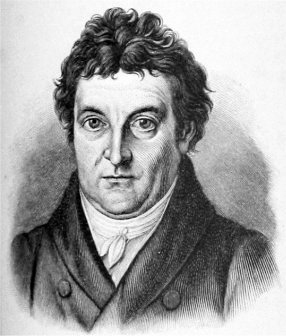
Fichte, with his setting up the world as a product of the mind and his development of action theory, was still very close to the ordinary person and a whole lot of a ways off from Nietzsche. Positing the world as a product of the mind causes forward development in the world, but nothing as exaggerated as Nietzsche. However, Fichte is generally not considered to be the most important philosopher of the last 200 years. He is generally considered to be the founder of German idealism proper which includes only three philosophers- Fichte, Schelling, and Hegel. However, once you take into consideration not only new thought and Evola (which are usually overlooked) as well as the plethora of non-metaphysical egoists of the early 1900s and all of his direct influence, Fichte should probably be considered the greatest philosopher of the last 200 years. These latter ones are often overlooked because of either the religious nature of the work or the obscurity in the case of the egoists. Was Nietzsche inspired by Fichte? He usually lists Schopenhauer as his direct influence. However, Fichte probably impacted him indirectly; his philosophy was probably prevalent in society at the time of Nietzsche.
New Thought as idealism
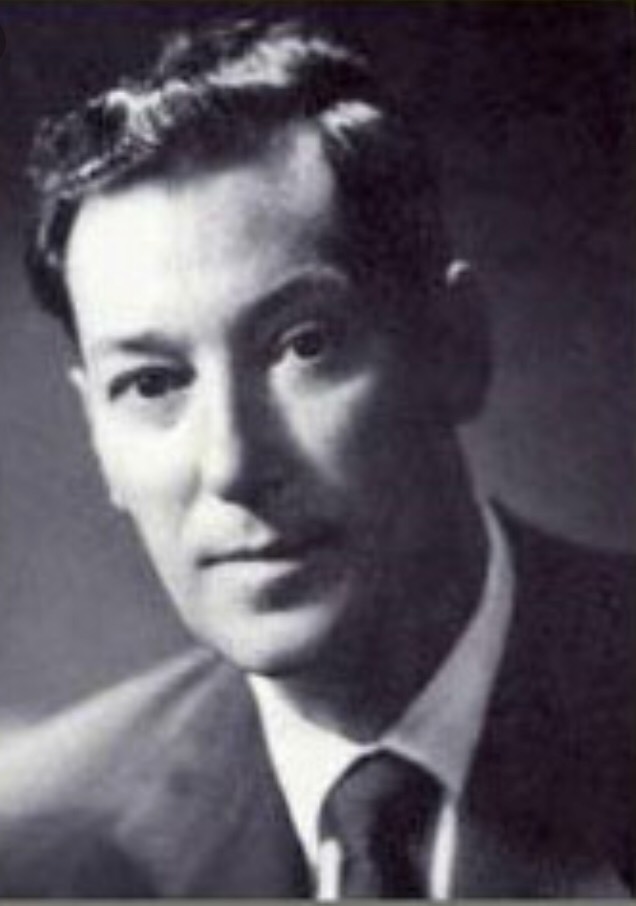
Neville Goddard, the New Yorkean ballet instructor and metaphysician, expounds in his book The Power of Awareness a doctrine in which the individual has the ability to control the world with his imagination. This can be handled either idealistically in which the subconscious manipulation is ripples in the idealistic construct or perhaps more physically in which the mind’s ability to control the world involves some sort of four-dimensional manifold exiting the persons brain. Goddard probably did not know who Fichte was, and lists as his inspiration kabbalah- which I take to be a mystical reading of the Bible involving the cosmological nature of the world. However, Goddard’s inspiration to Fichte is clear as in his ethics he expounds an action theoretic theory along Fichtean lines in much exaggerated form.
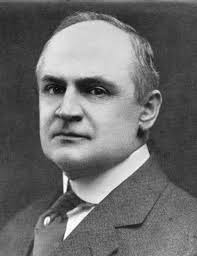
Is the law of attraction idealism? It certainly would be considered idealistic by many. However, new thought is more physicalist in nature and is a far way away from original idealism. Technically, new thought should be considered esotericism and not idealism. However, in Atkinson’s The power of concentration, he lays down an ethics that is Fichtean in nature in greatly exaggerated form together with religious connotations. This has to do with Atkinson’s thought vibration which involves a mind dependence on the world. It has to do with the mind dependence on the world that causes this forward momentum. Thus, Atkinson owes inspiration to Fichte’s idealism. Additionally, Atkinson writes many books on suggestion and autosuggestion and psychic phenomenon which can be considered idealistic in nature. These are perhaps outlined in Fichte with his positing other individuals as subcategories of the persons subconscious, but the detailed analysis was not carried out until Atkinson. Many would consider Fichte’s position to be closer to solipsism than to have a belief in psychic correspondence, but psychic phenomenon can be found in Hinduism which I am arguing all Hinduism presupposes idealism. Thus the idealistic nature of Atkinson of the Fichtean variety is obvious. William Atkinson certainly did not list Fichte as his inspiration, and I doubt Atkinson knew who Fichte was. However, yet again Fichte was probably an indirect influence of Atkinson
 Idealism Studies